




FGV is unlocking new possibilities for Malaysia's palm oil industry through renewable energy, innovation and practical sustainability
PALM oil has long been an integral part of daily life. From cooking oils and food products to cosmetics, pharmaceuticals and personal care essentials, it is one of the world's most versatile agricultural commodities. Today, however, palm oil is evolving beyond its traditional applications, emerging as an important contributor to sustainable innovation and renewable energy.
As nations accelerate efforts to reduce carbon emissions and strengthen energy security, palm-based products are finding new relevance in the global transition towards cleaner energy. One of the most promising developments is palm-based biodiesel, a renewable fuel derived from palm oil that has the potential to reduce reliance on conventional diesel while creating greater value from one of Malaysia's most strategic agricultural commodities.
For Malaysia, one of the world's leading palm oil producers, biodiesel presents an opportunity to extend the role of palm oil beyond food and industrial applications into the renewable energy landscape. Rather than simply producing another fuel, it represents a chance to strengthen downstream industries, support national sustainability goals and reinforce the long-term competitiveness of Malaysia's palm oil sector.
Recognising this potential, FGV Holdings Bhd is taking a measured yet progressive approach. The group believes its true potential must first be validated through rigorous, real-world testing.
This philosophy underpins FGV's expanded B100 biodiesel trial, which moves beyond earlier tests involving passenger vehicles to plantation machinery operating under actual estate conditions.
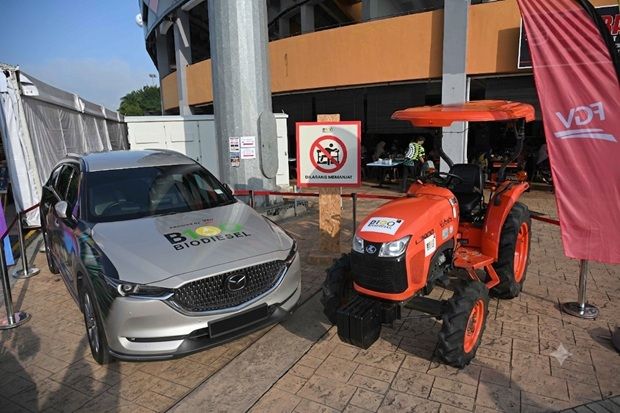
As an integrated agribusiness company involved in plantations, biodiesel production, trading and downstream activities, FGV is uniquely positioned to assess the potential of B100 across the value chain.
The six-month pilot, which will be conducted at the Tun Abdul Razak Agricultural Research Centre (PPPTAR) in Jerantut, Pahang, involves 17 units of machinery, including tractors, agricultural equipment, electric generators and four-wheel-drive vehicles used in daily estate operations. The expanded trial builds on FGV's earlier evaluation of B100 in road vehicles, extending the assessment into plantation environments where machinery operates under more demanding conditions.
The initiative reflects the company's commitment to evidence-based innovation, evaluating whether pure palm biodiesel can deliver the operational performance, reliability and practicality required before considering wider implementation.
Operational excellence through sustainability
Leading this operational transformation is FGV Holdings Bhd plantation division group director Izham Mustaffa, who brings more than 25 years of extensive experience in the plantation industry.
According to Izham, expanding the B100 trial to plantation machinery is the natural next step in FGV's structured evaluation of the renewable fuel.
The company adopted a phased approach rather than moving directly to large scale implementation.
"The next logical step is to evaluate B100 where our core business operates," he explains.
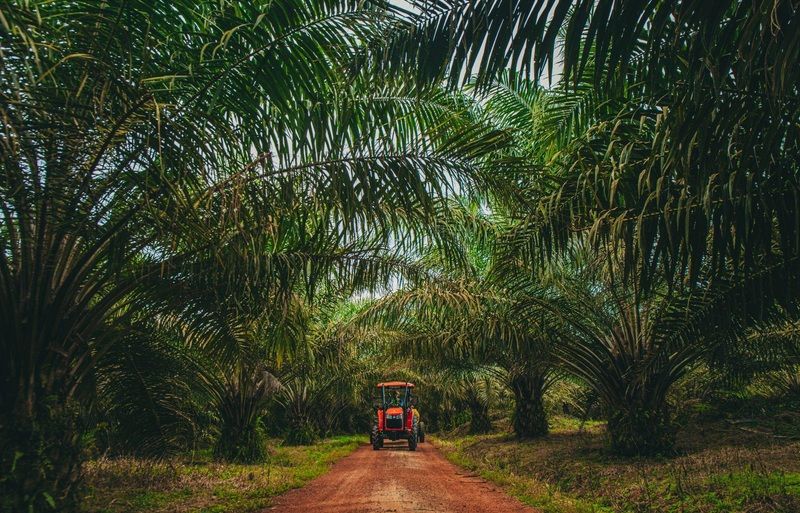
Unlike vehicles travelling on roads and highways, estate machinery – including tractors, excavators, backhoe loaders, prime movers, mini tractors, mechanical buffaloes and mobile field service vehicles – operates continuously under demanding conditions. Long operating hours, heavy loads, uneven terrain and varying weather conditions provide the ideal environment to assess the fuel's performance under real operating conditions.
"Testing B100 in plantation machinery allows us to evaluate not only engine performance, but also fuel consumption, maintenance requirements, equipment reliability and overall operational practicality," he says.
The trial, conducted at the PPPTAR, combines research capabilities with actual plantation operations, allowing the fuel's performance to be monitored and analysed in a structured manner.
FGV believes generating reliable operational evidence remains the priority.
Before any wider deployment can be considered, he says FGV needs to evaluate how B100 performs consistently across different types of machinery while ensuring fuel storage, handling, and supply can be smoothly integrated into daily estate operations.
"If the pilot delivers encouraging results, it could support the gradual use of B100 across suitable estate machinery and other diesel-powered equipment," he says.
"The experience and insights gained could also identify potential opportunities to expand the use of B100 across estate transport fleets, in-field mechanisation equipment, engineering support machinery and other diesel-powered assets throughout the wider FGV and Federal Land Development Authority (Felda) ecosystem.
"More importantly, this initiative demonstrates how different parts of the Felda and FGV ecosystem can work together to evaluate new applications for palm-based products in a structured and practical manner, while supporting the sustainability agenda, reducing dependence on fossil fuels and strengthening operational resilience for the future."
Creating greater value from Malaysia's palm oil
This operational focus is backed by FGV oils and fats division group director Zulkifli Othman, leveraging 30 years of corporate experience across the palm oil as well as oil and gas industries. Zulkifli believes the conversation surrounding biodiesel has evolved significantly over the past decade.
Global geopolitical developments, supply chain disruptions and fuel price volatility have reinforced the importance of strengthening domestic energy resilience while exploring alternative fuel sources. Against this backdrop,Malaysia with its well-established palm oil industry, possesses a strategic advantage over others.
“Palm oil has traditionally been associated with food and oleochemicals, but biodiesel demonstrates its potential to contribute to the renewable energy sector as well,” Zulkifli says.
"At the same time, the industry today is in a stronger position than it was a decade ago. Improvements in technology, production capability and industry collaboration provide a stronger foundation to evaluate how biodiesel can support national energy aspirations while strengthening the long-term competitiveness of Malaysia’s palm-oil industry."
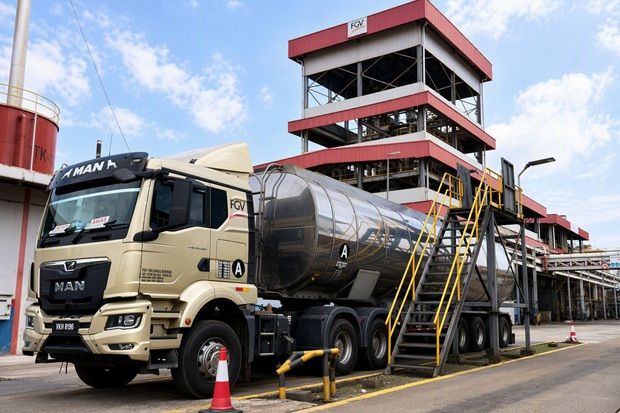
One of FGV's unique strengths lies in its integrated business model, where its upstream, downstream and plantation businesses work together to evaluate new opportunities from both a technical and commercial perspective. Few organisations can evaluate renewable fuel across multiple stages of the value chain within a single entity. Through its subsidiary, FGV Biotechnologies Sdn Bhd, the company not only produces the B100 biodiesel used in the pilot but also evaluates its performance within its own plantation operations.
“This creates an invaluable, first-hand feedback loop where operational insights gathered from our own end users allow us to better understand the fuel’s performance, operational considerations and potential areas for further improvement,” he highlights. “This integrated approach enables faster learning and better decision-making.”
As one of the world’s largest producers of palm oil, Malaysia produces close to 20 million tonnes of crude palm oil annually, making it one of the nation's most strategic commodities.
Ultimately, wider market adoption depends on more than production capability; customers and industry stakeholders need confidence that the fuel has been proven outside of the laboratory. “By evaluating B100 in plantation machinery, we are able to better understand its operational practicality, identify considerations that influence wider application and strengthen confidence in its long-term commercial potential,” Zulkifli points out.
Beyond producing another renewable fuel, the group sees biodiesel as an opportunity to create stronger domestic demand for palm-based products, diversify downstream applications and generate higher-value opportunities across the entire supply chain. Over time, Zulkifli notes, this diversification will build greater resilience for the industry against fluctuations in global commodity markets.
Green innovation and future readiness
While operational excellence remains essential, FGV also views B100 through a broader strategic lens. Guiding this transformation is FGV chief strategy officer Abbas Ariff, who has built over 20 years of international experience across the United Kingdom, Europe, Asia Pacific and Malaysia.
According to Abbas, B100 represents much more than renewable fuel.
“It positions the group beyond plantation production and aligns us with the national energy transition agenda, specifically the National Energy Transition Roadmap (NETR) and Malaysia’s climate agenda linking the National Determined Contributions.
“Besides, it also supports green industrial innovation and energy security,” he adds.
Under this strategic vision, FGV aims to evolve beyond being a traditional plantation company into a climate-sensitive, integrated agri-industrial group that embraces science, technology, collaboration and responsible experimentation to develop practical solutions for the country, the industry and future generations.
FGV believes remaining comfortable with conventional practices could leave value untapped and limit future opportunities as agriculture, sustainability and global energy markets continue evolving rapidly.
“Exploring alternatives such as B100 allows FGV to test new pathways, unlock greater value from its own resources and position itself ahead of changing climate expectations, fuel costs, market pressures and national policy shifts,” he explains.
However, the group stresses that innovation should never be driven by assumptions or enthusiasm alone.
“Every new technology must first be validated through structured pilot programmes capable of generating reliable evidence on fuel quality, vehicle performance, maintenance impact, operational practicality, safety, costs and user acceptance.
“A disciplined pilot approach allows the organisation to test, measure, learn and improve in a controlled way, ensuring any future scale-up of B100 is credible, responsible and based on real field data,” he adds.

The future of sustainable palm oil
Looking beyond FGV's operations, the initiative also reflects broader national aspirations. Providing this perspective is FGV Holdings Bhd chairman Datuk Abu Huraira Abu Yazid, with more than 50 years of leadership experience across financial services, logistics, social security, rehabilitation, oil and gas as well as the manpower sector.
He believes recent geopolitical developments and volatility in global energy markets have highlighted the importance of strengthening Malaysia's domestic capabilities.
“Malaysia already has an integrated oil palm ecosystem spanning the entire value chain, from plantations and processing to biotechnology, logistics, downstream businesses and technical expertise. These are strengths that should continue to be leveraged to create greater value for the country. The initiative also carries an important social responsibility," he says.
The B100 initiative aligns closely with Malaysia's National Biofuel Policy and NETR, demonstrating how an integrated agribusiness company can contribute meaningfully to the nation's transition towards a lower-carbon economy while creating new commercial opportunities across the palm oil value chain.
“As a company deeply rooted within the Felda ecosystem, FGV remains committed to creating sustainable long-term value for more than 112,000 Felda settler families whose livelihoods depend on a competitive and resilient palm oil industry,” he emphasises.
Looking five years ahead, he hopes the conversation will no longer centre on the success of a pilot programme but on how the knowledge generated has shaped the future of renewable fuels within FGV and Felda operations.
The group envisions stronger collaboration among industry players, researchers, policymakers and technology providers to create an ecosystem where renewable innovations such as B100 can be evaluated, refined and adopted more effectively.
“Ultimately, success should not be measured solely by biodiesel usage but by tangible value creation – new downstream opportunities, stronger demand for palm-based renewable solutions, industry competitiveness and empowering the spirit of sustainability across our operations while reinforcing Malaysia’s position as a global leader in sustainable palm oil,” he concludes.
Introducing B100 to a wider audience
The new phase of FGV’s B100 biodiesel plantation trial was launched by Prime Minister Datuk Seri Anwar Ibrahim on July 7 during the FGV Festival, held in conjunction with Hari Peneroka Felda 2026 in Jengka, Pahang.
Through exhibitions, demonstrations and interactive activities featuring its plantation, oils and fats, sugar, logistics and consumer products businesses, more than 12,000 visitors gained a deeper understanding of how FGV’s integrated business ecosystem creates value across the Felda ecosystem and supports settler communities.
Among the festival’s key attractions was Warung FGV, which served a variety of dishes prepared using FGV products such as Saji, Seri Pelangi and Gula Prai. Visitors also explored the B100 showcase, viewed technology displays and cooking demonstrations, enjoyed promotional offers on consumer products and participated in a range of interactive activities and quizzes throughout the two-day event.
To learn more about FGV, visit https://www.fgvholdings.com/home/ or follow FGV’s official channels for the latest updates on how this pilot initiative is paving the way for a more sustainable palm oil industry.


