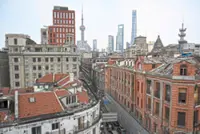
WHENEVER redevelopment projects are announced in our cities, they are often accompanied by compelling visuals: towers rising into the skyline, upgraded infrastructure and facilities, landscaped spaces and promises of rising property values.
For developers and the authorities, redevelopment represents hope. Older buildings suffering from structural deterioration, outdated utilities and rising maintenance costs appear ready for transformation. Safer housing, improved facilities and a more vibrant urban environment are understandably attractive prospects.
But does redevelopment genuinely improve the lives of existing residents? Or does it impose hidden burdens that are insufficiently discussed?
Redevelopment is not merely a physical act of demolition, resettlement and reconstruction. It is a profound socioeconomic process. When a neighbourhood is redeveloped, lives are reorganised, financial commitments are restructured and community networks are reshaped.
The benefits of redevelopment are real. Replacing deteriorated structures with safer, compliant buildings improves living conditions. Upgraded drainage, road systems and utilities reduce long-term infrastructure-related costs. Planning that emphasises efficient layouts and design, green spaces and energy efficiency, supports sustainability.
Construction projects generate employment, activate professional services and strengthen supply chains. Increased property values may enhance household assets and long-term financial security. From a town planning perspective, higher-density development near transit corridors promotes more efficient urban growth.
In principle, redevelopment aligns with broader sustainability goals. The issue is not whether redevelopment has benefits. It is whether those benefits are equitably distributed – and whether the costs are fully understood.
Relocation is one of redevelopment’s most immediate consequences. Temporary or permanent displacement carries financial and emotional implications that are often underestimated. Rental payments, moving expenses, longer commutes and school disruptions create tangible strain. Even “temporary” relocation can involve years of uncertainty.
More critically, compensation based on market value does not automatically ensure replacement adequacy. If compensation fails to reflect the true cost of obtaining an equivalent home in the same locality, residents may be pushed further away.
Market value is not the same as replacement value – and this distinction is crucial. Modern high-rise developments introduce ongoing financial commitments such as maintenance charges, sinking funds and management fees. While these costs may appear modest initially, they represent permanent obligations. Over time, they accumulate and may burden middle-income households, especially those on fixed incomes, and retirees.
Redevelopment discussions often highlight capital appreciation but remain silent about recurring expenditure. True transparency requires acknowledging both.
Beyond financial impacts lies the issue of community continuity. Neighbourhoods are ecosystems of trust, informal networks, local businesses and shared identity. When redevelopment rebrands an area with a more exclusive image, living costs rise, small traders may be displaced and demographics shift.
This transformation may not involve direct eviction. Instead, it unfolds gradually through rising affordability thresholds. The original community becomes peripheral in its own locality.
History shows that redevelopment driven primarily by commercial value can narrow social diversity. Cities thrive on diversity, not uniformity. Therefore, redevelopment must be treated as a governance responsibility, not merely a commercial exercise.
Redevelopment will remain inevitable, but progress must be measured carefully. If redevelopment produces taller buildings but weaker communities, its success will be superficial. If property values rise while financial strain increases, its benefit will be uneven.
True urban advancement balances renewal with social stability. It uplifts without uprooting, modernises without marginalising, and measures success not only by economic return but by collective well-being as well.
PROF DATUK DR ALIAS ABDULLA
and ASSISTANT PROF DR ROZIHA CHE HARON
Kulliyyah of Architecture and Environmental Design
International Islamic University Malaysia
Already a subscriber? Log in
Get 20% OFF The Star Digital Access
Cancel anytime. Ad-free. Unlimited access with perks.