SINCE South Korean President Lee Jae-myung took office, his “pragmatic diplomacy” has emerged as the defining thrust of the Republic of Korea’s (ROK) foreign policy amid intensifying US-China rivalry and mounting global uncertainty.
Beyond hosting Apec (Asia-Pacific Economic Cooperation) and visiting the United States and Japan, the past year has been marked by balanced engagement with China, India and middle powers across Australasia, South-East Asia, the Middle East and Latin America.
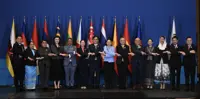
One area still taking shape is ROK’s Asean policy. Lee visited Malaysia for the Asean-related Summits in October 2025, Singapore and the Philippines in March 2026, and Vietnam in April 2026. But besides the Malaysia trip, these visits have been primarily bilateral, and the Lee administration has yet to articulate a clear policy towards Asean as a grouping or South-East Asia as a region.
By comparison, predecessors Moon Jae-in and Yoon Suk-yeol each launched dedicated regional initiatives – the New Southern Policy and the Korea-Asean Solidarity Initiative, respectively.
The Lee administration may be understandably reluctant to introduce yet another policy label, wary of reinforcing the perception that Korea’s Asean policy shifts with each presidency.
Even so, there remains a clear opening to clarify where Asean and the Asean Plus architecture fits within its pragmatic diplomacy.
There are compelling reasons why Asean and Asean Plus should be made core elements of ROK’s pragmatic diplomacy. The first is the proven record of the decades-long ROK-Asean partnership in institutionalising East Asian cooperation.
Korea was a founding member of the Asean Regional Forum (1994), Asean Plus Three (APT, 1997), East Asia Summit (EAS, 2005), and Asean Defence Ministers’ Meeting-Plus (2010).
President Kim Dae-jung’s 1998 initiative led to the East Asia Vision Group, which converged with Malaysia’s efforts to institutionalise East Asia-wide integration, laying the groundwork for the EAS. The TCS (2011, Trilateral Cooperation Secretariat) and RCEP (2022, Regional Comprehensive Economic Partnership) would not have been possible without continuous APT-anchored collaboration.
Second, the existing Asean Plus mechanisms provide readily available avenues for Korea to forge multi-layered cooperation. The ROK-Asean Comprehensive Strategic Partnership (CSP) in 2024 provides a ready foundation that can evolve into a de facto alignment without requiring either side to abandon its existing postures.
Third, a deepened ROK-Asean partnership can generate catalytic impacts for Korea’s alliance-plus strategy by shaping the shared geostrategic environment, supplementing existing collaborations with Washington, Tokyo, Canberra and European partners, and stimulating niche-based partnerships globally that strengthen resilience and broaden strategic fallback options.
To translate these imperatives into action, three complementary approaches are needed.
At the regional multilateral level, Korea should leverage the Asean Plus architecture, particularly the APT, to deepen cooperation in sectors rendered newly critical by fracturing supply chains and the weaponisation of economic interdependence.
At the sub-regional level, Korea should deepen support for indigenous mini-lateral mechanisms in South-East Asia. Beyond the Brunei-Indonesia-Malaysia-Philippines East Asean Growth Area (BIMP-EAGA)-ROK cooperation framework, Seoul should extend meaningful support to the Malacca Strait Patrol and the Trilateral Cooperative Arrangement, which address maritime security challenges in the Strait of Malacca through which a substantial share of Korea’s energy imports and trade flows pass.
At the bilateral level, Korea should deepen partnerships with individual Asean members. Malaysia stands out as a particularly compelling partner. Its 2019 Defence White Paper articulates Malaysia’s role as a “bridging linchpin” connecting the Indian Ocean and Pacific Ocean regions. Korea and Malaysia already share credible partnerships across trade and investment, defence industry, defence and non-traditional security, energy, education and the halal economy.
Ongoing disruptions are further opening up collaboration in complementary emerging sectors: semiconductors, data centres, critical minerals, rail technology, artificial intelligence and advanced industries, and smart farming.
Elevating these ties into a more comprehensive strategic partnership would generate catalytic effects through Asean and the wider Indo-Pacific.
DR KUIK CHENG-CHWEE
Professor of International Relations
Institute of Malaysian and International Studies
Universiti Kebangsaan Malaysia
The writer is a non-resident Senior Fellow at the Asan Institute for Policy Studies (Seoul) and at the Foreign Policy Institute, Paul H. Nitze School of Advanced International Studies, Johns Hopkins University, Washington DC.
Already a subscriber? Log in
Get 20% OFF The Star Digital Access
Cancel anytime. Ad-free. Unlimited access with perks.