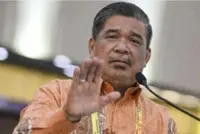
The six state elections revealed a nation still deeply divided and in need of a new narrative.
I BELIEVE that the turning point of this nation is and always has been the universities. We are where we are now – after intense elections in six states – because of the academicians and the graduates produced over the years by our tertiary institutions. And where we are is as divided as we’ve ever been.
As with most elections, there were basically two sides; one side was chosen by Malaysians of all kinds, people of different races and faiths; the other was chosen by those who are of one race and one faith only.

Some blame the division on the rise of vernacular schools. Others point to the proliferation of religious schools with a curriculum that caters only to a single race and religion. Whatever the reason, there seems less and less genuine interest in bridging the deepening divide.
The current federal government inherited a nation that had become increasingly disunited over the last five decades. It seemed like the mantra of the post-1980s was to divide the country strategically into one major race against all other races. This was to ensure a tight grip on one major race and create a simple narrative – that all who are different are the bogeyman.
While this was going on, the Malaysians across the South China Sea were getting closer and closer to separating from a country that had proposed an equal partnership but hadn’t delivered on it.
These two phenomena, one of extremism in race and religious narratives and the other concerning unequal partners do not bode well for Malaysia. Or perhaps ... it does? Could there possibly be a silver lining in these two dispiriting scenarios?
Well, to begin with, and as much as it hurts now, what is happening to Malaysia is a growth process that many will say is wholly natural.
All of us grew up with historical, religious and social baggage inherited from our parents, communities, friends, and yes, from politicians too. And tellingly, most of us went through an education system that makes us good workers but lousy thinkers – and that sharpens mistrust among the different races.
That is my main issue with our education philosophy and infrastructure. There is no one thing, event or person to blame but our own selves and the education constructs we are willing to live with.
Our political construct is simply to jaga (look after) your race and religion, jaga your periuk nasi (rice bowl), and work with a political partner until you find a better one that can give you your nasi, your heritage, and your God. That’s it.
Our education does not teach us about the humaneness of humanity, the ingenuity of human minds, and the ability to work together across tribal divides for a common purpose.
Historian Dr Yuval Noah Harari taught me in his books Sapiens: A Brief History Of Humankind (2011) and Homo Deus: A Brief History Of Tomorrow (2015) that only humans, no other animal, can work together across tribal divides if they are presented with a common and inspiring story about a good life.
In Malaysia, educators in the universities would not know what a good life is even if it hits them in the face. They do not read about different ideas, different lives, and different types of spirituality. Our education system also teaches the senselessness of “completion” in education.
That is, once you finish university – or religious school – there is no more to learn.
But then, many of us are “comfortable” people. One particular race expects the government to provide education and job security and listens to the clerics on how to reach heaven. Such people do not need their brains to think. What for? Ikut saja lah.
I have been involved in universities for almost 40 years now. Believe me when I say the tragedy of Malaysia starts right there. Schools do not hold the minds of the young the way universities can.
For me, when the university ceases to create the narrative of a good life that rises above our baggage of history, tradition and perceptions, there will be no end to the type of decisions that were made on Saturday during the polls.
We will forever be a divided nation until perhaps another virus threatens our comfortable lives.
So what is the silver lining in these two situations?
Well, to me, the unity government must now forge stronger ties with Sabah and Sarawak, as the people there are, I believe, not divided as those of us living on the peninsula.
The unity government should no longer dance to the music of the group that votes for one race over all other considerations. Malaysia has 40 ethnic groups, why be frightened of one race?
I would no longer waste my time with these people. I would like to rebuild this country with people who believe that we are a nation of many cultures, races and faiths.
It is time that we isolate those who would use race and religion to divide us and offer a new generation of university graduates a new Malaysia evolving from an education construct – one that looks beyond race and religion.
We can change only if we re-prioritise our vision to focus on a knowledge-based society and not a tradition-based one.
This requires a total paradigm shift in thinking, in education, in leadership, or else we will stop celebrating the Malaysia that was formed on Sept 16, 1963, and be fated to remember only the lone entity called Malaya that emerged on Aug 31, 1957.
Prof Dr Mohd Tajuddin Mohd Rasdi is Professor of Architecture at the Tan Sri Omar Centre for Science, Technology and Innovation Policy Studies at UCSI University. The views expressed here are entirely the writer’s own.
Already a subscriber? Log in
Get 20% OFF The Star Digital Access
Cancel anytime. Ad-free. Unlimited access with perks.