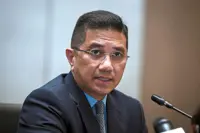
IN the ever-changing media landscape where one in 10 Gen Z sports fans use social media to consume content, the best minds representing industry leaders, including broadcasters, professional executives and marketers recently convened in Kuala Lumpur to deliberate on the evolution of the sports industry.
Organised by the Asia Pacific Broadcasting Union (ABU), the Sports Media Conference which used to be invitation based, was opened to media practitioners and key industry players over a three-day period throughout last week.

In his welcoming speech, ABU secretary-general, Ahmad Nadeem, said ABU were bidding to rebrand the conference into one of the most sought-after in Asia.
Much like European-based Sportel, ABU have the potential to deliver a perfect platform for key stakeholders of the international sports media and technology markets to come together and shape the future of the industry.
ABU after all are the biggest broadcasting union in the world, with a potential reach of three billion people, thanks to their 240 members in 65 countries covering eight regions, namely Pacific, Asia (North, South, Central and South East), Middle East, North Africa and North America.
A little-known fact is that ABU, with their headquarters in Kuala Lumpur, have always played a significant role in bringing major sports events to Malaysia’s living room.
They have assisted through their representatives in Spain for RTM to showcase four World Cup matches.
For the Mexico edition four years later, the government, through the Treasury, approved a hefty budget as RTM showed all 52 matches, as the expenses were offset by a tobacco brand as the main advertiser.
ABU were on hand to address technical issues including getting the satellite signals out of Mexico directly to their base in Hong Kong.
Within the next three months, two showpiece sporting events – the European Championship or Euro 2024 and the Paris Olympics will take place and the utmost on the Malaysia’s pool of broadcasters’ minds is the cost of purchasing the rights.
While ABU are distributing the broadcast rights to the Games to five territories – Afghanistan, Brunei, Cambodia, Laos and Timor Leste, Malaysia has yet to confirm their commitment.
“Acquiring sports media rights is complex and costly,” said Nadeem.
“It also means competing with commercial entities with unrestricted financial resources. For some of our members – this is something beyond their resources,” he said.
In 2015, the International Olympic Committee (IOC) announced that Dentsu Inc (Dentsu) had been awarded the exclusive broadcast rights in 22 countries in Asia for the Olympic Winter Games PyeongChang 2018, and the Olympic Games editions in 2022 and 2024.
This allowed Dentsu to continue as the exclusive gatekeeper for broadcast rights in most part of Asia. While Hong Kong has announced that their citizens would be able to watch the Paris Games on free-to-air television, sports fans in Malaysia are anticipating a similar outcome come July.
Malaysian viewers continue to rely on RTM as the sole free-to-air channel with the resources to buy the rights from Dentsu, whereas the other two giants – Astro Group and Telekom Malaysia – provide paid over the top (OTT) streaming services.
With Astro Group expected to purchase the rights for pay TV, the younger generation will be able to watch their Malaysian sporting idols such as Azizulhasni Awang, Lee Zii Jia and Aaron Chia-Soh Wooi Yik on all streaming platforms.
However, non-Astro or UnifiTV subscribers are quietly hoping for the government to follow their Hong Kong’s counterparts.
After all, a Malaysian athlete may win the gold medal that has eluded the country since 1956.
Can our broadcasters take the risk of not showing the historic occasion live – on free-to-air or otherwise?
Already a subscriber? Log in
Get 20% OFF The Star Digital Access
Cancel anytime. Ad-free. Unlimited access with perks.