New transit plans need last-kilometre connectivity to match bike convenience
The story of the kapcai in Malaysia began in George Town, Penang, offering a nugget of history that planners may find useful as they shape the state’s transport future.
The nickname is a perfect specimen of how Malaysians love to mash up languages to create new words.
“Kap”, spelt Malay-style, came from “Cub”, while “cai” is Cantonese for something small or endearing.
The closest English translation would be “Little Cub”.
The Honda Super Cub was first sold in Penang, in what is now The Star’s office in Jalan Masjid Kapitan Keling, 13 years before this newspaper was born.
The late tycoon Tan Sri Loh Boon Siew saw the Super Cub during a trip to Japan and realised how well it suited Penang.
He imported 50 units and opened a showroom in the building in 1958.
Thus began the kapcai craze that spread across the country from the heart of George Town’s heritage enclave.
A 2004 Universiti Sains Malaysia transport study found Penang had 0.57 motorcycles per person, more than twice the national rate of 0.26.
In 2005, it recorded 864,587 motorcycles versus 630,562 cars.
Penang Road Transport Department director Zulkifly Ismail said the state had 1,525,942 motorcycles and 1,145,295 cars as of October 2024.
And why not? Penang is the second-smallest state in Malaysia, yet its population density is close to Kuala Lumpur’s.
It inherited narrow roads first built for bullock carts.
The love for the kapcai grew on its own.
There was no consortium in 1958 with a multi-million ringgit marketing budget, no government campaign urging people to use motorcycles and no special lanes waiting for them.
Penang folk simply chose what worked.
That history matters as planners prepare for public transport on rails in Penang.
The light rail transit (LRT) will not only compete with cars; it must also compete with a cheap and quick machine that can slip through traffic, park almost anywhere and take riders from door to door.
A train may cover the main part of a journey quickly but the harder part comes before and after train trips.
How will commuters reach the station? What happens when they get off?
The last kilometre can make or break a rail system.
People will not leave their vehicles at home if they must walk beside heavy traffic, cross wide roads without shade or negotiate with broken pavements blocked by poles, drains or trees.
Walking 500m might not be hard. Walking 500m under the sun on a lousy pavement is.
Good walkways need shade, safe crossings, smooth paths and something worth looking at along the way.
As for feeder buses, they must be frequent enough to trust, while on-demand vans must not turn what is 2km from point A to B into a winding half-hour journey.
Penang folk embraced the kapcai because it solved problems without asking them to change first.
Future public transport plans may have to do the same.
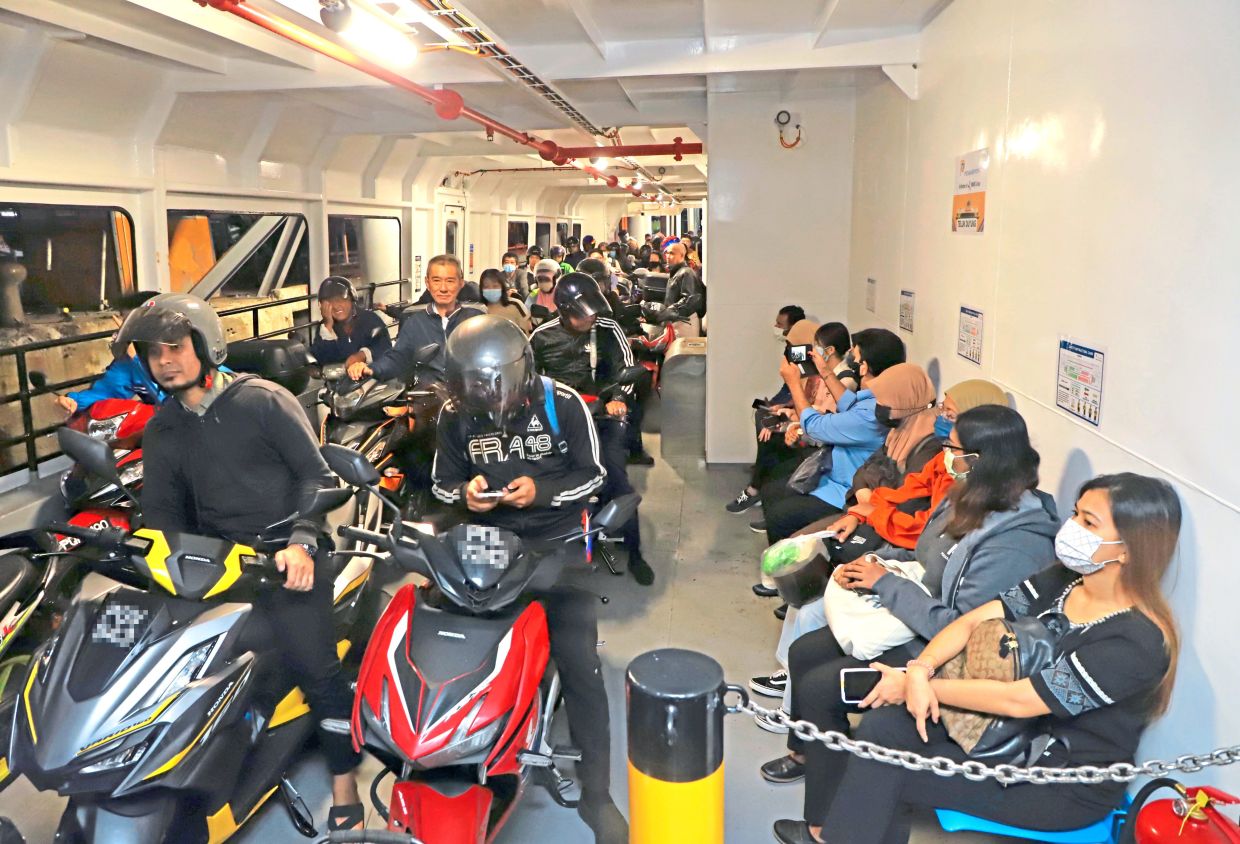
Who knows? Penang ferries allow motorcyclists to cross the sea.
Maybe someday, motorcyclists can ride in and out of trains and solve the last-kilometre problem themselves.
Already a subscriber? Log in
Get 20% OFF The Star Digital Access
Cancel anytime. Ad-free. Unlimited access with perks.