FATIGUE and irregular sleeping hours are taking a toll on me. It’s a real relief that the World Cup is finally coming to end, with the final in the wee hours of tomorrow morning.

Election campaigns never seem to cease and many Malaysians are just tired.
Yes, we are often reminded that we have to exercise our democratic duty but, unfortunately, common sense is missing among some politicians. Too much of anything is bad.
There was once a quaint belief that elections were something Malaysia had every few years. It was a charming belief. Today, though, elections are held every few months.
The modern elected representative has also evolved. Once expected to legislate, scrutinise policies, and solve constituents’ problems, he has now become an incessant campaigner, a busy salesman.
If you take the trouble to watch the Dewan Rakyat proceedings on television, you will often see many empty seats.
But those missing MPs would never be absent from the campaign trail. I suspect our politicians get a special kind of high when on walkabouts or at ceramah.
They have become political athletes with a unique skill set: smiling for the 87th selfie of the day while simultaneously promising lower prices, higher incomes, better roads, faster Internet and, if time permits, world peace.
It’s the only time that all languages are suddenly used. Even the right-wing Malay politicians insist that campaign material must be in all languages.
They even pretend to know greetings in Chinese and Indian languages. They also bring along some obscure relatives who have Chinese blood or are from a vernacular school.
During this silly season, as we journalists call elections, governing, unfortunately, just gets in the way.
Parliament may debate laws, but campaign trails debate everything else. Every microphone becomes a portal through which common sense briefly leaves the building.
Speeches grow increasingly colourful, metaphors increasingly adventurous, and arithmetic increasingly optional. It’s occasionally quite stupid, let’s be blunt.
The campaign trail has become a magical realm where every sentence begins with confidence and ends somewhere completely unrelated. Political rallies produce so many memorable quotes, but fact-checkers need overtime pay and linguists deserve hazard allowances to ensure that anything that sees print does not end up in court.
Perhaps it is inevitable. Human beings are not designed to spend months talking continuously into microphones under hot lights while trying to sound spontaneous.
There is plenty of well- researched evidence to show that the attention span of audiences is less than 15 minutes. That’s it. The brain then waves a tiny white flag.
This explains why campaign speeches often resemble a group project where nobody reads the assignment.
Some candidates promise impossible timelines. Others invent problems only they can solve. A few accidentally argue against the very policies they supported just last Tuesday.
By the final week, everyone appears to be campaigning against everyone else, including themselves. One week, they are attacking each other incessantly on state policies and the next week, they are defending each other on federal policies.
One cannot entirely blame them and neither can we blame the voters, who have become increasingly confused.
It must be tough for politicians, too, spending every waking hour greeting strangers, shaking thousands of hands, eating six dinners a night, attending forums, recording videos, posting on social media, and remembering which constituency they’re in before beginning their speech.
Under those conditions, anyone might eventually thank the wrong town, endorse the wrong slogan, or accidentally declare a traffic roundabout a national monument.
Meanwhile, voters develop an equally fascinating condition known as Campaign Fatigue Syndrome.
Symptoms include involuntarily tuning out whenever someone says “My fellow Malaysians...”, instinctively avoiding streets decorated with too many flags, and believing that every free tote bag contains another political leaflet.
By the third week, voters can identify party jingles faster than the national anthem. By the fourth week, even the flags look exhausted.
The greatest irony is that the people who most need time to work are busy doing other things, no thanks to politicians.
Road repairs wait while politicians explain why roads should be repaired. Committee meetings are postponed because everyone is attending another ceramah explaining the importance of effective governance.
Policy papers gather dust while campaign manifestos are published on glossy paper, with dramatic music and drone photography.
One wonders whether Malaysia should consider a radical innovation: allowing elected representatives to spend more time being representatives than candidates.
Imagine, MPs would actually be discussing legislation instead of rehearsing slogans. Assemblymen would be attending committee meetings without checking whether there is a by-election somewhere within driving distance.
And imagine press conferences where every answer is shorter than the question.
Campaigns, of course, are essential to democracy. Voters deserve choices, spirited debates, and the chance to scrutinise. Elections should be lively because democracy itself is alive.
But there is a difference between healthy competition and permanent, non-stop performance. At some point, the microphones need to be switched off so the spreadsheets can be opened.
Welcome to Malaysia. Where, I am beginning to believe, elections are part of the Visit Malaysia 2026/2027 campaign and Chinese mainland tourists are targeted for this circus.
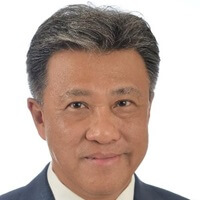
National Journalism Laureate Datuk Seri Wong Chun Wai is the chairman of Bernama. The views expressed here are solely the writer’s own.
Already a subscriber? Log in
Get 20% OFF The Star Digital Access
Cancel anytime. Ad-free. Unlimited access with perks.