Controversy over Melaka’s reps


It is now 57 years too late to employ Section 21(1)(b) of the Eighth Schedule to legislate for nominated assembly members.

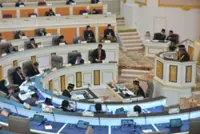
ON July 14, the state assembly of Melaka passed a controversial “State Constitution (Amendment) Bill 2026” to allow the state governor to appoint up to seven unelected, nominated assemblymen to the assembly.

This Bill is partly modelled on Article 45(1)(b) of the Federal Constitution permitting the Yang di-Pertuan Agong to appoint 40 individuals with expertise, experience and representative capacity to play a constructive role in the legislative process of the Senate/Dewan Negara.

Despite this noble intention, the Bill has raised much controversy. It led Pakatan Harapan to withdraw from the state administration in protest of the Amendment Bill’s possible unconstitutionality.

The issue of unconstitutionality is indeed quite complex and needs close scrutiny.

Constitutional supremacy: To begin with, let us note that though all of our 13 states have their own state constitutions, it is the Federal Constitution of 1957/1963 that is our supreme law.

The Federal Constitution’s supremacy is based on Articles 4(1) and 162(6) – any law, federal or state, pre-Merdeka or post-­Merdeka, that is inconsistent with the Federal Constitution is void to the extent of the inconsistency.

Opponents of the Melaka Amendment Bill, which establishes appointed members, are rightly raising the following arguments:

Essential provisions: The Federal Constitution contains an Eighth Schedule titled “Provisions to be Inserted in State Consti­tutions”.

All state constitutions are required by law to incorporate these “essential provisions” into their state fabric.

Section 4(1) of the Eighth Schedule is on the “Composition of Legislative Assembly”. Section 4(1) clearly states that “The Legislative Assembly shall consist of such number of elected members as the (State) Legislature may by law provide.”

Elective nature: The elective nature of the state assembly is re-emphasised in the definition of “Legislative Assembly” in Article 160(2) of the Federal Constitution. Additionally, Section 19(5)(b) of the Eighth Schedule provides for certain amendments that can only be made after the Assembly has been elected in accordance with Schedule 8, Section 4(1).

Article 75: Article 75 of the Federal Constitution is abundantly clear that if any state law is inconsistent with a federal law, the federal law shall prevail.

Proponents reply: Proponents of the Bill point to Sections 21(1)(b) and 21(2) of the Eighth Schedule, which clearly mention the existence of “such number of other members being less than the number of elected members, as the Ruler (or Governor) may appoint.”

Non-elected members are clearly in contemplation. The precedent of the Sabah state assembly’s six nominated members provides additional support for this law on non-elected, nominated assemblymen.

Article 71(5): Article 71(5) provides that under Schedule 8, Section 21(1), a state constitution may be modified to have elected as well as appointed members.

Rebuttal: In turn, the opponents of the Bill are questioning the legal relevance today of Sections 21(1)(b) and 21(2) of the Eighth Schedule. These provisions are “Temporary Provisions” in Part II of the Eighth Schedule. They had a sunset clause and an expiry period. They were relevant only during the first (1959) and second (1964) assembly of the state legislatures.

Under Article 71(5) of the Federal Constitution, the fully elected nature of a legislative assembly may be modified but only within the life of the first and second state assemblies.

In the case of Melaka, the first assembly met from 1959 to 1964; the second from 1964 to 1969. In 1969, the sunset clause came alive. The third assembly from 1974 onwards followed or should have followed the fully elected design of the Federal Constitution’s Eighth Schedule, Section 4(1).

This means it is now too late by 57 years to employ sections 21(1)(b) and 21(2) to legislate for nominated or non-elected members. Section 4 of the Eighth Schedule (on elected members) could have been amended within a prescribed time frame – the time of the first assembly and the time till the dissolution of the second assembly.

In any case, imitating the Dewan Negara and using Article 45(1)(b) as a mirror or model for the Melaka assembly is not justified because the Dewan Negara takes no part in the choice of the prime minister or in a possible vote of no confidence against the government.

In contrast, nominated members in state assemblies with no electoral legitimacy can take part in a vote of confidence or no-confidence against the chief minister or premier.

Conclusion: In sum, under our Federal Constitution, the principle of a fully elected state legislature applies to all the states. Temporary exceptions were allowed to all states only for their first two assemblies. From the third assembly onwards, the provision for nominated members expired under Article 71(5).

The overall constitutional scheme for state assemblies is to have a fully elected, unicameral, representative state legislature. However, exceptions were provided for the life of the first (1959 to 1964) and the second (1964 to 1969) state assemblies during which period, nominated members, being fewer than the number of elected members, were allowed by Article 71(5).

To resolve this controversy, an application for judicial review of the Melaka Bill is, therefore, highly likely. Alternatively, the government can invoke the Advisory Jurisdiction of the Federal Court under Article 130 to arrive at a less adversarial solution.

Emeritus Prof Datuk Dr Shad Saleem Faruqi is senior research fellow at Universiti Malaya. The views expressed here are the writer’s own.

Get 20% OFF The Star Digital Access

Monthly Plan

RM 13.90/month

RM 11.12/month

Billed as RM 11.12 for the 1st month, RM 13.90 thereafter.

Best Value

Annual Plan

RM 12.33/month

RM 9.87/month

Billed as RM 118.40 for the 1st year, RM 148 thereafter.

Follow us on our official WhatsApp channel for breaking news alerts and key updates!

Next In Columnists

China’s Global Development Initiative and Malaysia’s rail transformation
Many Israelis' dual citizenship makes entry ban harder to enforce
Ice, ice, baby: Is freezing the answer to your biological clock?
Negri Sembilan: Testing a new political equation
Campaign season: The never-ending national sport
Asean meets in an uncertain world
The contrasting tales of Rosle and Scaloni
Making mental health a workplace priority
Malay tsunami forming in Negri Sembilan?
Hadi's jubilation over victories in Johor is a warning to Negri Sembilan and also the two states in Borneo

Others Also Read