Culture of non-compliance a big factor in lorry crashes


Filepic

WITHIN a week, Malaysia has witnessed harrowing incidents involving commercial vehicles, each more heartbreaking than the last. The first, a tragic collision along the Gerik-Jeli Highway saw a lorry plough into a baby elephant, killing the innocent creature on the spot. The second, and far graver incident, involved a gravel-laden lorry colliding with a Federal Reserve Unit (FRU) truck in Teluk Intan, resulting in the devastating death of nine police personnel.

These incidents have once again thrust the spotlight on the safety and regulatory compliance of our commercial transport sector.

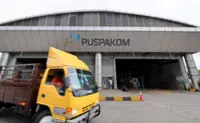
It is not for lack of regulation that these events recur. Malaysia has, over the years, established a framework of legal instruments and enforcement mechanisms. From mandatory Puspakom inspections, ICOP (Industry Code of Practice) standards, and GPS installation in all commercial vehicles to stringent penalties under the Road Transport Act 1987 and the Land Public Transport Act 2010, our legislative infrastructure is in place.

Yet, we are forced to ask: If the laws exist, why do lives continue to be lost?

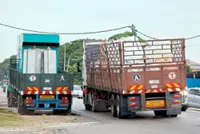
Police reports on various commercial vehicle crashes have consistently highlighted recurring factors like unsecured or hazardous loads, brake failure, and poor vehicle maintenance.

Human elements, too, are prominent – driver fatigue, distraction, and violations of duty-hour regulations. Under Rule 10B of the Road Traffic Rules 1959, lorry and bus drivers are restricted to a maximum of four continuous driving hours, breaks included. However, enforcement and observance of this rule remain highly questionable.

The issue of overloading, a chronic and well-documented malpractice, reflects similar defiance. Operators of lorries overloaded by more than 35% may face fines up to RM500,000, a two-year jail sentence, or both. For repeat offenders or those breaching the 70% overloading threshold, vehicle seizure is even possible under Section 80 of the Land Public Transport Act.

With the High-Speed Weigh-in-Motion (HS-WIM) technology being introduced as a solution, hopes are high, but technology cannot compensate for a lack of systemic will.

The underlying current, then, must be interrogated beyond just regulatory gaps. Are operators choosing to ignore these obligations due to ignorance, or is it economic desperation that drives them to sideline compliance?

Many SMEs in the logistics industry operate on razor-thin margins. The firefighting nature of daily operations, especially in a fragmented and hyper-competitive market, often means safety is deprioritised.

Some may argue that the swelling number of commercial vehicles outpaces the government’s capacity for consistent enforcement, particularly in semi-rural routes and smaller towns.

But this cannot become an excuse. The root of the problem lies not solely in regulatory inadequacy but also in the deep-seated culture of non-compliance and the economic precarity of operators who see regulations as a luxury rather than a necessity.

Moreover, there exists a persistent disconnect between policy intent and operational reality. For every lorry that is properly inspected, there may be several others bypassing oversight through loopholes, collusion or sheer neglect.

If Malaysia is to seriously tackle the plague of commercial vehicle crashes, we must shift from reactive enforcement to proactive transformation. This includes greater digitalisation of vehicle inspection records, real-time enforcement supported by AI and telematics, and, above all, cultivating a compliance culture from the ground up.

Incentives for safety investments among fleet operators, particularly smaller players, could drive more sustainable change compared to imposing punitive measures alone.

The pain of losing lives, human and animal alike, is immeasurable. But the greater tragedy is if we continue to accept these incidents as inevitable rather than the consequence of avoidable neglect.

The roads of Malaysia demand accountability not just from our regulators, but from every player in the transport ecosystem as well.

PARIMALA PONNUSAMY

Lorry System Sdn Bhd

Shah Alam

(The writer is an academic researcher and industry practitioner involved in Malaysia’s logistics and transport technology sector.)

Get 20% OFF The Star Digital Access

Monthly Plan

RM 13.90/month

RM 11.12/month

Billed as RM 11.12 for the 1st month, RM 13.90 thereafter.

Best Value

Annual Plan

RM 12.33/month

RM 9.87/month

Billed as RM 118.40 for the 1st year, RM 148 thereafter.

Follow us on our official WhatsApp channel for breaking news alerts and key updates!

Next In Letters

Anthony Loke must explain alleged RM178mil VEP contract award to Nasir Baki's company
Three warnings in 30 days: The balance-sheet risk stewardship keeps missing
Five-year sentence reflects failure of healthcare, protection, and compassion
When trees turn deadly: Rethinking urban tree management
Lonely journey of raising a neurodivergent child
Strengthening the Road Transport Act the right way
Growing resilience through science
KWAP's eFishery losses: The buck stops at the Finance Ministry
The magic number could well be 65, not 36, in Negri Sembilan
Judge us by financial health, not age

Others Also Read