
US President Donald Trump on Tuesday insisted that Iran has agreed to “highest level” nuclear inspections even as Iranian officials disputed his claim, exposing how much remains contested even with a tentative agreement in place.
“Despite their protestations and false statements to the contrary ... Iran has fully and completely agreed to highest level Nuclear inspections long into the future (Infinity!!!),” Trump wrote on social media on Tuesday morning.
“This will insure ‘Nuclear Honesty.’ If they did not agree to this, there would be no further negotiations!”
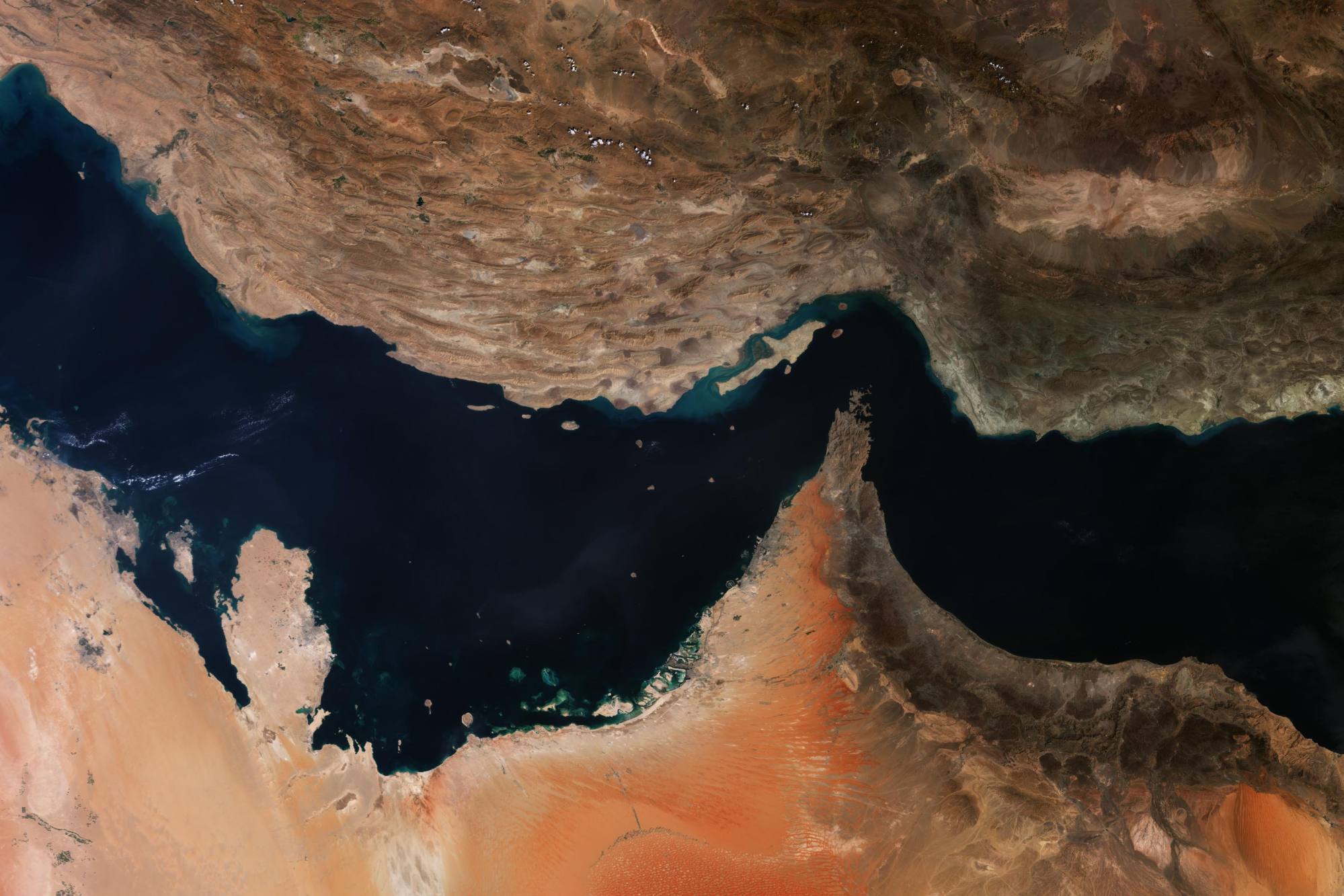
Trump said he had agreed to keep the strategic Strait of Hormuz open based on this agreement but could reinstate the US naval blockade, even though it was “at this point, highly unlikely”.
His comments came after Iran’s ambassador to the United Nations Ali Bahreini told reporters that Tehran has yet to agree to the deployment of inspectors from the International Atomic Energy Agency (IAEA) to monitor its nuclear activities. He said a working group that has yet to be convened would discuss whether inspectors would travel to Iran.
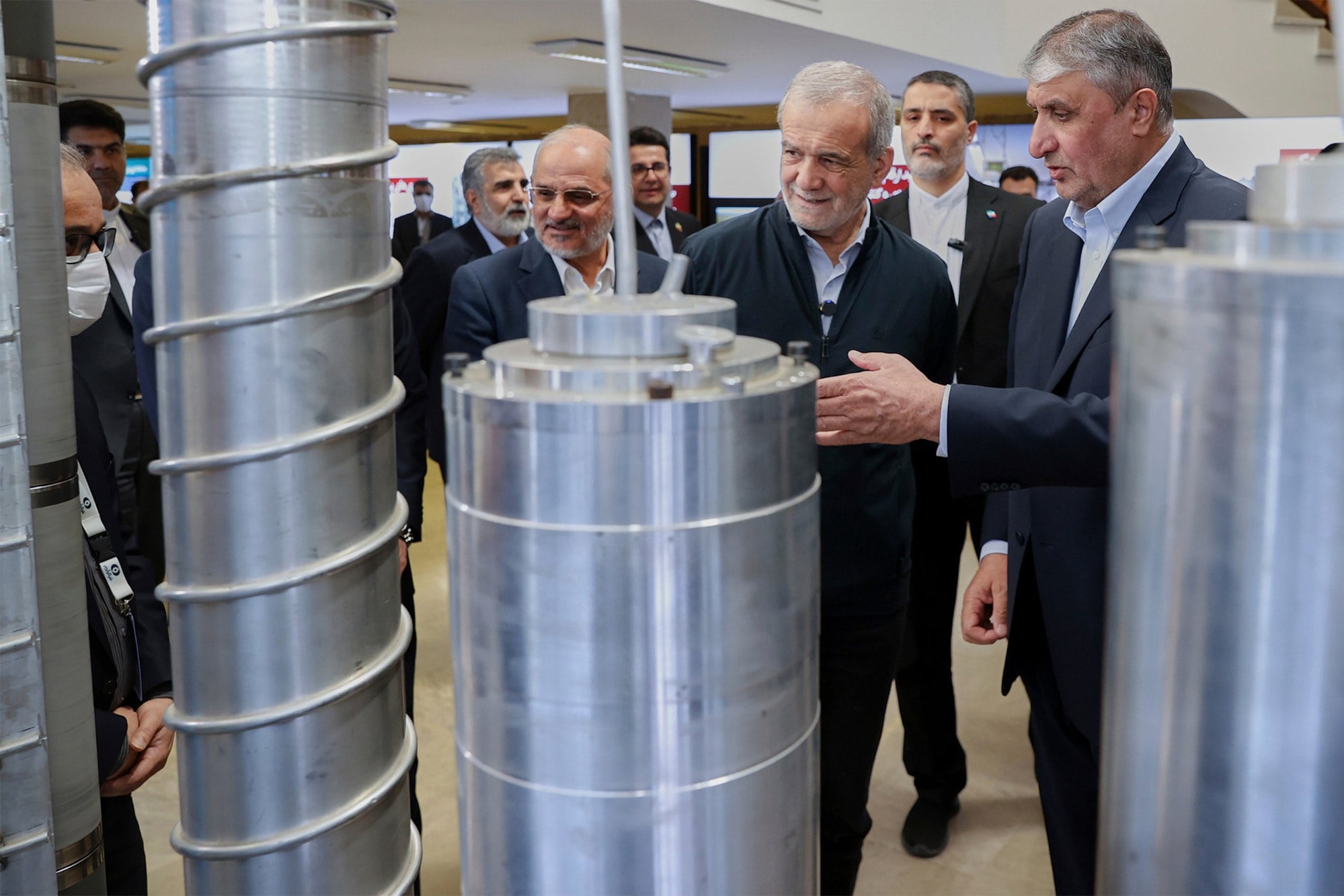
Weighing in on Wednesday during a visit to Japan, IAEA chief Rafael Mariano Grossi said inspectors would visit Iran’s nuclear sites, as it was a key component in the interim US-Iran deal. “Whether this happens the day after tomorrow or in one week or in 10 days, it’s important, but not essential. This is going to happen.”
US Vice-President J.D. Vance on Monday said Iran would allow the IAEA into the country but that no timetable had yet been established.
Meanwhile, the administration faced a political challenge in Congress. On Tuesday, the US Senate, in a sharp rebuke to Trump, approved a House-passed resolution directing the president to withdraw US forces from hostilities against Iran on its 10th attempt. Its passage took place after four Republican senators broke ranks and voted to undercut Trump’s authority as commander-in-chief.
Trump cannot veto it. But given a 1983 Supreme Court ruling, it is effectively non-binding and the president can ignore it unless Congress votes to withhold defence monies.
Marco Rubio, the US secretary of state, also brushed off Iran’s denial on Tuesday, telling reporters he did not understand why Iranian officials “have to say the things they say”.
“We know what they agreed to do, and now they’ll either do it or they won’t. And if they do, the process moves forward. And if they don’t, the president will have some decisions to make,” he said.
The clashing accounts from Washington and Tehran point to how each side was interpreting the week-old agreement on its own terms, with looming questions over nuclear inspections, sanctions relief and control of the Strait of Hormuz.
Trump also said in his social media post that the funds the US would be releasing to Iran would be used to buy food and medical supplies including corn, wheat and soybeans from American farmers.
“These are things that are desperately needed by Iran. This is a humanitarian crisis, and I feel it is necessary to help, NOW, before it is too late. Talks are going well!” he said.
Analysts said the squabbling over who agreed to what was likely to continue for the foreseeable future given the very different audiences the two sides were addressing.
Under the deal, signed last week, Iran pledged not to acquire or develop nuclear weapons, with the two sides agreeing to “resolve the disposition of stockpiled enriched material”.
Washington would also release Iran’s frozen funds and assets, which critics of the vaguely worded agreement argued Tehran could use to rebuild its armed forces and sustain its support of militant groups such as Hezbollah.
Iranian media reported, citing Deputy Foreign Minister Kazem Gharibabadi, that US$12 billion of its frozen funds were set to be released as part of ongoing talks with the US, which would be broken down into two instalments of US$6 billion each.
The US has yet to confirm how much Tehran would get in unfrozen funds.
Vance last week sought to frame the agreement as a victory of the US, pushing back against suggestions that Iran came out ahead in the deal.
“We have all the cards. If the Iranians want the benefits of the bargain, they have to give us the things that are necessary to get those benefits,” he said.
A fundamental structural problem as the two sides circle the memorandum of understanding (MOU) with conflicting narratives, as seen by the bickering over inspections, is the markedly different constituencies each is appealing to, said Ali Vaez, Iran project director with the International Crisis Group.
“The imperatives of domestic politics in Tehran and Washington are completely incompatible,” he said. “So whatever you say, your core points at home, by definition is going to burn the other side. And then they would counter the narrative in a way that will create problems for you at home.”
Iran is keen to show that it has protected Iranian sovereignty despite being pummelled by the US, the most powerful military in the world, and by Israel, the world’s most powerful intelligence nation.
And the Trump administration wants to prove it has accomplished something more than the Obama administration achieved with the Joint Comprehensive Plan of Action (JCPOA) that Trump ripped up, with a focus on ending Tehran’s nuclear weapons programme.
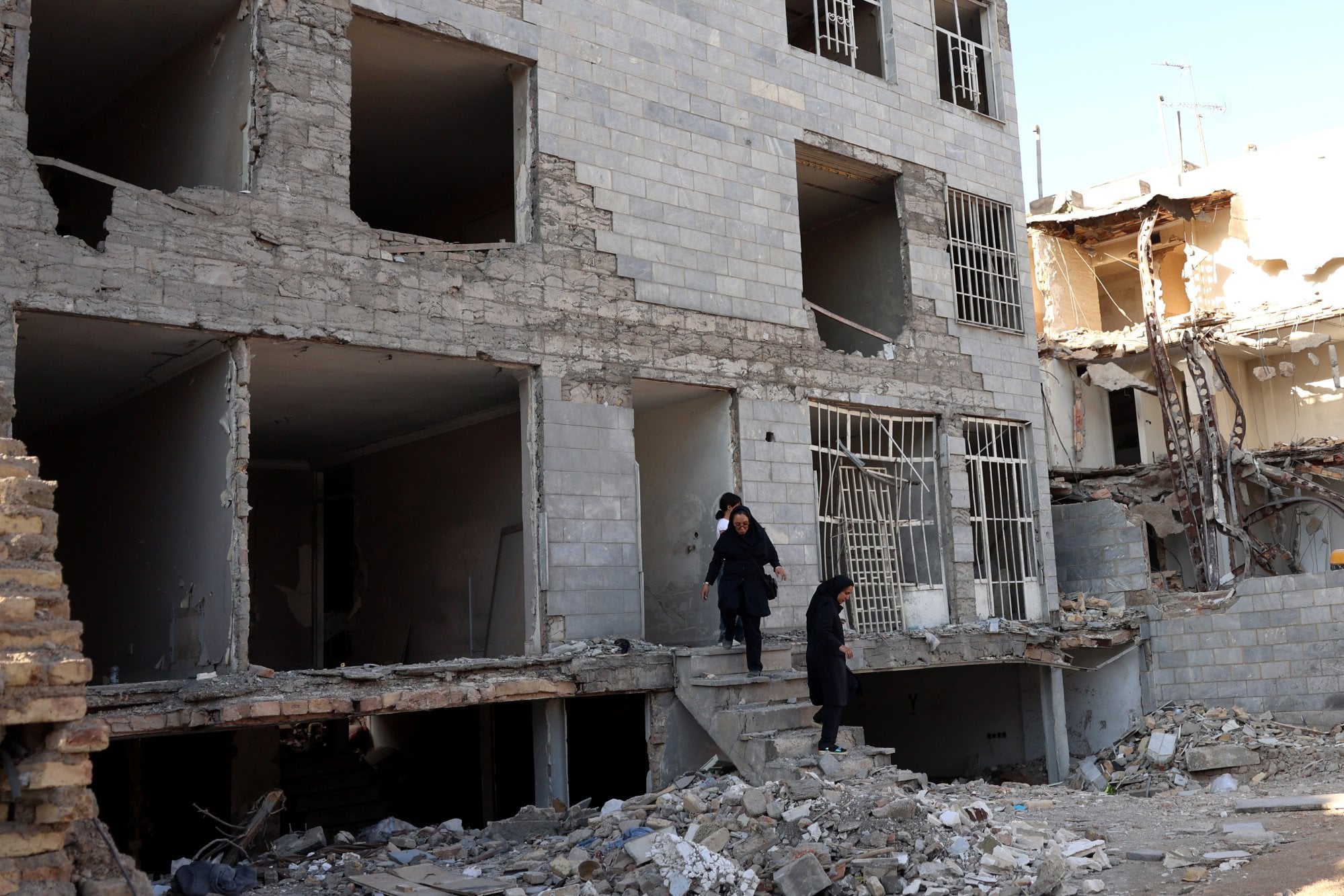
While this is hardly a new US demand, what is fundamentally different relative to the JCPOA, however, is that Iran’s once-robust nuclear fuel enrichment programme has been badly degraded by the US and Israeli attacks. And Tehran desperately needs funds to reboot its economy to safeguard its regime and catch up with its more prosperous neighbours.
Iran has by some estimates suffered nearly US$2 trillion in damage from the war, Vaez said.
“Some people are portraying this as totally meaningless,” he added on Tuesday at a forum sponsored by Foreign Policy magazine. “I do see value in ... the possibility of trying to get some kind of a nuclear deal that is potentially even stronger than what the Obama administration was able to do.”
“And it’s simply because of the fact that reality on the ground is different. This is not the nuclear programme that the Obama administration was dealing with at the time.”
A looming question in Washington, meanwhile, is what happens after the 60-day period outlined in last week’s deal. After that, Congress would need to extend, reject or punt on sanctions relief for Iran, just as lawmakers get increasingly squirrelly about publicly supporting Iran so close to the November midterm election.
“In Congress, Republican dissent has been kept to a dull roar, largely because most members are out of town,” said Henrietta Treyz, director of economic policy with Veda Partners, a consultancy.
“But the path ahead is going to be politically painful for the White House and ultimately for the Republicans who will need to support the MOU and final trade deal Trump hopes to negotiate with the Iranian Revolutionary Guard Corps in the months to come.”
Furthermore, if the US-Iran ceasefire falls apart in the next 60 to 90 days, the oil supply cushion from reserves – already low – will be further deflated, pushing fuel prices up again and spurring more political pressure.
“This creates a scenario ripe for Trump detractors and 2028 hopefuls to take advantage,” said Treyz. “But that will depend on China’s restocking of its reserves, which is not yet taking place, and President Trump’s ability to control the narrative.” -- SOUTH CHINA MORNING POST