
LISTENING did not come naturally to Nikhil Theva Raj at first. But this Seremban-raised filmmaker quickly realised it is a discipline many ambitious professionals overlook in their race to speak loudest – capturing Sir Richard Branson’s belief that “being a good listener is absolutely critical to being a good leader”.
For the 31-year-old who moved to the UK to forge a career working on major films and high-end TV dramas, this realisation hit home on set.
Regularly navigating gruelling 12-to-15-hour days, he quickly discovered that technical prowess behind the camera could not completely solve operational inefficiencies or complex stakeholder relationships.
The catalyst for change was recognising these systemic challenges across the creative industries.
“I realised this could not be solved through technical expertise alone. I wanted a framework that would help me become an effective leader and decision-maker,” he notes.
Rewriting the script
Nikhil’s search for strategic clarity led him to a two-year, part-time MBA incorporating a Level 7 qualification from the Chartered Management Institute (CMI).
His exceptional journey through the programme, which awards the globally recognised Chartered Manager (CMgr) designation, recently saw him named the CMI International Student of the Year.
Admitting he was initially sceptical about bringing corporate structures into highly creative, fast-moving spaces, Nikhil shares: “Some management frameworks can appear rigid or overly corporate.
“The looming question was how concepts developed within traditional business settings could be applied in circumstances that change by the hour.”
However, the sheer adaptability of CMI principles surprised him and redefined his understanding of day-to-day leadership.
“A key valuable insight from CMI was understanding leadership as a deliberate practice. It is not simply about authority.
“It is also about influencing outcomes, building trust and creating environments for others to succeed.”
He actively deployed this philosophy in his recent role as the Skills Industry Partnership Manager at Film London, designing collaborative programmes to bridge employers, educational institutions, and industry partners around shared workforce objectives.
The goal, he explains, was to “ensure that all initiatives create sustainable impacts rather than short-term activity”.
This mental shift completely rewired his approach to real-time crises. Instead of frantic “firefighting” during high-pressure moments, the training guided his application of scholar Keith Grint’s Tame, Critical and Wicked Problem framework, allowing him to deal with intense situations objectively and prevent decision-making gridlocks.
This unlocked a macro-level worldview Nikhil had never experienced during his early career.
“The top two changes are my macro-level thinking and my view on things. I don’t ever remember viewing things this way when my background was solely in production management for the screen industries.
“I’ve become a better listener, obtained better business acumen, more resilient and further understood the importance of continuous development for myself,” Nikhil reflects.

Foresight for success
This focus on continuous growth points to a broader workplace reality. As automation scales, the premium shifts to human capabilities like leadership and strategic communication.
It is this exact insight that drove 21-year-old Chong Ning Thong to future-proof her career. Aligning with the global standards showcased by Nikhil,
this IPK College Business Administration student turned to CMI to gain professional qualification that complements academic studies with practical leadership and management skills.
“I first discovered CMI through my university. What attracted me most was that CMI focuses not only on management theories but also on developing the mindset and competencies required to become an effective leader in today’s business environment.
“The catalyst for joining CMI was my realisation that academic knowledge alone is no longer enough in today’s competitive workplace,” she shares.
Embarking on this dual path while managing her undergraduate workload initially brought a natural wave of apprehension.
“When I first started the programme, I was excited but also a little uncertain. I wondered whether it would simply be another academic qualification filled with theories and assessments.
“Since I was already balancing university studies, I questioned whether the additional commitment would truly add value to my personal and professional development,” Chong admits.
Those doubts evaporated as the practical application of the curriculum took hold.
Embracing CMI’s core tenets of professionalism, ethical governance and continuous improvement, she shifted from a task-oriented student mindset to one anchored in reflective leadership and structured decision-making.
The ultimate test of this training arrived when heavy university assignment deadlines clashed with demanding work commitments.
“Previously, I would often feel overwhelmed and focus only on completing urgent tasks. However, after completing the CMI programme, I approached the situation differently.
“I prioritised my workload, broke larger tasks into manageable milestones, communicated proactively with team members where necessary and maintained a structured schedule.
“Instead of allowing stress to control my decisions, I remained calm and focused on finding practical solutions,” she recalls.
This capacity to remain solution-focused under intense pressure earned her global recognition by CMI, where she was nominated and named a Highly Commended Nominee for the CMI International Student of the Year.
However, she believes the most profound reward was the internal transformation she experienced.
“The greatest change I have noticed is my confidence. Before joining CMI, I often focused mainly on completing tasks correctly.
“Today, I think more strategically about how decisions affect people, organisations and long-term objectives,” she shares.
Noting that the programme is most valuable when one actively connects its concepts to personal and professional growth, Chong advises future participants to not underestimate one’s own potential.
“Growth often happens outside your comfort zone, and every challenge is an opportunity to become a more capable leader,” she reflects.
Setting leadership standards
The stories of Nikhil and Chong are not isolated triumphs. They are the direct result of a framework designed to eliminate accidental managers – professionals promoted for their technical skill rather than their formal management training.
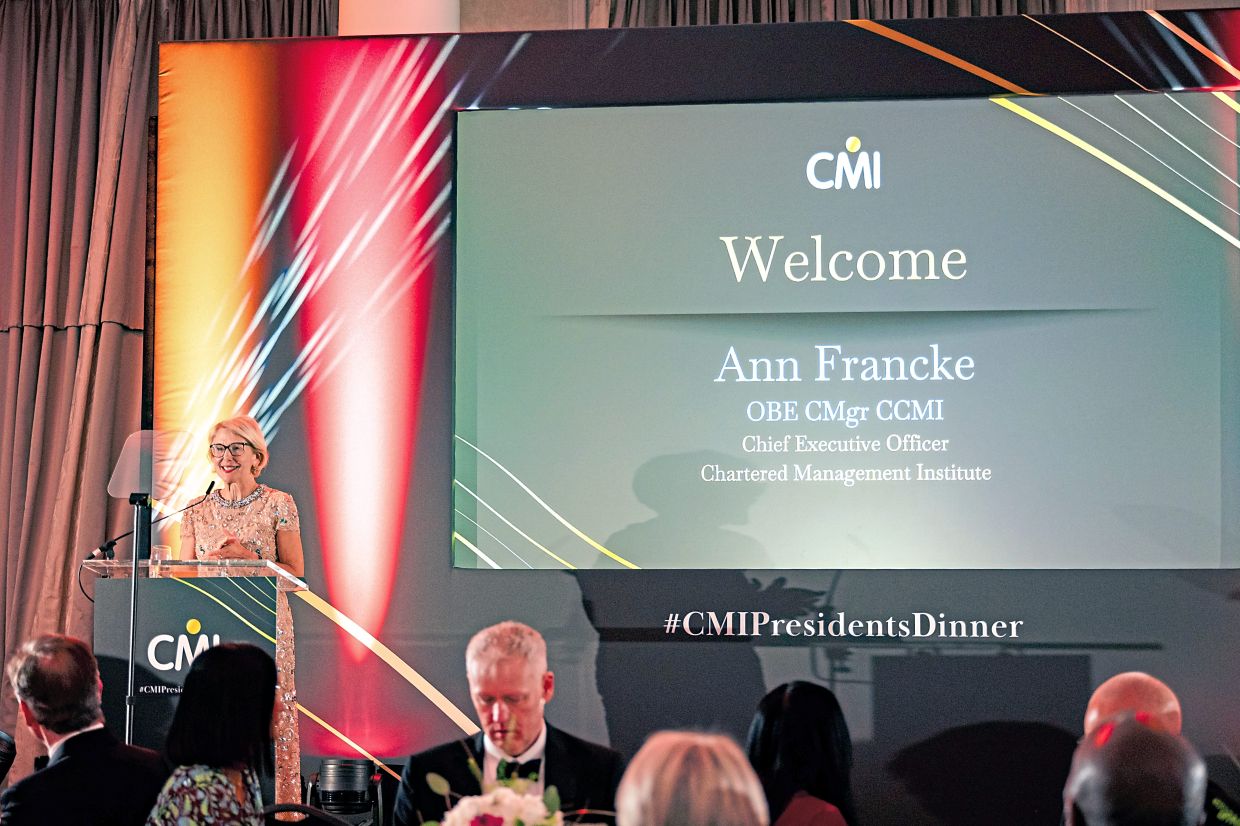
As CMI chief executive officer Ann Francke noted on the reality of modern workplaces: “We exist to turn accidental managers into capable, competent, confident leaders. Too many people look at management as an amateur activity.
“But when it is professionalised, companies perform better, people have better experiences at work and the economy does better as well.”
Backed by a unique Royal Charter, CMI stands as a global standard-bearer for the management profession.
By embedding its rigorous professional standard across global higher education and corporate landscapes, CMI bridges the crucial gap between raw academic theory and high-stakes executive execution.
For young minds and ambitious professionals alike, the institute acts as a catalyst for transformation.
It moves learners away from task-oriented mindsets and moulds them into ethical, reflective leaders anchored in strategic foresight.
The pinnacle of this professional path is the globally recognised CMgr status. Backed by a community of over 250,000 members across 170 countries, CMI’s annual global awards actively celebrate the exceptional individuals who turn leadership from a position of authority into a deliberate practice of changing lives.