




Brazilian President Luiz Inacio Lula da Silva told US President Donald Trump on Thursday that his country’s rare earth reserves are open to investment from China and any other nation willing to process the minerals on Brazilian soil, resisting pressure to side with Washington in its contest with Beijing over critical mineral supply chains.
“We have no preference. What we want is to share with whoever wants to invest in Brazil,” Lula said at a press conference at the Brazilian embassy in Washington after a three-hour meeting with Trump that ran more than an hour past schedule.
“Americans, Chinese, Germans, Japanese, French, whoever wants to participate with us to help us mine, separate and produce the wealth that these rare earths offer us, they are invited.”
Lula said he told Trump that Brazil had approved a new regulatory framework for critical minerals in Congress on the eve of the visit and was treating the sector as a matter of national sovereignty.
He said his government would not repeat what happened with silver, gold and iron ore, resources that Brazil exported raw for decades without capturing the industrial value.
“With rare earths, we are going to change our behaviour. We want Brazil to be the big winner from this wealth that nature gave us,” he said.
The meeting at the White House was Lula’s first visit to Washington since Trump returned to office. It covered trade, tariffs, organised crime and critical minerals over two sessions, first in the Oval Office and then during an extended working lunch.
Brazilian officials said the two sides agreed to a 30-day window for trade negotiators to try to resolve a dispute over tariffs ahead of a possible new round of US levies on Brazilian goods. The US Trade Representative has been conducting a Section 301 investigation into what Washington calls unfair Brazilian trade practices, a probe Brasilia considers unfounded.
Brazilian president highlights US neglect of Latin America
Lula framed the conversation on rare earths as part of a broader argument about the US neglect of Latin America. He told reporters that China overtook the US as Brazil’s top trading partner after 2008 because American companies stopped competing for contracts in the region.
“I told him that many times we hold international tenders to build a highway, a railway, and the United States does not bid. The Chinese do,” Lula said. “For a long time, the United States stopped looking at Latin America; they only looked through the lens of fighting drug trafficking.”
The pitch comes as access to rare earths has become one of Washington’s most pressing supply chain vulnerabilities. China controls about 91 per cent of global rare-earth separation and refining and 94 per cent of permanent-magnet production, according to the International Energy Agency.
In October, Beijing expanded export controls on rare earth materials, processing equipment and technologies, breaking new ground by asserting extraterritorial jurisdiction over products made outside China with Chinese-origin inputs.
Those restrictions were suspended for one year under a US-China deal reached later that month, though a separate licensing regime covering seven rare earth elements imposed in April last year remains in force.
Bloomberg estimated last month that roughly 4 per cent of US GDP, or about US$1.2 trillion, comes from industries that depend on rare earths. For sectors accounting for about 1.4 per cent of GDP, there are no viable substitutes.
Brazil holds the world’s second-largest reserves of rare earths and graphite and is the third-largest holder of nickel. The 17 rare earth elements are used in products from electric vehicle motors and wind turbines to fighter jet engines and missile guidance systems.
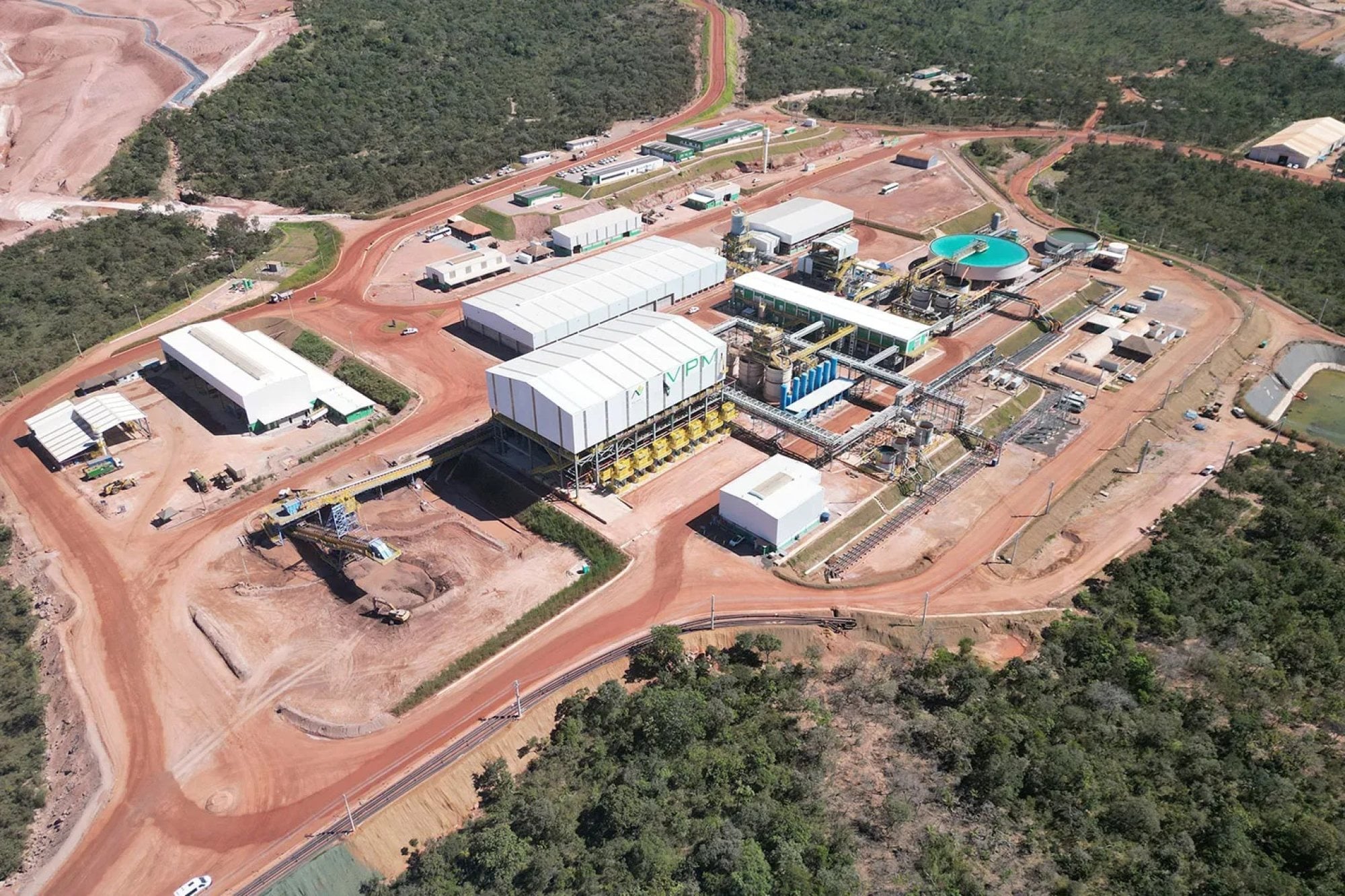
On Tuesday, the lower house of Brazil’s Congress approved a bill to create a national critical minerals policy, including a US$2 billion guarantee fund and US$5 billion in tax credits over five years to encourage domestic processing. Lula told Trump about the legislation and said he expected the Senate to pass it the same day.
The question of who controls those resources is already the subject of a high-profile legal battle. USA Rare Earth, a US company, announced last month a US$2.8 billion deal to acquire Serra Verde Group, owner of the only operating rare earth mine in Brazil, in Goias state.
The deal includes a 15-year supply agreement for part of the mine’s output to a special-purpose vehicle backed by US government agencies, with guaranteed minimum prices for neodymium, praseodymium, dysprosium, and terbium. Serra Verde had previously ended long-term supply contracts with Chinese buyers and secured US$565 million in financing from Washington’s Development Finance Corporation.
But the transaction now faces a challenge before Brazil’s Supreme Court. The Rede Sustentabilidade party filed a constitutional complaint, arguing that the current regulatory framework fails to provide sufficient protection of the national interest when strategic mineral assets change hands.
The party asked the court to compel Brazil’s mining regulator to present documentation on the deal and, if the review proves inadequate, to suspend the transaction.
Lula’s insistence that Brazil will not pick sides may not survive contact with the regulatory architecture that Washington and Beijing have each built around the sector.
Under the US Inflation Reduction Act and the One Big Beautiful Bill Act passed last year, minerals extracted or processed by entities with 25 per cent or more Chinese government ownership are disqualified from electric vehicle tax credits.
Brazil does not have a free-trade agreement with the US, creating a separate barrier even without Chinese involvement. Pentagon procurement rules taking effect in January next year will ban Chinese-origin rare earths from the entire defence supply chain.
And on the Chinese side, Beijing’s export controls on refining technology mean any processing facility built with Chinese equipment could require a licence from Beijing to export its output.
Bruna Santos, director of the Brazil programme at the Inter-American Dialogue, said the cost of Brazil’s strategic ambiguity was rising fast.
“Before the Brazilian government even creates policies to guide diversification, the private sector is already making that decision in boardrooms,” she said.
“Executives are pricing in the geopolitical risk of being overexposed to China or to the United States.”
Santos said the real test would not be in presidential speeches but in the offtake agreements being signed now. She said Brazil could be a card for Trump in front of Xi Jinping, “but it is not a ready-made card. Xi knows that China has been in the game much longer, with capital, companies, demand and processing capacity. The US has to show industrial speed.”
The rare earths question gains added weight from Trump’s planned visit to Beijing next week for a summit with Chinese President Xi, the first by a sitting US president to China since 2017. China is widely expected to use its dominance of rare-earth supply chains as leverage in negotiations for a broader trade truce with Washington.
Lula used the press conference to address other topics raised during the meeting. He renewed his criticism of the US-led military campaign in Iran, saying he believed the conflict would cause more damage than Trump anticipated.
“I believe much more in dialogue than in war,” Lula said, adding that he had offered to help broker talks on Iran and Cuba if Washington needed an interlocutor. Brazil had no interest in taking sides but was willing to facilitate dialogue, he told reporters.
Lula urges Trump to convene UN Security Council summit
Lula said he had urged Trump to convene a summit of the five permanent members of the UN Security Council to address the conflicts in the Middle East and elsewhere, arguing that the body’s current structure had failed to prevent or resolve wars.
“I already called Xi Jinping proposing to convene the Security Council, I already called [Vladimir] Putin, I already called [Emmanuel] Macron,” Lula said.
He said the geopolitics of 2026 bore no resemblance to 1945, and that the council needed to be expanded to include countries such as Brazil, India, Germany, Japan and South Africa.
“If the UN worked well, it could end half the conflicts you have burning in Africa,” Lula said. “It would need political authority, moral authority and financial authority to intervene. With whose mandate? The five permanent members of the Security Council. Only they can do this.” -- SOUTH CHINA MORNING POST


