The sweeping anti-corruption drive in China’s military appears to have cleared the way for a new batch of officers to quietly assume de facto leadership of key People’s Liberation Army bodies.
According to a South China Morning Post analysis of official insignia and protocol seating from state media coverage of recent meetings, dozens of fresh commanders have stepped into the roles of their ousted predecessors, positioning them to lead the world’s biggest standing army.
Many have assumed major portfolios previously held by full generals, having recently been promoted from within their respective departments. Several others attained the rank of lieutenant general less than a year ago, according to the SCMP tally, even though they are roughly the age their full general predecessors were when assuming the same leadership roles.
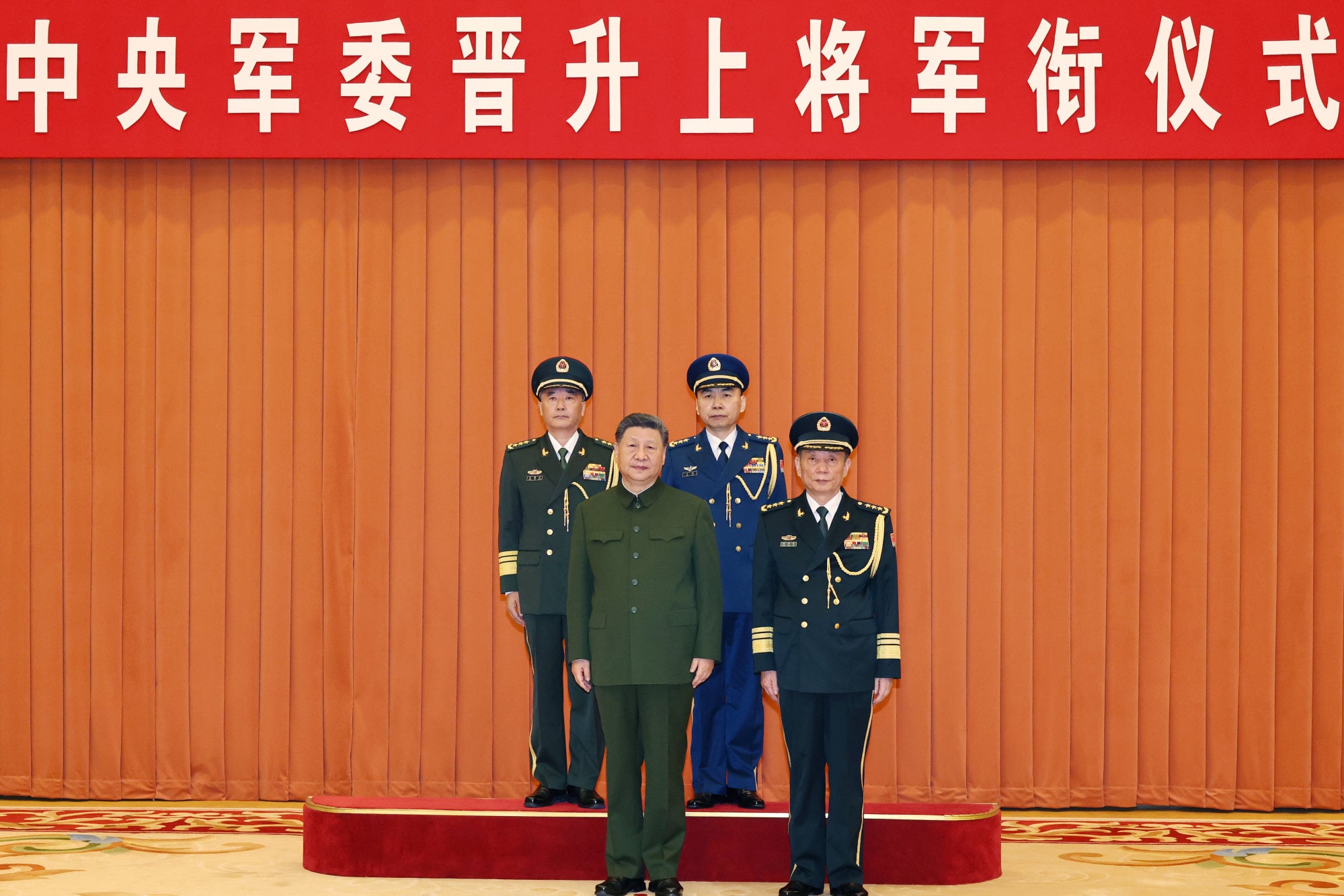
“Many of them have had a relatively short tenure as lieutenant generals, but they are fulfilling the duties of full generals,” noted a Chinese political expert who requested anonymity because of the sensitivity of the matter.
“These lieutenant generals will face challenges – they haven’t served as senior military leaders long enough. Compared to more senior full generals, they need time to adapt to a higher perspective and establish leadership within their departments.”
A defining moment
These internal shifts come at a pivotal moment for China’s military and political trajectory.
The PLA celebrated its 99th anniversary on Saturday, entering the final countdown to its centenary modernisation goal.
Meanwhile, the Communist Party is expected to hold its 21st national congress in the autumn of next year, when Beijing will choose a new leadership line-up for both the party and the Central Military Commission (CMC).
The CMC is the PLA’s highest commanding body, chaired by President Xi Jinping.
The current CMC began its five-year term with seven members following the 2022 national congress. But the anti-corruption drive within the PLA has left it with only two – Xi and vice-chairman Zhang Shengmin.
Convention dictates that CMC members must hold the rank of full general and have previously led a major military department, theatre command or service branch. However, the recent wave of dismissals means Beijing may need to reach deeper down the ranks to build its next high command.
Since 2023, a total of 26 full generals have been placed under investigation, while another 12 have disappeared from public view. All had previously held key positions in the PLA.
The latest major upheaval came in January, when authorities announced that CMC vice-chairman Zhang Youxia and fellow member Liu Zhenli were under investigation.
Their downfall brought the number of active full generals visible to the public down to four, before promotions in July brought the total back up to six.
New faces have been steadily filling gaps in the chain of command over recent months, according to official announcements as well as video footage from various meetings, including last Friday’s official reception to mark 99 years of the PLA on August 1.
State media footage showed the new officers seated in the front rows usually reserved for senior military leaders. They were also the highest-ranking officers displaying their department’s specific insignia, indicating that they were in charge of those military bodies.
Officers with air force backgrounds appeared to have made the most gains. According to the SCMP tally, nine of the 20 key positions reassigned during the reshuffle went to air force officers. In five of those roles, the predecessors had come from other military branches.
The expert noted that while the anti-corruption campaign had inflicted a heavy toll on the PLA Ground Force, Rocket Force and Navy – the power bases of several disgraced heavyweights – the air force had emerged relatively unscathed.
The rise of air force generals could further weaken the army’s long-standing dominance within the PLA, the analyst said, referring to a decades-old tradition widely viewed as outdated and ill-suited for the joint combat requirements of modern warfare.
Changes within CMC bodies
Zhang Shuguang, who was promoted from lieutenant general to full general in July, has since been named secretary of the CMC’s discipline inspection commission. This role traditionally carries a seat on the CMC and was previously held by Zhang Shengmin, who was promoted to vice-chairman last October.
After the fall of several top generals from the CMC last year, Air Force Lieutenant General Chen Demin and Vice-Admiral Xiong Zhaoyuan appear to have taken charge of the commission’s Political Work Department, which manages ideological matters and personnel changes within the PLA. The pair have represented the department at major recent events.
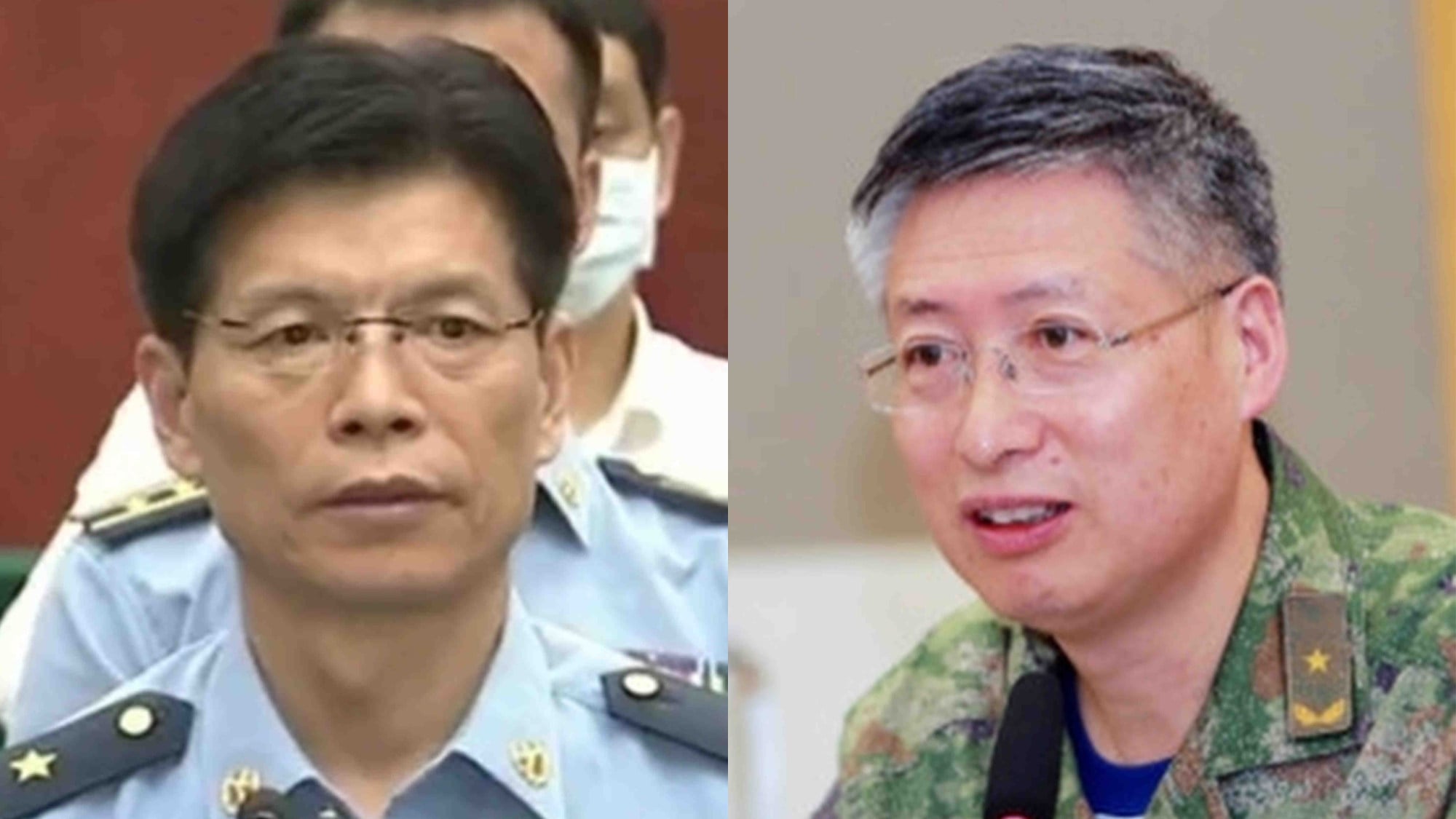
The department’s former director, CMC member and former admiral Miao Hua, was placed under investigation in November 2024.
Chen and Xiong were promoted to their ranks by last November at the latest. Xiong is a veteran of the second artillery corps – the predecessor to the PLA Rocket Force, which oversees China’s strategic nuclear arsenal – and previously served as secretary general of its Political Work Department. Notably, Zhang Shengmin is also a former director of that same department.
Among others in the emerging leadership is Zhu Chuansheng, who now heads the CMC’s Joint Staff Department, once led by disgraced former CMC member Liu. Zhu was promoted to lieutenant general in March 2025 and previously served as the department’s deputy chief of staff.
Vice-Admiral Zhang Like, former deputy head of the CMC’s National Defence Mobilisation Department, was promoted to lead the department no later than last October.
The most senior lieutenant general in the line-up is Dong Li, head of the CMC’s Joint Operations Command Centre, who has served at that rank for more than five years. Dong’s predecessor, Wang Xiubin, was expelled from the party last October.
Head of forces
Clear leadership has also emerged across the PLA’s main service branches.
Wang Gang, promoted to full general alongside Zhang Shuguang in July, was also confirmed as commander of the PLA Air Force. Full general is the highest active rank in the PLA.
Wang’s co-leader as acting political commissar appears to be Shi Honggan, who was promoted to lieutenant general around December. His last publicly announced role was secretary of the air force’s discipline inspection commission.
The air force’s original commander has been removed from the national legislature, and its original political commissar has not been seen in public since last year, with no replacements formally announced.
Under the PLA’s dual-command structure, the commander focuses on military tactics and combat operations while the political commissar is in charge of political supervision, troop morale and ideology.
Cai Zhijun appears to be the new leader of the PLA Ground Force, according to the latest clues. He was promoted to lieutenant general no later than July last year, and his previously disclosed position was army chief of staff. The ground force’s original commander was removed from the national legislature before it convened earlier this year.
In another shift, Zhang Zheng – a former captain of China’s first aircraft carrier, the Liaoning – is now responsible for the navy’s military affairs. He was promoted to vice-admiral no later than September 2025, having previously served as navy chief of staff.
The navy’s original commander, Hu Zhongming, has also not been seen publicly since late last year and missed the high-profile commissioning in November of the Fujian, China’s most advanced carrier.
The navy’s political affairs are being led by Hu Yuhai, who appears to have been promoted to vice-admiral no later than last December. His previously disclosed position was deputy political commissar of the navy. He has also worked within the military’s anti-corruption infrastructure.
Lieutenant General Lei Kai has emerged as the apparent commander of the rocket force, where he previously served as chief of staff. Notably, Lei is also from the air force, where he was a top-rated pilot.
Lieutenant General Zhou Jingjiong now oversees political affairs for the rocket force, where his previously disclosed role was director of the political work department.
Earlier in his career, Zhou directed the political work department of the rocket force’s Base 56 – a unit where Zhang Shengmin also previously served as political commissar.
Lei and Zhou were promoted to lieutenant general no later than last December.
Theatre commands: picture unclear
While key leadership shifts across the CMC and rocket force are coming into focus, uncertainty still surrounds the leadership of the PLA’s five theatre commands – which are responsible for combat missions.
Only Han Shengyan and Yang Zhibin – both promoted to full general last December – have been confirmed as theatre commanders. Both are long-serving air force officers.
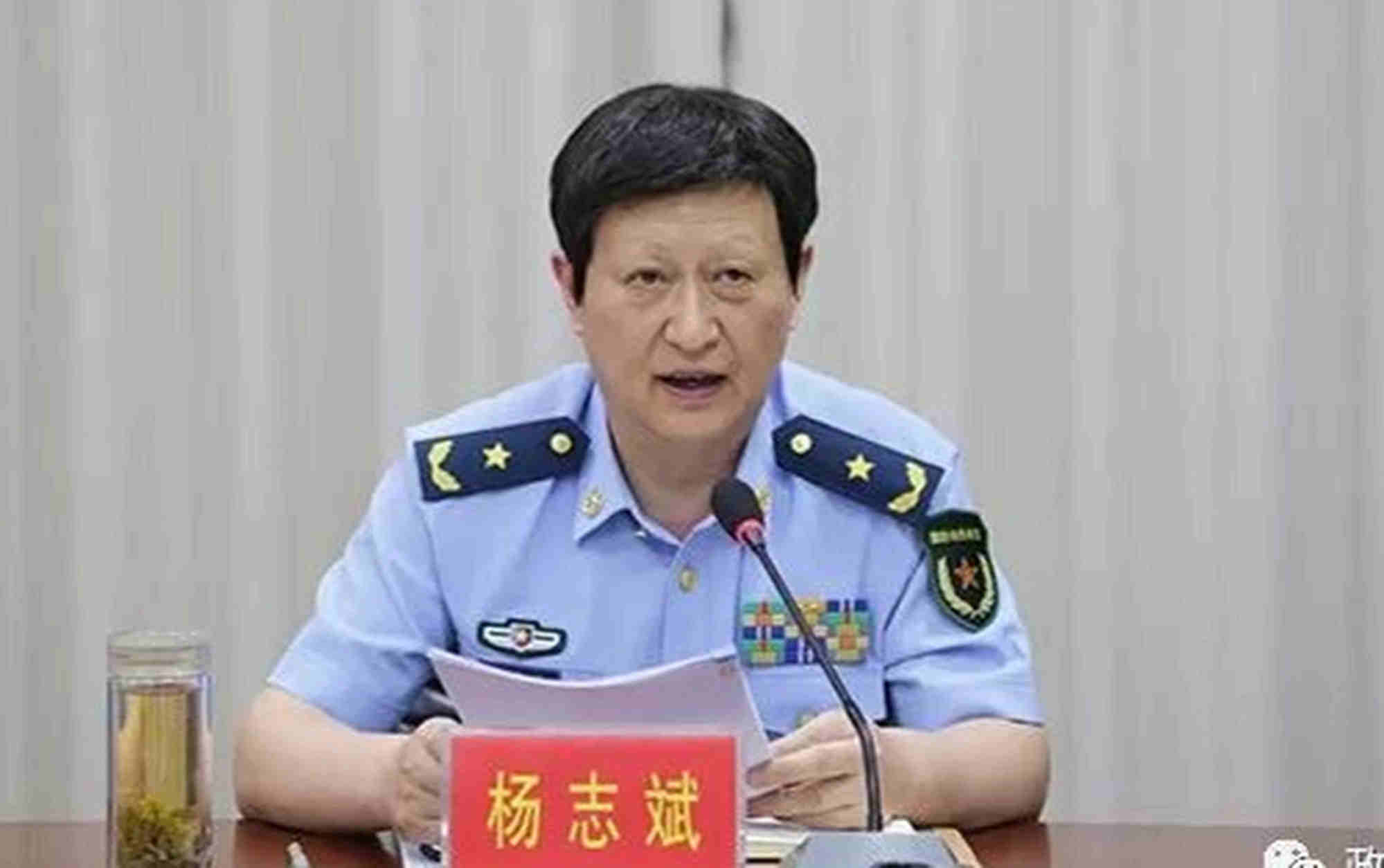
Han leads the Central Theatre Command and served as chief commander of the Victory Day military parade in Beijing last September. Headquartered in Beijing, this command is tasked with protecting the capital while providing operational support to the other theatre commands.
Yang is head of the Eastern Theatre Command, which is responsible for operations and deployments relating to Taiwan. -- SOUTH CHINA MORNING POST