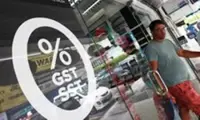
PETALING JAYA: Putrajaya should not combine elements of the Goods and Services Tax (GST) with the Sales and Service Tax (SST) into a hybrid system as it will not address the fundamental weakness of SST, says Datuk Seri Dr Wee Ka Siong (pic).
The MCA president said that if the government acknowledges the need for GST mechanisms, it should instead begin a clear transition towards a full GST system. He noted that GST carries no cascading effect, features a broader tax base and provides greater transparency.
“The main problem with SST is the cascading effect. You cannot remove this problem simply by adding some GST elements to the existing system.
“If the government now wants to bring in GST elements, why not go straight to GST?” he said when contacted yesterday.
Prime Minister Datuk Seri Anwar Ibrahim has directed the Finance Ministry to conduct a full study on the proposal to introduce a hybrid taxation system that combines the current SST with the GST.
Dr Wee warned that a hybrid system would complicate tax structures for businesses without resolving the issue of embedded supply-chain costs.
The Finance Ministry’s Fiscal Outlook 2024 states that SST can have a cascading effect when tax becomes embedded in costs at successive stages, while GST has no cascading effect as input tax is recoverable.
As such, Dr Wee said this made GST fairer if properly designed, as essential items could be zero-rated while taxation was spread across a broader base of consumption.
He said items such as rice, chicken, eggs, medicines and school supplies could be zero-rated throughout the supply chain, while input tax credits would prevent taxes paid at earlier stages from being built into final prices.
“GST does not mean essential goods must be taxed. They can be zero-rated while input tax credits prevent earlier taxes from compounding into final retail prices,” he pointed out.
Dr Wee, who is the Ayer Hitam MP, cited a Finance Ministry parliamentary reply in 2023 which stated that 174 countries had implemented GST or similar systems.
He said under SST, consumers might not see the tax directly at the point of purchase but could still bear the cost through higher prices.
Businesses could incur tax on inputs and services such as packaging, rental and logistics, with the additional costs eventually reflected in the prices of finished goods, he said. “The consumer eventually pays for it through the price,” he added.
Dr Wee called for Budget 2027 to set out a 12-month roadmap towards GST, beginning with consultations with businesses and consumers.
During the transition, he proposed suspending or rationalising SST on essential items.
Once systems and taxpayer data are prepared, he recommended introducing GST at 4%, increasing to 5% in the second year and 6% in the third, subject to economic readiness.
“Based on our estimates, 4% is a reasonable starting point before we increase to 5%, where it will have a meaningful contribution, as part of the transition, and then 6% as the base rate,” he said.
Dr Wee also proposed maintaining zero-rating or exemptions for essential goods and services, alongside targeted assistance such as the STR cash aid and Sumbangan Asas Rahmah (Sara), programmes during the transition.
He suggested setting the registration threshold at RM1mil in annual turnover to protect micro-businesses and petty traders from unnecessary administrative burdens.
“The important thing is to set out the roadmap in Budget 2027, give businesses and consumers time to prepare, and ensure essential goods are protected throughout the transition,” he said.