
KOTA KINABALU: Sabah Chief Minister Datuk Seri Hajiji Noor has ordered district officers to identify development potentials in agriculture, tourism and industry sectors as part of strengthening the state’s key economic growth drivers.
He said this year alone the state allocated nearly RM1bil for the development of the agriculture, industry and tourism sectors and every District Officer must identify the economic potential within their respective districts.
“Some districts have strengths in agriculture. Some have tourism potential. Others have marine resources, while some have potential in industry and trade. These strengths and opportunities must be identified and developed in a planned manner.
“Our task is to ensure that this potential can be translated into investment opportunities, jobs and increased income for the people,” he said at the opening of the 29th Sabah District Officers’ Conference being held in interior Keningau on Monday (Aug 17).
“In this regard, I see the Blue Economy as a sector with great potential, particularly in rural areas. Sabah has vast marine resources, biodiversity and coastal areas.
“This potential must be harnessed prudently to create new economic opportunities and increase community incomes. I hope District Officers can help identify such potential and facilitate investments that are suited to the needs and strengths of each district,” he said.
Hajiji also called on the district officers and Assistant District Officers to consistently practise a responsive, proactive and integrity-driven work culture, while being bold in adopting new approaches.
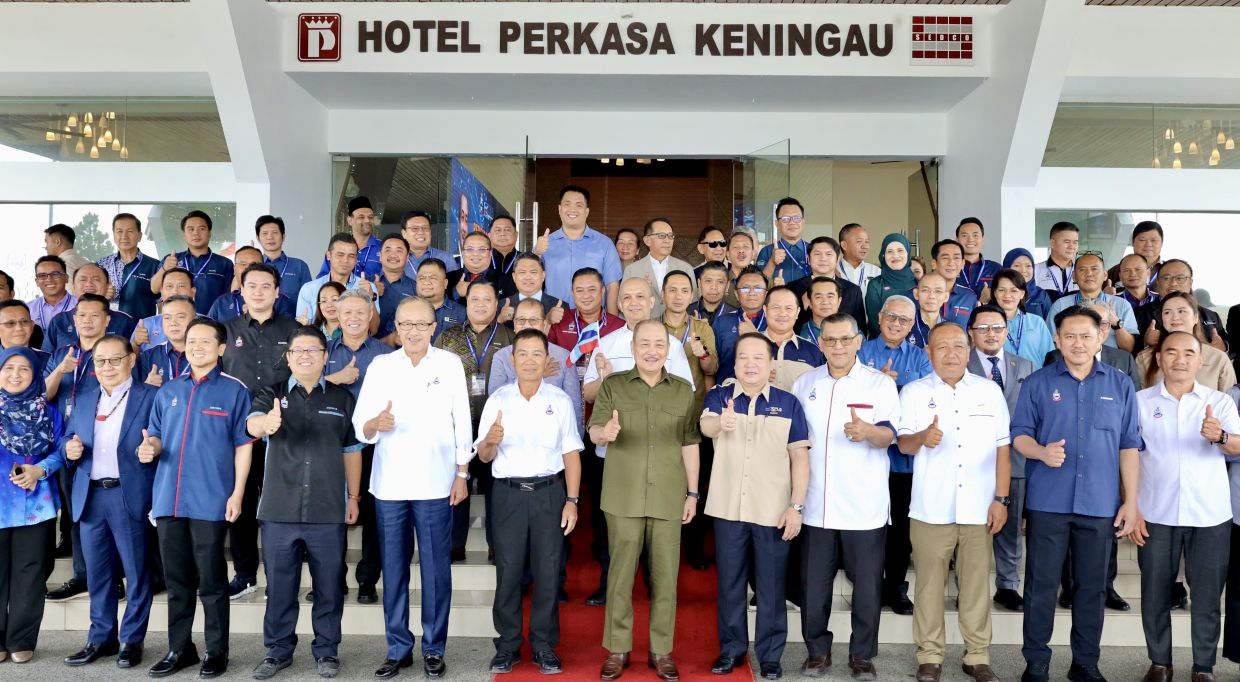
“We must be bold in adopting new approaches if they can improve the quality of service delivery to the people.
“However, at the same time every action must be done in accordance with regulations, good governance, and the interests of the people,” he said at the conference themed “Driving Innovation, Empowering Communities.”
“We are facing changes that are taking place at a very rapid pace. Advances in technology, changes in the global economy, social changes and rising public expectations of government services require us to continuously improve the way we work.
“Government administration must be more efficient, responsive and centred on the needs of the people,” he said.
Hajiji said that for this year, the state government has a development allocation ceiling of RM12.02bil for 1,173 programmes and projects under the 13th Malaysia Plan (13MP), the highest in the history of the Sabah Budget.
“The allocation ceiling covers 241 continuation projects and 932 new projects. However, the larger the allocation provided, the greater our responsibility to ensure that its implementation is truly effective,” he said.
He said District Officers and Assistant District Officers must also change the way they measure development success and not focus solely on the number of projects approved or completed.
“We must look at the impact on the people. Have their problems been resolved? Have their facilities improved? Have economic opportunities increased? Has their quality of life improved? These are the true measures of development success,” he said in stressing that rural development remains among the state government’s priorities particularly basic amenities such as roads, water and electricity supply.