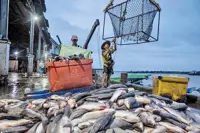
NIBONG TEBAL: Penang accounted for 77% of the country's seabass aquaculture production last year, recording 44,596.46 tonnes worth RM562.51mil.
In a statement on Tuesday (July 21), the Fisheries Department said the country's total seabass production last year totalled 58,221.38 tonnes worth RM755.27mil.
"Penang's seabass production increased from 39,690.39 tonnes (65% of total output) worth RM489.55mil in 2024.
"The increase represented a 12.36% rise in production volume and a 14.9% increase in production value compared with the previous year.
"Apart from seabass, Penang recorded total aquaculture production of 54,767.3 tonnes valued at RM1.14bil in 2024.
"Based on our data, there are 105 pond-cultured seabass operators in Seberang Prai – 93 in South Seberang Prai, 11 in Central Seberang Prai and one in North Seberang Prai.
"On top of that, there are 17 white shrimp and black tiger prawn farmers operating in the area as well," it said.
Fisheries director-general Datuk Adnan Hussain said Penang's position as the country's leading seabass producer must be supported by good farming practices, including compliance with the Malaysian Good Aquaculture Practices (MyGAP), prudent antibiotic management and farm biosecurity measures.
"These are essential to ensuring that aquaculture products are safe, of high quality and meet market requirements," he said.
On exports, Adnan said they are preparing for an on-site technical inspection by Thailand's Fisheries Department as part of the requirements for exporting Malaysian aquaculture products to Thailand.
"Preparations involve close cooperation among all competent authorities namely the Fisheries Department, Health Ministry, Malaysian Fisheries Development Authority, Malaysian Border Control and Protection Agency and Malaysian Quarantine and Inspection Services Department to ensure compliance with biosecurity requirements, antibiotic management, product traceability systems, and food safety standards.
"The management of antibiotic use in the aquaculture industry is governed under the Fisheries Act 1985 and its subsidiary regulations, including the Fisheries (Inland Fisheries Aquaculture) Rules.
"The use of veterinary medicines at the production stage is regulated by the Veterinary Services Department under the Feed Act 2009.
"We will continue to monitor and provide guidance to industry players to ensure the country's aquaculture production complies with food safety requirements, export market standards and consumer interests," he said.