KUALA LUMPUR: The Public Accounts Committee (PAC) has urged the government to amend its supplementary agreement with Spanco Sdn Bhd to prevent ministries from paying lease charges on vehicles whose leases have expired but must remain in use because of delays in receiving replacement vehicles.
PAC chairman Datuk Mas Ermieyati Samsudin said the committee recommended that the Finance Ministry incorporate the improvements into its supplementary agreement with the concessionaire to address weaknesses exposed by repeated delays in vehicle deliveries.
“The Finance Ministry must incorporate the identified improvements into the supplementary agreement with Spanco so that monthly lease charges are not imposed on any concession vehicle that has exceeded its lease period but continues to be used by ministries or agencies because of delays in the supply of new vehicles,” she said.
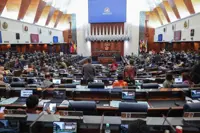
Mas Ermieyati said this during a press conference in Parliament after tabling the PAC report on Thursday (July 9).
The recommendation was among five proposed by the committee following its inquiry into the government’s vehicle concession management under the Finance Ministry.
The PAC also called on the ministry to review the current 60-working-day vehicle delivery requirement to better reflect the realities of the automotive industry, including changes in vehicle variants, Customs clearance, vehicle registration, installation of specialised equipment and logistical challenges in Sabah and Sarawak.
It further recommended the full implementation of a digital fleet monitoring system across all ministries and agencies to issue early warnings before vehicle leases expire, allowing replacement orders to be placed on time.
“The committee also urged the ministry to expedite audits and verification of delivery delay data so that official penalty claims could be issued to the concessionaire without further delay.”
In addition, the PAC recommended that the Finance Ministry and the Public Private Partnership Unit (Ukas) conduct a comprehensive study on alternative fleet management models, including a multi-supplier system, to assess whether it would provide better cost savings and service delivery than the current single-concession model, which runs until 2037.
The report followed findings in the Auditor-General’s Report 3/2025, which concluded that the government’s concession vehicle management was unsatisfactory due to delays in vehicle deliveries by Spanco, the government’s failure to impose penalties for the delays and higher costs arising from the continued use of vehicles whose leases had expired.
Following three proceedings involving the Finance, Home, Health and Defence Ministries along with Spanco, the PAC said it found weaknesses in the contract management, particularly during the early implementation of the concession agreement.
“Poor communication between the ministry and user agencies, confusion over when delivery penalties should begin and the failure to distribute contract documents delayed the government’s efforts to recover millions of ringgit in penalties from Spanco,” the PAC said.
The committee also found that delays in replacing 5,323 leased vehicles caused the government to incur RM28.79mil in unnecessary expenditure because ministries had to continue paying monthly lease and higher maintenance costs for ageing vehicles instead of operating newer ones with lower maintenance expenses.