



PETALING JAYA: With more than 38,000 dengue cases recorded in the first half of the year, the country is now grappling with a significant viral shift, as the DENV-3 strain emerges as the dominant circulating serotype.
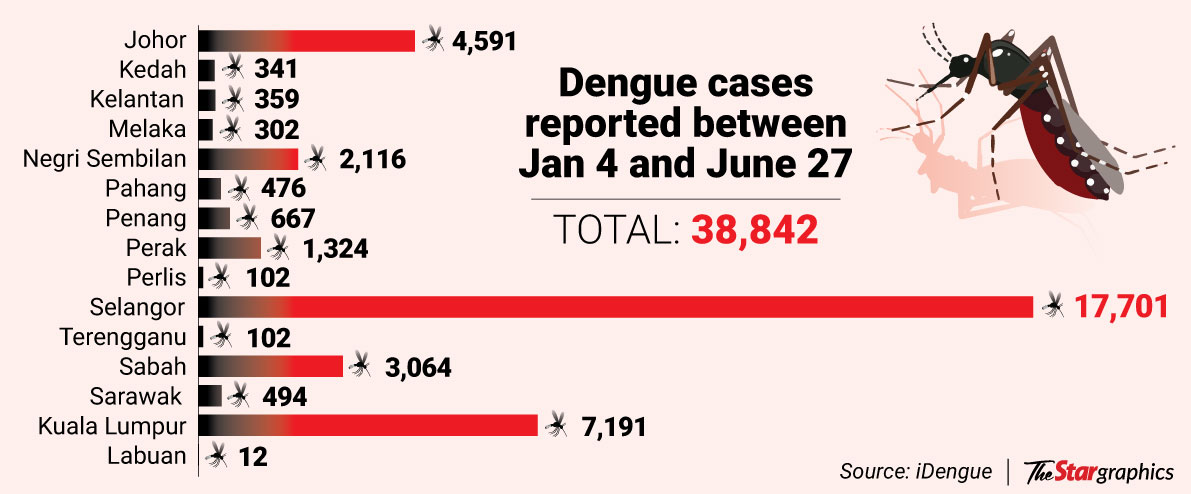
According to data from the Health Ministry’s iDengue website, a total of 38,842 cases were reported between Jan 4 and June 27. The daily caseload for June 27, stood at 310.
Selangor topped the list with 17,701 cases, followed by Kuala Lumpur (7,191) and Johor (4,591).
Recently, Health Minister Datuk Seri Dr Dzulkefly Ahmad said that Malaysia ranked third in Asean for the number of cases recorded this year, revealing that the DENV-3 virus is now dominant in the Malaysian infection cycle.
Dengue Prevention Advocacy Malaysia (DPAM) co-chairman Prof Dr Zamberi Sekawi said DENV-3 is not a new dengue virus, but one of the four established dengue virus serotypes.
“The concern is not that DENV-3 is more infectious, but that a major serotype shift can increase the number of people who are susceptible, especially if the population has been more exposed to other serotypes previously.
“This can contribute to a rise in cases and may also increase the risk of more severe disease in some individuals who are infected again with a different dengue serotype.”
Prof Dr Zamberi said that the DENV-3 infections are generally similar to other dengue infections.
“Patients may develop high fever, headache, pain behind the eyes, muscle and joint pains, nausea, vomiting, rash and tiredness.
“What the public must watch for are warning signs such as persistent vomiting, severe abdominal pain, bleeding, lethargy, difficulty breathing, or worsening condition after the fever subsides. These require urgent medical attention.
“The rise of DENV-3 should therefore be taken seriously but not with panic.
“The key public health message remains early recognition, prompt medical care, aggressive control of Aedes mosquito breeding sites and dengue vaccination,” he added.
Universiti Kebangsaan Malaysia’s professor of Public Health Medicine, Prof Dr Sharifa Ezat Wan Puteh, said individuals who have not been exposed to DENV-3, although they had contracted dengue fever previously, are at risk of being infected with this strain.
She said reinfection with DENV can happen multiple times in one’s lifetime.
However, former patients would develop lifelong protection against the DENV type virus.
“Severe cases can present with rashes and bleeding tendencies, even severe hemorrhagic manifestations such as bleeding from the gums, coughing up blood, from menses (menorrhagia), especially if they are going into shock.
“Uncommon manifestations include effects on specific organs like liver, cardiac, pancreas.”

