
BEFORE dawn breaks over Pulau Sebangkat, fisherman Mohd Gadafi Ahmad puts on a security vest, climbs into a boat and heads out to sea.
His destination is not a fishing ground.
Instead, he patrols the waters around Tun Sakaran Marine Park (TSMP), watching for fish bombers and other activities that could damage the coral reefs he has spent years helping to protect.
“We don’t need any more awareness campaigns. We understand the importance of our marine treasures, and we put effort into protecting them,” he said.
“If it weren’t for us, I believe the corals in the area would have been gone long ago.”
Yet despite years of voluntary patrols, Gadafi and other residents of the marine park now face a different challenge: proving they still have a place within the protected area they say they helped safeguard.
For Musal Kalim Mahalil, 57, the issue is deeply personal.
Standing outside his home on Pulau Bodgaya, he points to where dozens of houses once stood. Today, much of the settlement is gone.
The indigenous Bajau resident is among the few families still holding on after a series of enforcement actions in TSMP, a protected area off Semporna gazetted in 2004 under Sabah Parks.
For Musal and many others living on Bodgaya, Sebangkat and neighbouring islands, the dispute is not about whether conservation should exist.
They supported it from the beginning.
What they question is whether the communities that helped make the park possible still have a place within it.
TSMP encompasses eight islands and surrounding marine waters and is renowned for its coral reefs, rich marine biodiversity and tourism attractions, including Bohey Dulang.
Before the park was gazetted, consultations and workshops were held with communities living in the proposed protected area.
Salleh Abdul Salleh, a community leader from Pulau Sebangkat, said residents agreed to support the park after being assured they could continue their traditional livelihoods and remain within designated community zones.
“The park exists today because there was an agreement between Sabah Parks and the community,” he said.
According to Salleh, conservation was presented as a way to protect one of the world’s richest coral reef ecosystems while allowing residents to continue living and working within the park.
Many residents still keep records of those meetings and consultations.
More than two decades later, they believe that understanding is being tested.
Across Bodgaya and nearby islands, families say their communities existed long before conservation boundaries were drawn.
Many depend on fishing, while others once relied heavily on seaweed farming. On Bodgaya, mango orchards remain an important source of seasonal income.
Musal estimates there are nearly 2,000 mango trees on the island, many planted by previous generations.
“When mango season comes, that is part of our livelihood. Our grandparents planted these trees. Some of them are older than the marine park,” he said.
That livelihood has already been disrupted.
An enforcement operation that began in August 2024 resulted in the demolition of homes occupied by indigenous residents. At the time, about 50 houses sheltered more than 200 people.
Today, only Musal’s house remains.
In April this year, it too received an eviction notice, one of about 10 issued in the area.
Many families left after their homes were demolished, abandoning orchards cultivated over generations. The remaining house now serves as a temporary shelter for former residents returning to visit the island or tend their trees.
According to Sabah Parks, 177 mango trees were felled during an integrated enforcement operation in what authorities described as a prohibited area. The agency estimated that more than 1,000 mango trees had been planted there and noted that residents were reluctant to leave while the orchards remained because of their economic value.
During a recent visit by The Star, remnants of demolished structures could still be seen scattered across parts of the settlement.
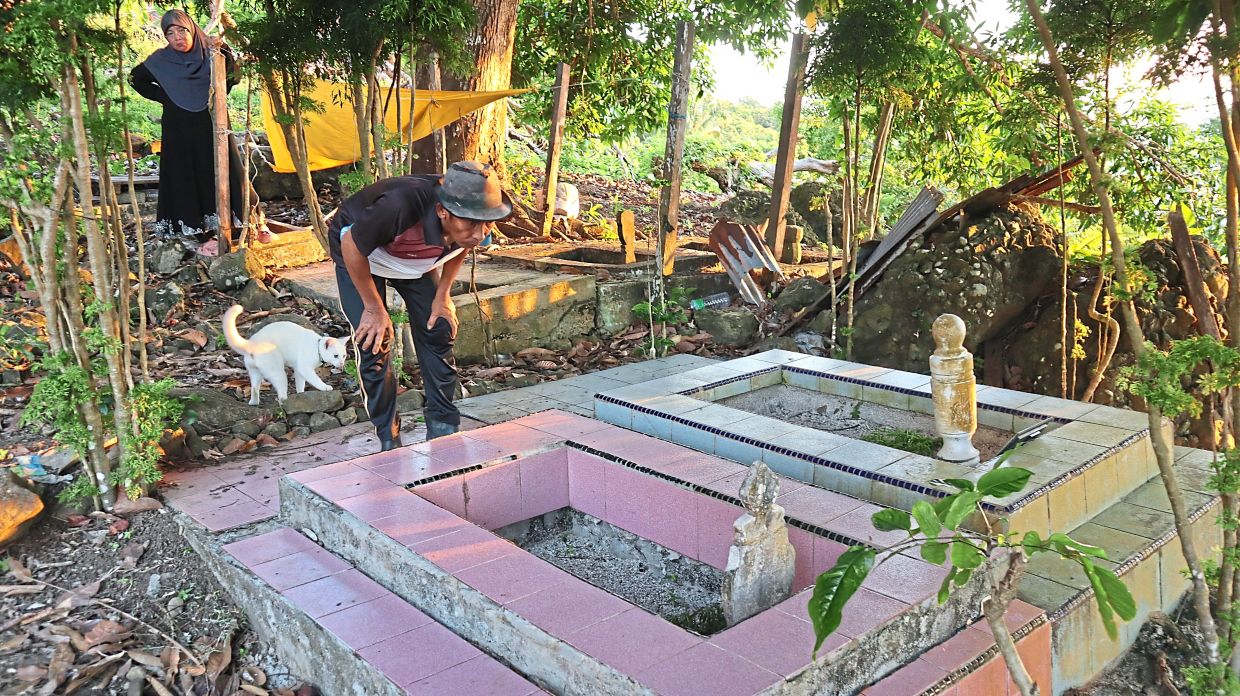
Residents point to family graves, former settlements and oral histories stretching back decades as evidence of their longstanding presence. Some of the oldest graves on the islands date to the 1980s.
For many, the fear is not only about losing homes but also the gradual disappearance of communities that have lived on the islands for generations.
Residents reject suggestions that they are incompatible with conservation. Instead, they argue they have long helped protect the marine environment.
Musal was once appointed a community ranger and participated in conservation activities within the park. He said local residents regularly alerted authorities to illegal activities and assisted in safeguarding marine resources.
For communities across TSMP, the debate is therefore not simply about houses, permits or enforcement notices.
It is about whether local communities have a place within conservation efforts.
Musal, Salleh and Gadafi share the same message: conservation should not come at the cost of eviction.
They support protecting the marine park. What they are asking for, they say, is recognition that their history, livelihoods and role as stewards of the area are part of that protection too.
> This story was produced with the support of Macaranga and International Media Support (under the Digital Democracy Initiative).