
A DISPUTE unfolding across the waters of Tun Sakaran Marine Park (TSMP) in Semporna is about more than eviction notices and demolished homes.
At its heart lies a question increasingly debated worldwide: can protected areas be effectively conserved while allowing long-established communities to remain, or does protecting nature require their removal?
To Sabah Tourism, Culture and Environment Minister Datuk Jafry Ariffin, the issue is a matter of law.
Official checks found no registered land grants or titles on the islands, classifying them as state land within the marine reserve.
“As the agency responsible for managing the protected area, Sabah Parks must enforce existing laws and regulations,” Jafry said.
Sabah Parks has issued notices ordering occupants of unapproved structures to vacate and demolish them within 30 days. Separate notices were served to tourism operators running businesses without permits.
Jafry said TSMP faces mounting pressures, including environmental encroachment, illegal activities, growing tourism and the challenge of monitoring a vast marine area with limited resources.
In that context, he said, Sabah Parks must prioritise its legal conservation responsibilities.
Asked whether displaced residents would receive compensation, Jafry said Malaysian citizens could apply for standard government housing assistance schemes.
He also rejected suggestions that long-term occupation alone conferred special rights, stressing that decisions must be based on land titles and official records.
For many islanders, however, their connection to the islands cannot be measured solely through legal documents.
Residents point to decades of continuous occupation, ancestral graves and records of consultations held before the park was gazetted in 2004.
Semporna MP Datuk Seri Mohd Shafie Apdal believes that history should be taken into account.
The former Sabah chief minister, whose late uncle Tun Sakaran Dandai gave the marine park its name, argues that conservation and community survival are not mutually exclusive.
He has urged the state government to review the historical context of the gazettement process, including verbal agreements and understandings reached with local leaders at the time.
The disagreement reflects two competing visions of conservation.

For authorities, strict enforcement is necessary to protect a fragile ecosystem renowned for its coral reefs, marine biodiversity and tourism value.
For residents, the idea that people and nature cannot coexist contradicts their own experience.
They point to years of voluntary patrols against fish bombing, cooperation with conservation groups and participation in environmental programmes as evidence that local communities can be partners in conservation rather than obstacles.
About 300km north of Semporna, an island community near Sandakan offers an example of a different approach.
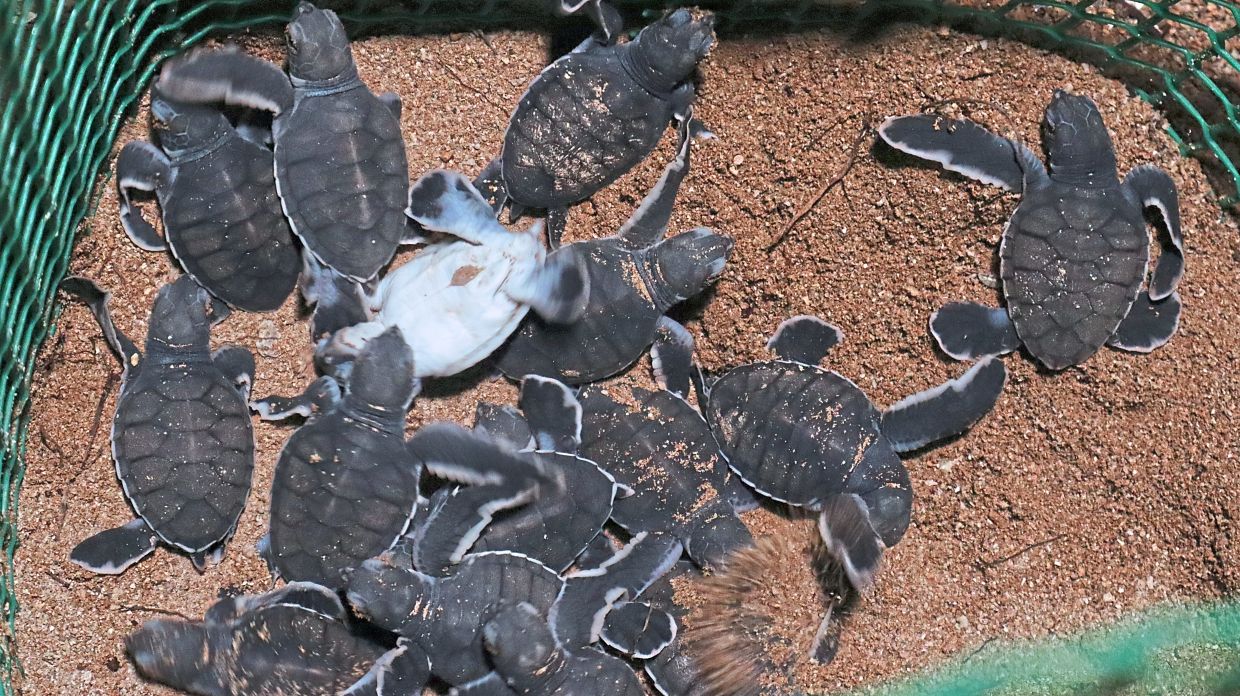
When turtle conservation efforts began on Pulau Libaran in 2012, they were initially met with resistance.
The island’s roughly 400 residents depended largely on fishing and small-scale trade, while turtle eggs provided an important source of supplementary income.
Poaching and consuming turtle eggs was common.
Alexander Yee, founder of Friends of Sea Turtle Education and Research (Foster), remembers the challenge.
“When we go over to run this conservation work, we are practically taking away the livelihood for the villagers,” he said.
“There is no point talking about protecting the environment when the local community within that space has no food on the table.”
Recognising that conservation alone would not succeed, Foster broadened its focus to include livelihoods.
Tourists were encouraged not only to see turtles but also to experience village life, sample local food, play traditional games and purchase handicrafts. Residents were trained to guide visitors and run cultural activities.
For Sophia Killong, the programme created new economic opportunities.
“Before this, tourism already existed here, but it mostly focused on the resorts,” she said.
“Now, tourists are taken along and shown how villagers here live and what they do.”
Participating families receive allowances when tourists visit and can earn additional income through handicraft sales.
More than a decade later, some villagers who once harvested turtle eggs now help protect nesting sites.
The transformation did not happen overnight.
Yee said it took between five and seven years for attitudes to shift significantly, and disagreements still exist. Nevertheless, he believes the model can be adapted elsewhere.
“This work, the way it is run, can be duplicated everywhere else,” he said.
“If you get someone willing to go into an area and find a way to solve the financial challenges first for the villagers, I don’t see why you cannot duplicate this.”
Tun Sakaran Marine Park and Pulau Libaran are very different places, with distinct legal frameworks, populations and conservation challenges.
Yet they face a similar question: should communities living within protected areas be treated primarily as a problem to be managed, or as partners to be included?
For the families of Bodgaya and Sebangkat, the answer is clear.
They say they are not opposed to conservation. What they want is recognition that their history, livelihoods and presence can form part of the solution.
How that question is resolved may determine not only the future of the marine park, but also whether communities that have lived there for generations can remain in the place they call home.
> This story was produced with the support of Macaranga and International Media Support (under the Digital Democracy Initiative).