KOTA KINABALU: For some children in Sabah, the journey to school, a clinic or even legal recognition begins with a document they do not have – a birth certificate.
Many children in Sabah remain unregistered at birth owing to administrative and geographical barriers, leaving them vulnerable to exclusion from education, healthcare and legal protection, says child rights group Advocates for Non-Discrimination and Access to Knowledge (Anak).
ALSO READ: Undocumented children and those in rural Sabah lag in health, digital access, says Unicef study
Its executive director Anne Baltazar said the problem is especially acute in Sabah, home to one of the country's largest concentrations of undocumented and stateless children.
"Many of these children remain unregistered at birth, invisible to the legal system and excluded from basic services such as education and healthcare," she said during the Symposium on Children's Rights Legislative Reform held at Parliament on June 8 and 9.
Baltazar said statelessness was often viewed as an issue affecting migrants and refugees, but indigenous communities living in remote border and interior areas were also impacted.
"Statelessness is not just a legal issue. It is a child rights issue that affects every aspect of a child's life and development," she said, adding that seven of Malaysia's 10 poorest districts for children are located in Sabah.
ALSO READ: New joint committee set up to tackle Sabah’s long-standing statelessness crisis
She said the challenge was compounded by Sabah's vast geography, with some families having to travel long distances over difficult terrain to reach registration centres.
"Physical distance in Sabah cannot be measured the same way as in Peninsular Malaysia.
"Rough terrain and a reliance on specialised transport make travelling to registration centres difficult and costly for grassroots families," she pointed out.
Baltazar also said that births in Sabah must be registered within 45 days, compared with 60 days in Peninsular Malaysia, while late registrations require endorsement by a magistrate.
ALSO READ: Home Ministry handles up to 14,000 cases of unregistered children each year
She said the additional requirements could further discourage vulnerable families from registering births.
"Birth registration does not automatically confer citizenship, but it is a fundamental, non-negotiable human right.
"Failing to protect marginalised children ultimately puts all of society at risk," she said, citing Sabah's pre-pandemic polio outbreak as an example of the dangers posed by large numbers of unvaccinated and undocumented children.
She added that undocumented children were also more vulnerable to exploitation, child labour and human trafficking.
ALSO READ: Be responsible, register births promptly, Home Minister urges parents
According to Anak, findings from the Sabah Child Wellbeing Index showed that only 6.1% of children surveyed met the basic threshold for living in a safe environment, while among undocumented children, only 0.6% met the threshold for basic health.
Baltazar urged the government to simplify birth registration procedures, expand mobile registration programmes in remote areas and strengthen protections for children regardless of their documentation status.
"A missing document should never mean a missing childhood," she said.
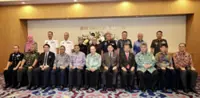
The symposium was organised by Parliament, the Human Rights Commission of Malaysia (Suhakam) and the All-Party Parliamentary Group Malaysia on Children's Rights.