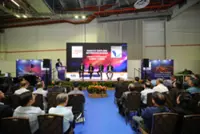
Medical Fair Asia will return to Marina Bay Sands, Singapore, from Sept 9 to 11, bringing together the technologies, expertise and partnerships needed to address some of the most pressing challenges facing healthcare systems across Asia.
This year’s edition will place clinical innovation, regional collaboration and market access at the centre of an expanded exhibition and content programme.
Medical Fair Asia will be co-located with Medical Manufacturing Asia and RehaCare Asia, creating a connected ecosystem spanning medical technology and healthcare delivery, MedTech manufacturing, rehabilitation, assistive technology and long-term care.
More than 14,000 healthcare and trade visitors are expected to attend, alongside over 1,000 exhibitors presenting more than 10,000 products and solutions.
International participation will extend across 40 countries and regions, supported by national pavilions, country groups, hosted buyer meetings, business matching and visiting delegations from across South-East Asia.
SingHealth appointed Healthcare Innovation Partner
Strengthening Medical Fair Asia’s connection to real-world clinical innovation, SingHealth has been named the exhibition’s Healthcare Innovation Partner for 2026.
The partnership will bring together clinicians, healthcare leaders and innovators from across the SingHealth network to share how new technologies are being tested, implemented and scaled within operational healthcare environments.
This collaboration will be brought to life through the Alice Lee Innovation Centre of Excellence (ALICE) / SingHealth Pavilion and the Paradigm Shifts in Healthcare Seminar on Sept 11.
The seminar will examine how artificial intelligence (AI), automation, robotics, sustainability and advanced manufacturing are already transforming clinical workflows, hospital operations and patient care.
Speakers from Singapore General Hospital and Sengkang General Hospital will present practical case studies covering:
- The barriers to AI adoption and how healthcare organisations can overcome them
- The development of a novel viral filter combining clinical innovation and sustainability
- PEACH, an AI-powered assistant designed to enhance pre-surgery assessments
- The use of 3D printing to produce customised foot insoles
- The application of AI to reduce food waste across healthcare operations
- The deployment of autonomous mobile robots to transform hospital logistics
The programme will feature Dr Chan Yew Weng, Dr Daryl Tan, Dr Ke Yuhe, Dr Jonathan Cheng, Leon Alvis and Teng Jyh Lei, bringing together expertise in anaesthesiology, perioperative medicine, critical care, healthcare informatics, clinical innovation, robotics and hospital automation.
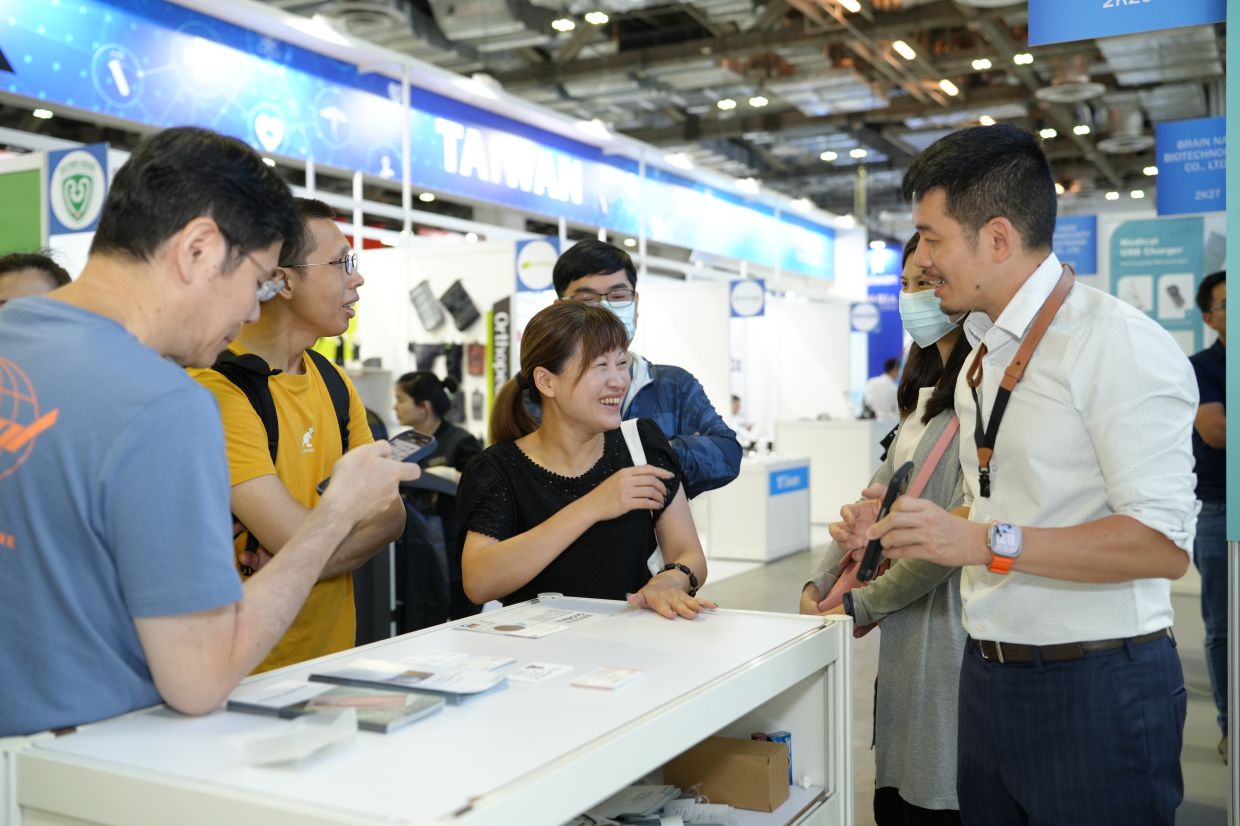
“Healthcare innovation has the greatest impact when clinical expertise, technology and industry capability come together around a shared problem,” said Messe Dusseldorf Asia managing director Lars Wismer.
“Our partnership with SingHealth gives visitors direct insight into how innovation moves from an idea to implementation and how solutions can be designed around the realities of healthcare delivery.”
From predictive healthcare to continuous care
The FTR4H, Future for Health Conference Asia 2026, will place connected, intelligent and preventive healthcare in the spotlight across two days.
On Sept 9, the programme will examine how robotics, AI and connected technologies are reshaping intervention, rehabilitation and chronic disease management.
Sessions will explore cognitive robotics in healthcare, skin-safe medical adhesives for wearable rehabilitation devices, AI-powered exoskeletons, multi-omic approaches to digital longevity, predictive health and the infrastructure required to support connected care.
The first day will conclude with a panel discussion on how digital health can deliver measurable outcomes for patients living with chronic conditions.
The programme continues on Sept 10 with a focus on AI, data analytics, the Internet of Medical Things and wearable technologies.
Topics will range from AI-powered longevity clinics and digital twins for chronic disease therapies to wearable injury-prevention systems, sweat-based health monitoring and technologies that support earlier detection and lifelong prevention.
A dedicated FTR4H Showcase will complement the conference with daily presentations and demonstrations spanning AI, robotics, wearables, connected health, predictive analytics and next-generation care solutions.
Healthcare innovation brought to life
Across the exhibition floor, visitors will be able to move beyond presentations and experience emerging healthcare technologies in practical settings.
The new K-AI Medical Diagnostic Hub, developed in collaboration with the Korea Medical Devices Association, will demonstrate how AI can support the patient journey from early screening and diagnosis to treatment decision-making.
Built around an integrated PACS and RIS environment, the hub will feature three experience zones:
- An AI Screening Centre, demonstrating AI-supported preventive screening and disease prediction
- A Smart Diagnostic Room, showing how AI can assist clinicians in analysing medical images and identifying abnormalities
- An AI Command Centre, visualising how screening, diagnostic and treatment information can be integrated into a connected healthcare platform
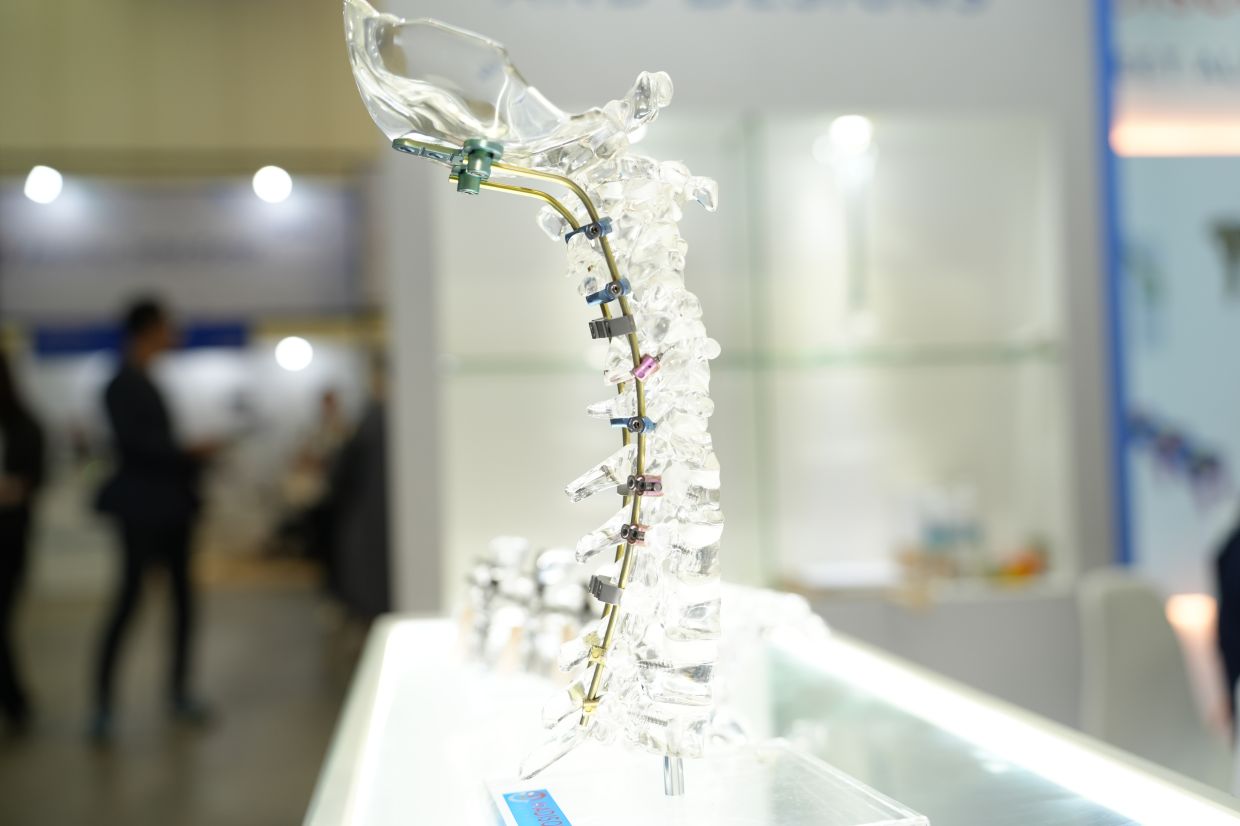
The showcase is expected to feature Korean medical AI solutions across radiology, cardiovascular health, neurology, respiratory care, musculoskeletal health and preventive screening.
The daily LaunchPad Innovation programme will provide another platform for companies to introduce new-to-market technologies and emerging solutions directly to healthcare professionals, buyers and potential partners.
Rehabilitation moves from theory to practice
RehaCare Asia will expand the conversation beyond treatment to examine how rehabilitation, assistive technologies, preventive care and community-based support can help people live longer and more independently.
A daily Locomotor Therapy in Practice workshop will introduce a structured, evidence-based approach to gait rehabilitation.
Led by Asst Prof Dr Parit Wongphaet, one of Thailand’s leading specialists in locomotor therapy and neurological rehabilitation, the workshop will combine robotic gait training, body weight-supported treadmill training and overground rehabilitation.
Each session will conclude with a live patient demonstration, showing how gait assessment findings can be translated into clinical decision-making and personalised interventions in real time.
Other RehaCare Asia programmes will include:
- A practical workshop on robotic and treadmill training for neurological recovery
- Advancing Healthy Living, Preventive Care, Rehabilitation, and Elder Care Across Asia, presented in collaboration with Frost & Sullivan
- RehaCare Asian Conversations, featuring frontline experiences and regional perspectives on care delivery
- Expert discussions covering healthy ageing, preventive care, rehabilitation, elder care, mobility and independent living
Connecting healthcare innovation with manufacturing capability
Medical Manufacturing Asia will complete the ecosystem by connecting healthcare innovation with the expertise required to design, engineer, manufacture, test and commercialise the next generation of medical technologies.
Jointly organised by the Singapore Precision Engineering and Technology Association and Messe Dusseldorf Asia, the seventh edition of Medical Manufacturing Asia will feature solutions across advanced materials, components, micro- and nanotechnology, precision engineering, contract manufacturing, electronics, testing, packaging, sterilisation and quality assurance.
The Medical Manufacturing Asia Forum on Sept 10 will bring together manufacturers, innovators, start-ups, investors and ecosystem partners to address regulatory complexity, supply-chain resilience, commercialisation and the technologies shaping MedTech production across the Asia-Pacific region.
The programme will also include the Medical Manufacturing Asia Marketing Award, recognising exhibitors that have demonstrated effective and innovative approaches to industry engagement and market development.
Opening doors to South-East Asia and beyond
Medical Fair Asia 2026 is preparing to welcome visiting hospital, healthcare, procurement, association and industry delegations from across Southeast Asia.
Through hosted buyer meetings, pre-event business matching and onsite networking, exhibitors will be able to connect with healthcare leaders and decision-makers actively seeking new products, technologies and partnerships.
The new Market Entry Briefings, taking place on Sept 10 and 11, will provide companies with practical intelligence on healthcare priorities, regulations, investment opportunities and routes to market.
The South-East Asia programme will cover Singapore, the Philippines, Malaysia, the Johor-Singapore Special Economic Zone, Indonesia’s Batam Free Trade Zone, Thailand and Vietnam.
“Medical Fair Asia is not simply where the region comes to see what is new,” added Wismer.
“It is where healthcare providers, manufacturers, innovators, investors and policymakers meet to determine what can be implemented next. By bringing the complete value chain together, we are creating the conditions for stronger partnerships and faster progress across Asia.”
Admission is complimentary for registered business and trade visitors. Selected conferences, workshops and briefing sessions may require separate registration and are subject to availability.
For more information and visitor registration, visit www.medicalfair-asia.com or https://reg.mda.com.sg/registration/MFA2026?RefSource=star