KANGAR: Growers of premium Harumanis mangoes in Perlis may soon be able to sell directly through an official online platform.
The platform aims to curb scams and expand access to local and international markets.
Perlis youth and sports, communications and digital, transport, science, technology and innovation committee chairman Wan Zikri Afthar Ishak said the state was developing a dedicated trading portal.
The portal for its signature mango variety comes as part of efforts to digitalise the agricultural sector.
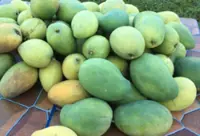
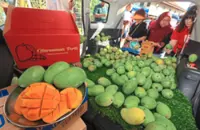
"Harumanis is our iconic premium product and is highly sought after by consumers across the country," Wan Zikri said when winding up the debate at the Perlis State Legislative Assembly on Friday (June 5).
He noted that the trading portal will allow farmers to trade directly with the global market while also promoting sales domestically.
Speaking to reporters later, Wan Zikri said the move was prompted by increasing cases of online fraud involving Harumanis sales.
"People buy Harumanis but receive other types of mangoes instead," he said, adding that sales had previously been entirely manual.
Wan Zikri said the platform would function as an official marketplace backed by the state government and the state agriculture department.
The department's website will be developed into a central hub with a user-friendly interface, allowing consumers to purchase genuine Harumanis from verified growers.
He said the initiative would start with Harumanis before being expanded to other agricultural products in the future.
As part of the digitalisation efforts, Wan Zikri had submitted an application to Yayasan Inovasi Malaysia on April 20 for thirty units of a smart agriculture innovation dubbed the HABAQQQ.
The system, which utilizes artificial intelligence, was developed by researchers at Universiti Malaysia Perlis (UniMAP).
The devices would be deployed across Perlis as a pilot project to help farmers monitor soil nutrients and optimise cultivation.
Perlis has about 2,600 Harumanis growers cultivating about 1,700ha of orchards.
By mid this year, production reached 1.36 million fruits, equivalent to 610.73 metric tonnes, which is about 61% of the total seasonal projection.
A similar digitalisation initiative was recently introduced in Penang, where durian growers adopted QR code technology to help consumers verify fruit authenticity.
The Penang system allows buyers to trace the fruit back to its orchard to protect the reputation of premium durian varieties from counterfeit products.