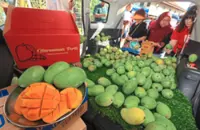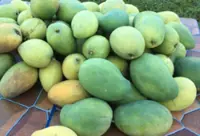
KANGAR: It’s raining harumanis mangoes in Perlis.
The dry and scorching weather was precisely what the trees required, allowing Malaysians to relish the annual delight of sweet mangoes, characterised by their unique citrus tang.
Growers say this year’s bumper crop was driven by prolonged hot and dry conditions, which are crucial for notoriously finicky harumanis trees to flower and fruit.
Farmer Mohd Nasir Salim, 35, said that the improved weather had enhanced fruit setting and boosted output across most orchards.
“Sales have increased compared with last year because of the hot weather. We are getting so many fruits. Most growers are seeing better yields,” he said.
Mohd Nasir, who manages about 80 trees in Sungai Batu Pahat here, said his orchard recorded about an 80% increase in production.
“This year I’ve already sold about 3,000 fruits and expect sales to exceed RM10,000,” he said, adding that last year’s harvest had brought in less than RM5,000.
He said disease levels were lower this season and customers found the fruit sweeter, though pest control, especially against thrips (a type of insect), remained a weekly task.
Another farmer, Mohd Fairus Abdul Razak, 41, said he had sold about two tonnes so far, double last year’s output.
“Last year, my output was only about one tonne,” he said, adding that he anticipated sales of around RM50,000 by the season’s end.
Mohd Fairus said premium-grade harumanis was now selling at about RM35 per kg, while standard grade was priced around RM28.
He said online demand and post-Hari Raya purchases had boosted sales, with orders coming from the Klang Valley, Kelantan and Terengganu.
Perlis Harumanis Entrepreneurs Association chairman Datuk Hashim Suboh said a bumper and extended harvest season was expected to push production to about 3,000 metric tonnes this year.
“Harvesting is at its peak, and the fruits are being widely sold. A longer season allows for repeat purchases, which is important because harumanis is not a staple food,” he said.
The extended season, he said, would benefit tourism, as more visitors would have the chance to savour the fruits.
Hashim said that other mango varieties were also in abundance and being sold at lower prices, with some even spoiling and going to waste.
“We should focus on developing downstream products such as pickles, chutney or even ice cream to better utilise the excess,” he said.