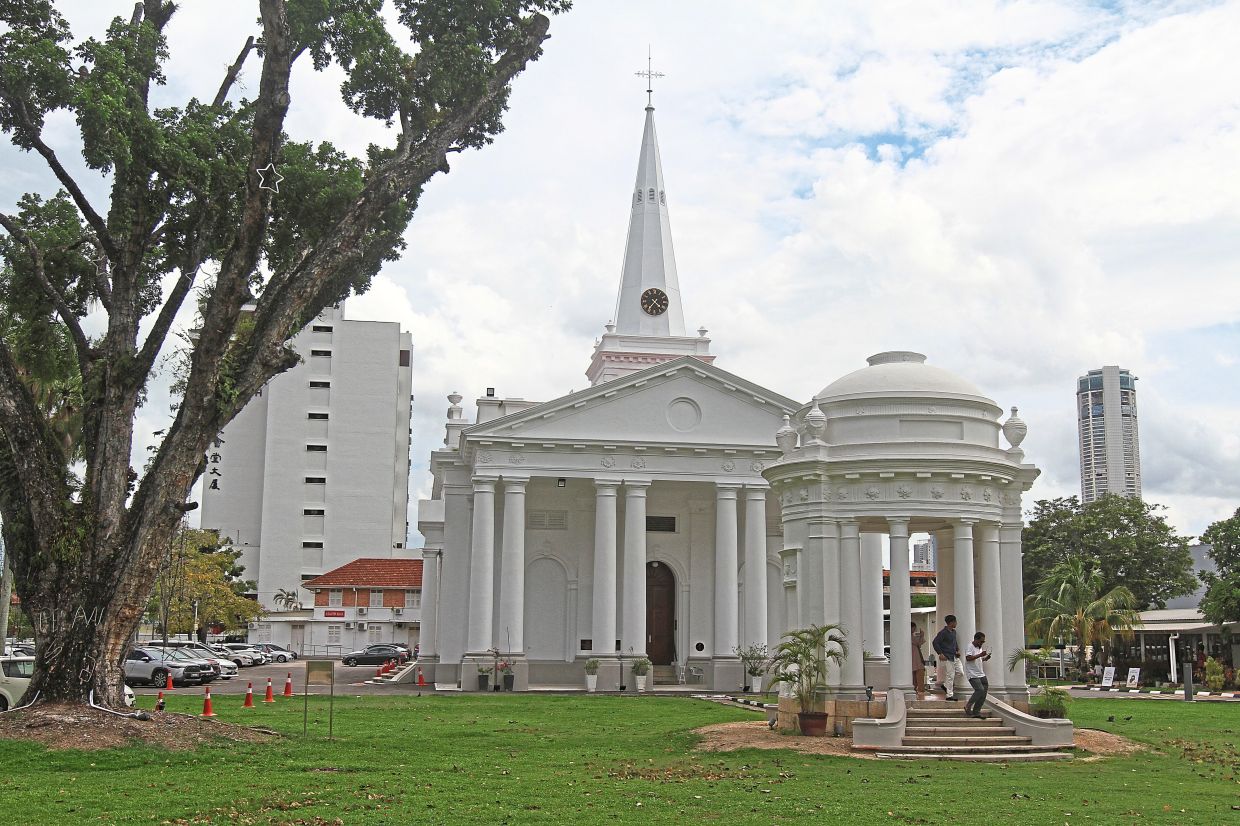
GEORGE TOWN: Hawker favourites such as char kuey teow and asam laksa, along with heritage landmarks including Fort Cornwallis, Kapitan Keling Mosque and St George’s Church are among 50 heritage elements gazetted to protect Penang’s multicultural legacy.
These heritage sites, intangible cultural elements and food items were recognised in the gazettement list under the Penang State Heritage Enactment 2011.
Penang tourism and creative economy committee chairman Wong Hon Wai said the state government was committed to preserving historical memory, cultural traditions, artistic heritage and social identity.
“The recognition highlights our multicultural and inclusive heritage that encompass the traditions and histories of various communities, religions and civilisations in the state.
“The gazettement shows our proactive role in heritage preservation and long-term vision of positioning cultural heritage as an important asset in tourism development, educational research and the creative economy,” he said in a statement.
Among the other landmarks gazetted were the Penang Free School, the Guar Kepah archaeological site and the Leng Eng Seah Association building in Butterworth. The intangible heritage list includes nasi kandar and kopitiam culture, Thaipusam and Chingay processions, St Anne’s feast in Bukit Mertajam, and Penang Tanjong dialect.
Gazetted heritage food items also include nasi kandar, cendol, roti canai, putu mayam and pasembor.
Wong said all gazetted items could potentially be proposed for recognition at the national level under the National Heritage Act 2005.
He added that intangible cultural heritage elements representing Malaysian cultural values could, in future, be considered for nomination to Unesco’s Representative List of the Intangible Cultural Heritage of Humanity.
“This will allow Penang’s cultural treasures to continue shining on both the national and international stage.”
Wong said although the enactment was passed in 2011, no official state-level cultural heritage gazettement had been carried out over the past 15 years.
“This year, we translated the provisions of the law into concrete action by gazetting 50 items, laying a stronger institutional foundation for preservation efforts,” he said, adding that cultural heritage is an important bridge in strengthening national unity.
“When the histories, beliefs, celebrations, languages, food cultures and built heritage of Malaysia’s multi-ethnic communities are recognised and institutionally protected, society can deepen mutual understanding through respect, foster a stronger sense of togetherness through cultural appreciation and reinforce the foundations of unity within Malaysia’s plural society.”