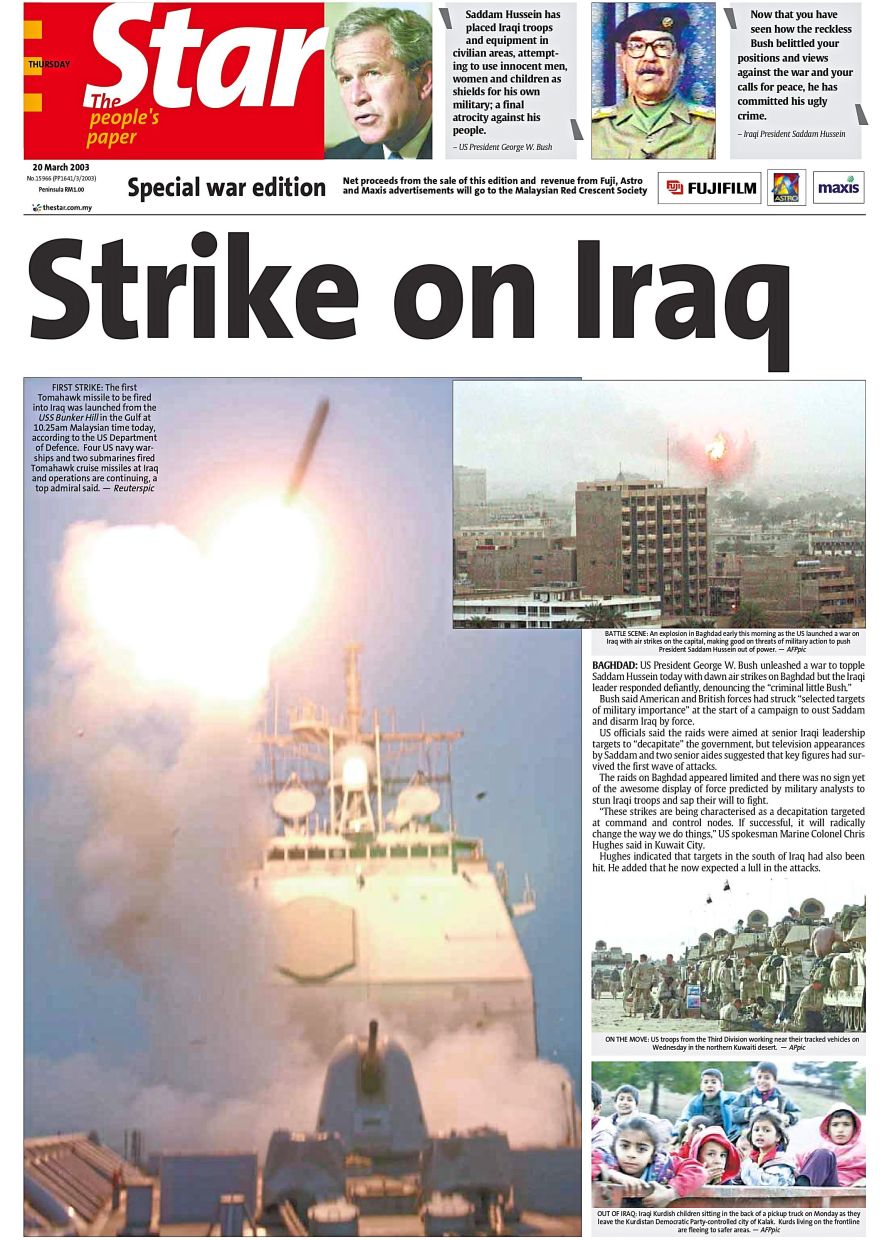
PETALING JAYA: On March 20, 2003, the United States and its allies launched a war on Iraq with airstrikes devastating the capital city Baghdad.
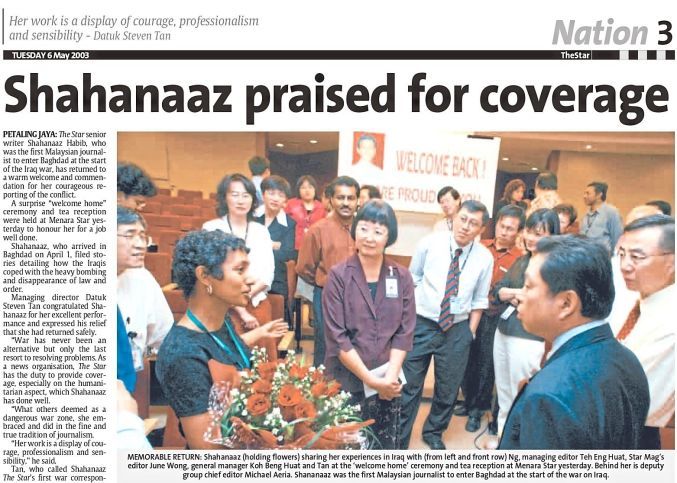
At a time when thousands of Iraqis were fleeing the country for safety, The Star senior writer Shahanaaz Habib was headed to the heart of the conflict zone.

“There was a lot of interest in the build-up to the Iraq war among Malaysians, and it was the biggest story then. But I did not expect to be asked if I wanted to go,” she recalled.
Shahanaaz arrived in Amman with regional associate editor PK Katharason on the day of the invasion.
While there, they produced stories highlighting the impact of the war on children in refugee camps and Mercy Malaysia’s efforts to provide medical relief amid severely limited resources.
Then on April 1, after overcoming some initial difficulties, Shahanaaz made her way to Baghdad on a 1,000km taxi journey from Jordan’s capital.
She reported seeing burnt-out vehicles, including an ambulance, and remembered speaking to a 14-year-old boy who said he learnt how to use a gun to protect his family.
“War is not a normal situation, and I was curious about people’s lives, how they were coping, their thoughts, concerns and fears,” said Shahanaaz.
With major Western media organisations – such as CNN and wire services – reporting on the US airstrikes, the advance of its troops and the reactions of the Iraqi government, Shahanaaz did not feel a need to duplicate the stories.
“I chose to focus on the untold stories, those overlooked or forgotten in the fog of war, which were the people’s stories.
“I had a driver, and we went around. When I saw something interesting, I would stop, talk to people and ask a lot of questions.”
However, things did not go all that smoothly for her upon arrival in Baghdad.
“One of the first things the United States did in Iraq was to strike the telecommunications towers and electricity grid.
“So, there were telephone lines and Internet services only if you had a satellite phone, and power only if you had a generator,” she said.
With that in mind, Shahanaaz stopped at an area where two hotels – The Palestine and Sheraton – were located.
One of them became her base, and Shahanaaz sought help from foreign journalists to send her stories through their satellite system.
“A few days later, AFP agreed to email my stories to The Star on a daily basis.
“That helped immensely because it took the stress out of having to keep finding someone with a satellite modem,” she added.
Shahanaaz said she could never forget how Iraqis remained resilient and kind toward strangers during the war.
A traumatic incident was when a US soldier in a tank shot and killed a photographer snapping the advance of US forces into Baghdad from his hotel lobby after mistaking the camera for a rocket-propelled grenade (RPG).
“The shock was overwhelming because less than a minute earlier, I was on the hotel rooftop watching fighter jets fly low and bomb areas around the building.
“I had just stepped into the lift to go down when the hotel came under fire during a US tank assault. It was horrifying to see a journalist being taken down,” she said.
While it was difficult to witness death and grieving families and mortuaries filled with limbs, Shahanaaz said she fought hard not to let her emotions get in the way of telling the story in the best way.
Shahanaaz spent about four weeks in Iraq before returning in November.
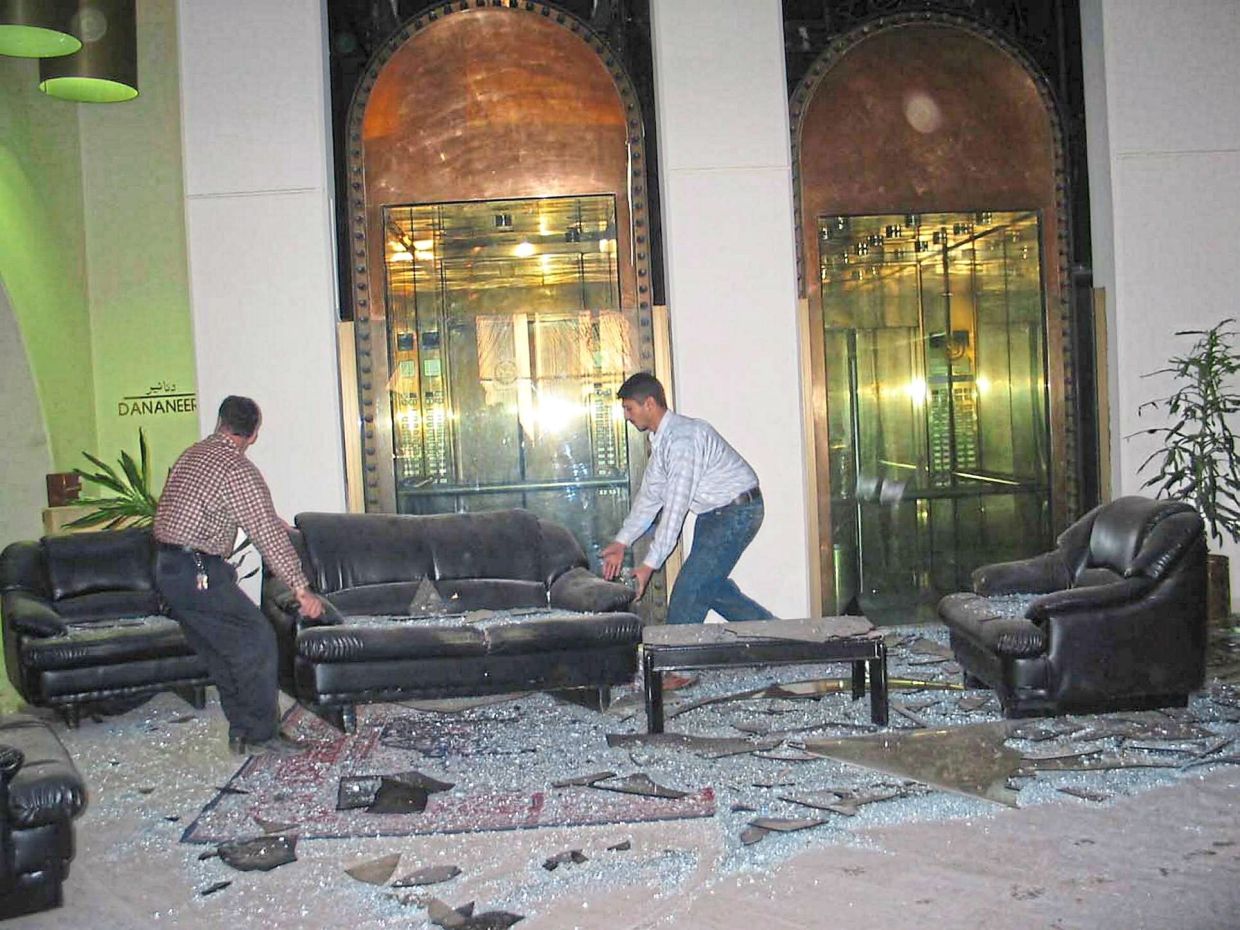
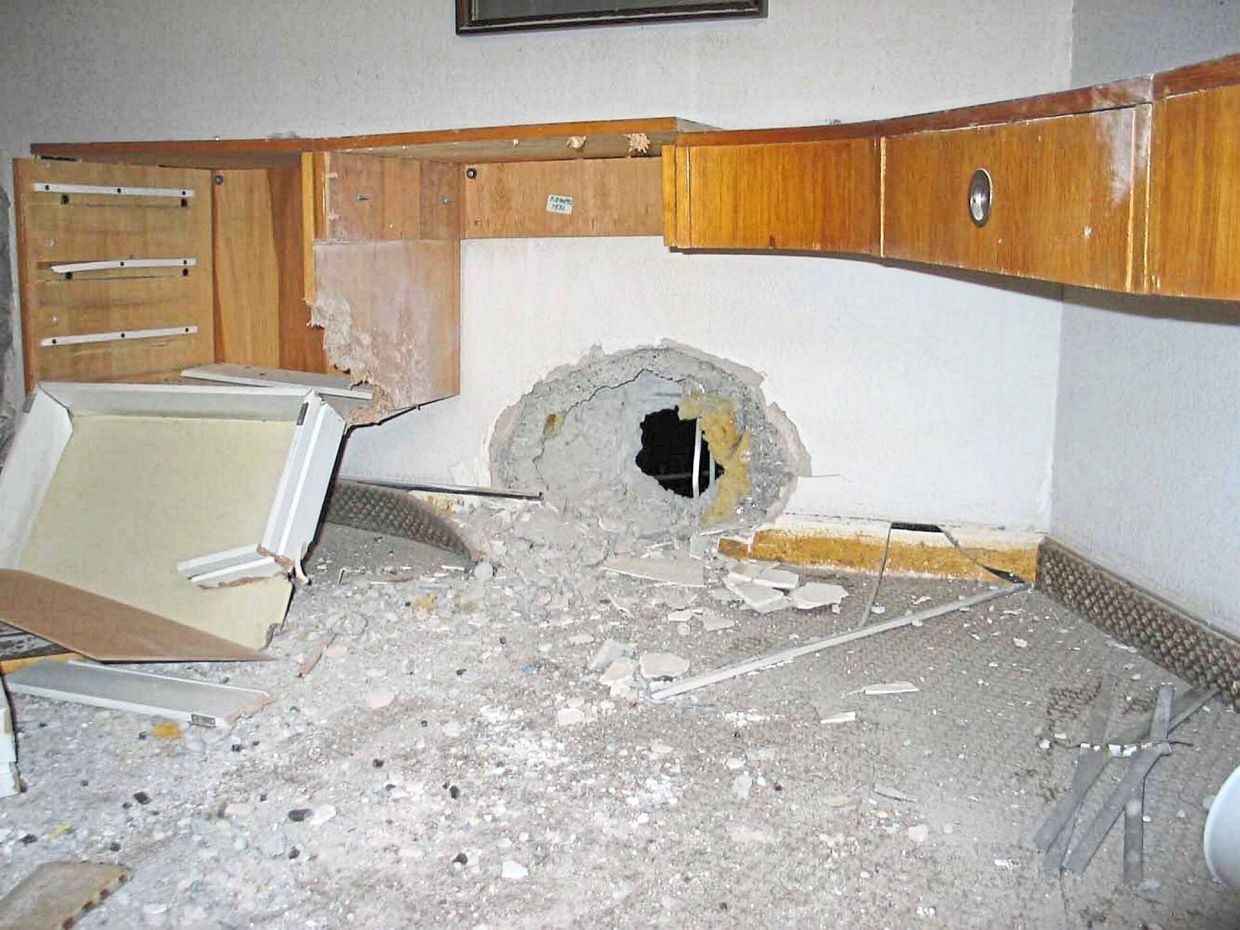
On Nov 20 at about 7am, a rocket struck her hotel, hitting room 1602.
The blast jolted her awake, and thankfully, she was safe in room 1615. Yet again, Shahanaaz refused to be despondent.
“I just moved on with what had to be done. I was constantly out and speaking to people, then returning to the hotel to file my reports,” she said.
She was committed to providing a ground-level perspective of the situation.
“War impacts lives in very real ways. Those were the stories I focused on.
“Human values – suffering, love, fear, concern for family and faith – cut across geographical borders,” she added.
Shahanaaz is widely recognised as the first Malaysian war correspondent to arrive in Iraq during the invasion.
In 2004, The Star published Between Blood and Bombs: A Journal of War, a book detailing her experiences in Iraq.