
PETALING JAYA: A pleasant dining experience is not just about food and ambience. Clean and hygienic toilets at these restaurants matter, too.
Maintaining high standards for toilets is also essential for attracting customers and sustaining business, say restaurant and coffee shop operators.
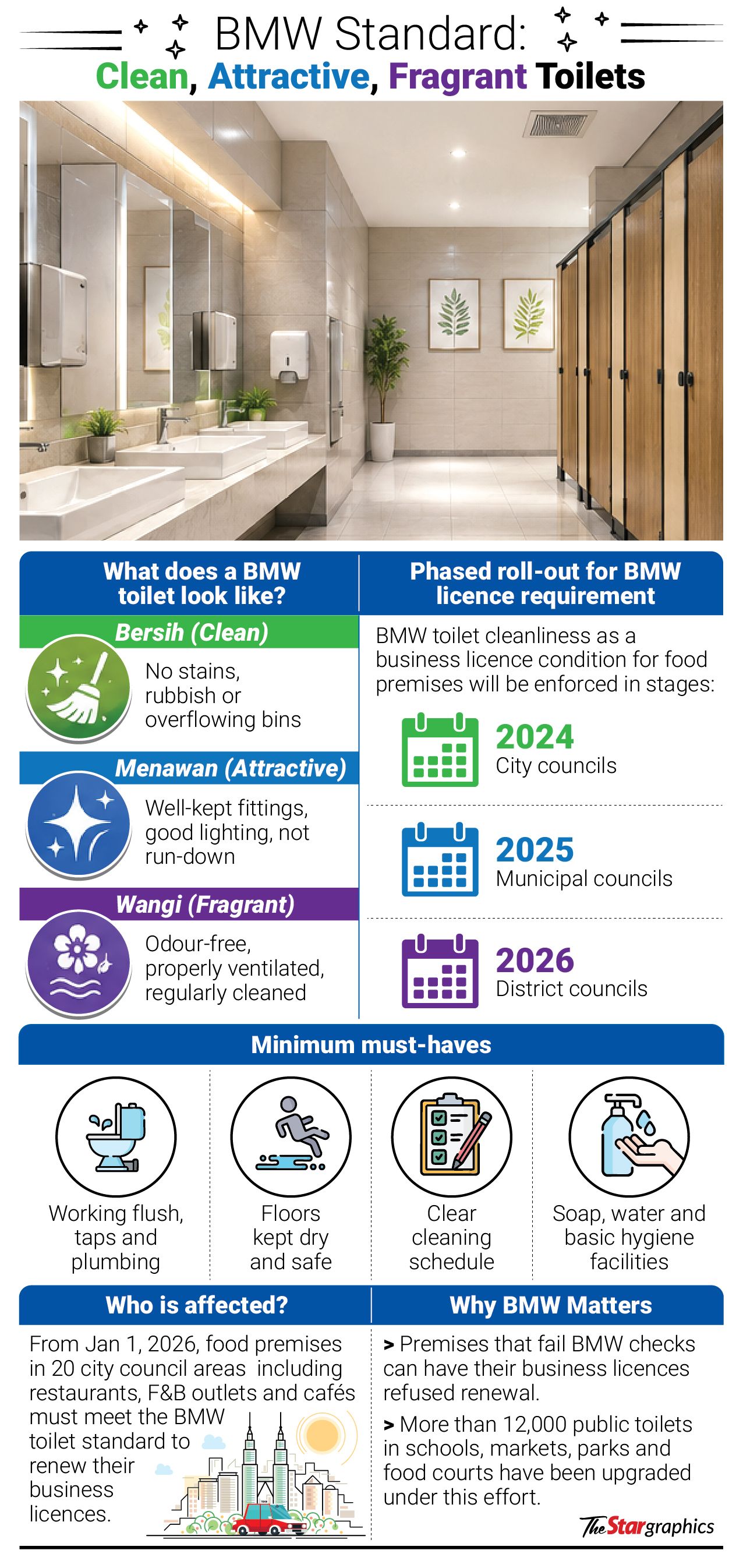
Hygiene standards, particularly toilet cleanliness, directly influence customer confidence and repeat business, said C. Krishnan, deputy president of the Malaysian Indian Restaurant Owners Association.
“Clean toilets are part of the overall dining experience. If toilets are not clean, customers will simply not return.”
ALSO READ: Spotless toilets now a must for eateries to keep licences
Krishnan said restaurant operators are already subject to inspections by the Health Ministry and local councils under food establishment regulations, which cover various aspects of cleanliness, including kitchens, food handling, refrigeration, dining areas and toilets.
Operators are assessed through a scoring system and premises that fail to meet the minimum marks would be ordered to close temporarily until improvements are made.
“Operators may be instructed to close for about 14 days and rectify the issues before reopening,” he said.
Krishnan said customers today are very particular about hygiene.
“In the last five years, restaurant standards and outlook have improved significantly. Operators know they have to keep their restaurants and toilets clean to maintain business.”
“You cannot have an unclean or unhygienic toilet,” he said, adding that it would affect the overall image and performance of a restaurant.
However, he admitted that maintaining cleanliness has become challenging due to labour shortages and rising operating costs.
“One of the biggest issues now is worker availability. When you have limited workers, it becomes very difficult to maintain cleanliness of the entire premises, including the toilets,” he said.
Krishnan said many operators could not afford to hire dedicated cleaning contractors, especially moderate-sized restaurants serving lower- and middle-income customers.
“Separate cleaning services are too expensive for many operators,” he said.
Malaysian Singapore Coffee Shop Proprietors’ General Association president Wong Teu Hoon said association members are constantly encouraged to maintain cleanliness standards despite the challenges.
“Many coffee shops have already started renovating and upgrading their toilets over the past year,” he said.
Wong said coffee shop operators, particularly those in older rented premises, often faced practical difficulties in maintaining toilet facilities due to heavy public usage.
“These toilets are almost like public toilets. With too many users, the flushing systems break down easily, and supplies such as toilet paper run out,” he said.
“Some toilets are located at the back of old buildings, making it difficult to carry out major improvements. But at the very least, they must be kept clean,” he said.
Wong said many operators had spent significant sums upgrading toilets, including replacing tiles and toilet bowls.
“In some cases, renovation costs can exceed RM10,000,” he said.
“At the end of the day, cleanliness protects our own business. If we fail to maintain it, customers will stop coming,” he said.
Wong added that some high-traffic outlets continue to face challenges despite regular cleaning.
“In busy eateries, especially hawker-style outlets, toilets are used constantly throughout the day. Sometimes stains build up quickly and even cleaning chemicals cannot fully solve the problem immediately,” he said.