PETALING JAYA: As data centres continue to expand across the country, federal and state governments are joining forces to ensure the technological boom does not strain the nation’s water and power supplies.
Digital Minister Gobind Singh Deo said state governments will be incorporated into Putrajaya’s Data Centre Task Force (DCTF), which oversees planning, investment approvals and the growth of the rapidly growing data centre industry.
“The invitation for all states to participate in the DCTF is currently being processed. The request came from the Mentri Besar and it will be carried out,” Gobind said after the launch of the NEXTDC KL1 facility here yesterday.
Acknowledging public and industry concerns over energy and water sufficiency, Gobind said managing such investments requires a whole-of-government approach.
“We in the DCTF look at the sufficiency of energy supply, and there are also discussions on alternative energy sources. At the state level, matters involving water supply and local authority approvals are handled there,” he said.
Gobind also said the Digital Ministry is actively developing governance frameworks for next-generation technologies, alongside large-scale upskilling initiatives to prepare Malaysians for artificial intelligence (AI)-driven changes in the job market.
“The government has to be prepared for what we anticipate over the next five to 10 years.
“We need to ensure the country has enough talent for the new job opportunities we foresee,” he said, adding that discussions on upskilling and reskilling are ongoing to address concerns over the impact of emerging technologies on existing jobs.
Earlier, Selangor Mentri Besar Datuk Seri Amirudin Shari called for collaborative planning between federal and state authorities to determine the actual number of data centres required to support Malaysia’s ambition of becoming an AI-driven nation by 2030.
Amirudin said the Selangor government is currently drafting a white paper on AI to comprehensively examine the technology’s benefits and risks, including issues related to privacy, national security and sustainability.
“That is fundamental in striking a balance between progress and security. It is the only way we can gain public trust and fully harness AI’s potential while recognising that certain risks will always exist.”
Meanwhile, during a later press conference, Amirudin said Selangor is on track to increase its water reserve margin to 22% by 2029 from the current 18%, following the completion of the Rasau Water Treatment Plant.
“By 2027, capacity can be increased to 700 million litres per day, and by 2029, it will become the largest water treatment plant in South-East Asia, with a capacity of 1,400 million litres per day,” he said.
Addressing local concerns over the rapid development of data centres, including high water and energy consumption as well as potential noise pollution, Amirudin said developers must be proactive in communicating their sustainability efforts to the public.
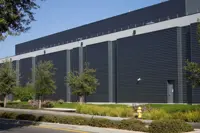
He commended NEXTDC’s approach for its KL1 facility, which uses air cooling instead of conventional liquid cooling and incorporates rainwater harvesting systems to reduce environmental impact.
The RM1bil NEXTDC KL1 facility is the first Tier IV data centre in Peninsular Malaysia.
The 65MW, Nvidia-certified infrastructure is designed for large-scale applications, including high-volume e-commerce, cloud service providers, and critical sectors such as healthcare and defence that require zero downtime.