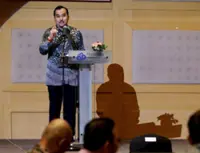
KUALA LUMPUR: Around 70% of the proposed amendments to the Majlis Amanah Rakyat (Mara) Act 1966 will focus on strengthening corporate governance, with emphasis on preventing abuse of power and conflicts of interest within the organisation, says Mara chairman Datuk Dr Asyraf Wajdi Dusuki.
He said the current Act, which was drafted in the 1960s, is no longer suitable for today’s governance needs, as it places too much authority in the hands of the chairman and the Mara Council.
This concentration of power, he added, could expose the institution to risks of misuse, manipulation and misappropriation if stronger checks and balances are not put in place.
“Under the current Mara Act, the power given to the chairman and council is very broad.
“For example, decisions involving large allocations could be influenced without sufficient oversight, and this cannot be effectively questioned under the existing framework,” he said at the public consultation session on the Mara Bill 2026 here yesterday.
Asyraf Wajdi said the proposed Bill, which will be presented to the Cabinet before being tabled in Parliament, will modernise governance structures and reinforce accountability mechanisms.
Among the key proposals are the creation of statutory governance committees, including those on audit, risk, finance, governance and investment, to help strengthen oversight and decision-making processes.
The amendments will also introduce requirements for the appointment of Mara Council members, alongside clearer definitions of roles and responsibilities within the organisation.
Asyraf Wajdi said the reforms are aimed at ensuring Mara remains free from abuse of power and financial leakages while improving institutional integrity.
He stressed that an organisation of Mara’s scale can no longer rely on informal governance structures, noting that it currently manages assets worth RM23bil and oversees 345 educational institutions, as well as major investment and entrepreneurship programmes.
“Power must not be overly centralised. There must be a clear separation between management, led by the director-general, and the Mara Council, which sets policy direction,” he said.
He added that the lack of clear separation of powers in the current Act has contributed to weak oversight mechanisms, increasing the risk of decisions being influenced by individual interests.
“Governance reform is essential to ensure continuity and integrity,” he said.