
For decades, a single ingredient, MSG (monosodium glutamate), has unfairly haunted Western dining.
People scan ingredient labels for MSG (or E621) as if it is a toxin – an alleged “silent killer” claimed to be responsible for headaches and neurodegenerative diseases.
Under “No MSG” signs that promise a “natural” dining experience, it has been banished from menus across the United States and Europe.
However, this widespread fear is one of the most successful and damaging pieces of food misinformation in modern history.
The negative perception of MSG is not rooted in rigorous science, but in a potent mixture of a 1960s hoax, persistent racial prejudice, and the sensationalism of debunked medical theories.
Far from being toxic, MSG is a compound our bodies produce naturally, and it has been consumed safely as an additive for over a century.
To understand why this discrimination persists in 2026, we must peel back the layers of xenophobia and pseudoscience that have unfairly maligned a simple flavour enhancer.
Your body loves MSG
To understand the injustice of the MSG panic, one must first understand what the substance actually is.
MSG is a salt which was discovered by Japanese chemist Kikunae Ikeda in 1908, when trying to capture the savoury essence of his wife’s kombu seaweed broth.
MSG is approximately 88% glutamate by mass, with the remainder sodium. Glutamate is the naturally occurring form of glutamic acid, a common amino acid and the main carrier of the savoury “umami” taste.
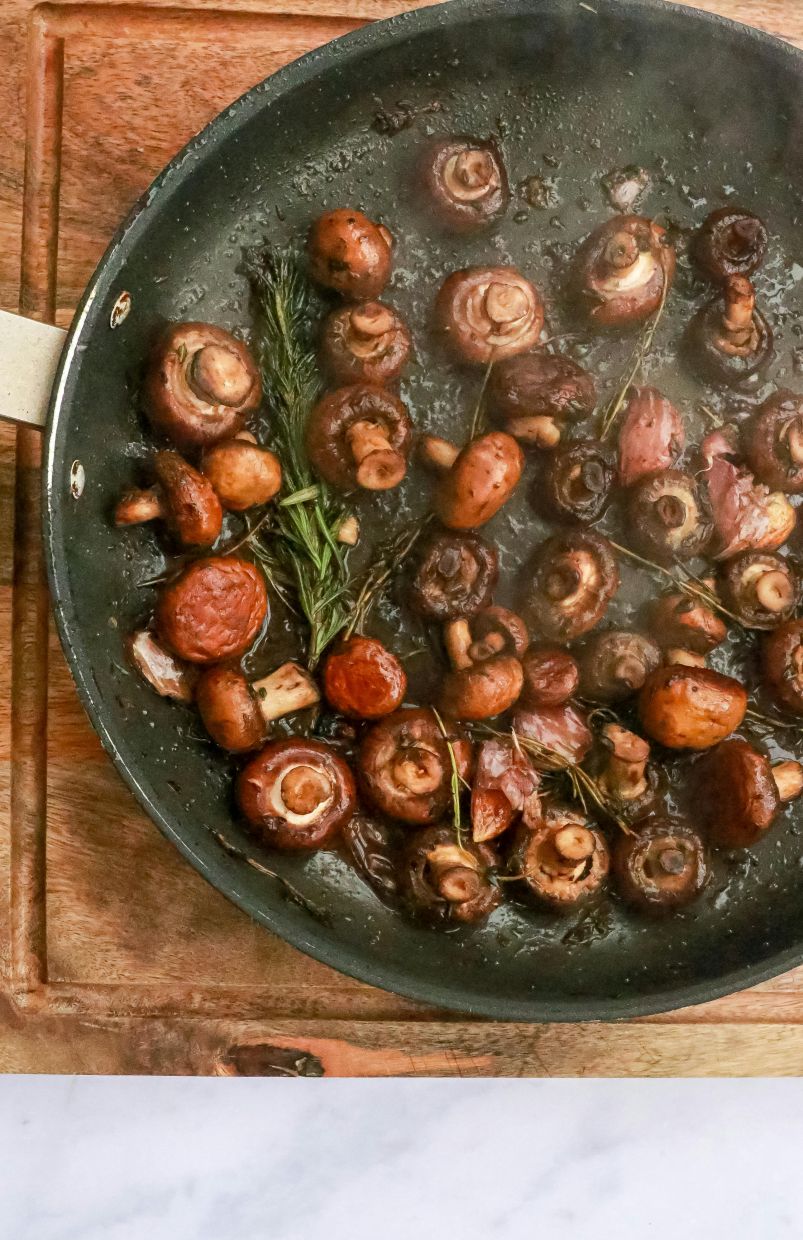
The glutamate in MSG is chemically identical to the free glutamate that occurs naturally in foods like tomatoes, Parmesan cheese, mushrooms, soy sauce, seaweed, meat, seafood, etc, and your body processes them in exactly the same way.
Glutamate is in fact the most abundant amino acid in nature and a fundamental building block of protein.
And the human body is a veritable factory for this compound.
The average adult synthesises tens of grams of glutamate every day through normal metabolic processes.
Our bodies store roughly two kilos of it in major organs like the brain, muscles, and liver. In the brain, it serves as a crucial neurotransmitter essential for learning and memory.
Birth of a myth
If MSG is so natural, how did it become a cultural pariah?
The origin of the myth can be traced to 1968, when a doctor named Robert Ho Man Kwok wrote a letter to the New England Journal Of Medicine.
He described experiencing vague symptoms – numbness, palpitations, and weakness – after eating at Chinese restaurants and speculated naively that one or more of several ingredients, including MSG, might be the cause.
This was not a scientific study; it was an unverified anecdote published without peer review.
However, the media latched onto it, coining the term “Chinese Restaurant Syndrome” (CRS) and singled out MSG as the “culprit”.
The term CRS itself was deeply problematic, implicitly linking illness to a specific ethnicity and stigmatising an entire cuisine.
While MSG was (and is) ubiquitous in Western fast/ultra-processed foods (UPFs), there is no “Potato Crisps Syndrome” or “Microwave Dinner Syndrome”, even though UPFs are unequivocally linked to metabolic diseases in countless scientific studies, unlike MSG.
This discrepancy highlights the racial prejudice inherent in the MSG scare.
In the 1960s and 70s, amid shifting immigration patterns, Asian cuisine was often portrayed as suspect or “exotic,” making it an easy target for Western cultural anxieties.
As the facts emerged later, it became clear that MSG was never a problem – the true culprit was the racism beneath the hysteria.
The “excitotoxin” deception
In the 1990s, the anecdotal fear of MSG was given a false veneer of scientific legitimacy by a neurosurgeon named Dr Russell Blaylock.
In his book, Excitotoxins: The Taste That Kills, Blaylock argued that MSG acts as a “neurotoxin” by flooding the brain with excess glutamate, overstimulating neurons to the point of cell death.
He claimed this “excitotoxicity” was a primary cause of Alzheimer’s, Parkinson’s, and behavioural disorders.
While Blaylock’s MD credentials gave him an air of authority, his theory has been thoroughly rejected by the scientific community.
Put simply, Blaylock’s claims are not supported by any evidence. The primary flaws in his arguments include:
1. Blood-Brain Barrier (BBB): The brain is protected by a highly selective “gatekeeper” known as the blood-brain barrier. Scientific research shows that dietary glutamate hardly reaches the brain at all.
Even when plasma levels of glutamate rise slightly after a meal, the BBB prevents it from entering the brain and affecting internal levels. 2. Intestinal metabolism: When we eat MSG, it simply does not just flood our bloodstream.
Approximately 95% of ingested glutamate is metabolised directly in the intestines, where it is used as a primary energy source by intestinal cells. Very little reaches the rest of the body.
3. Flawed research methodology: Blaylock’s “evidence” relied heavily on animal studies that bore no resemblance to human eating habits.
These experiments often involved injecting massive, concentrated doses of glutamate directly into the brains or under the skin of lab animals.
Scientists argue that these results are irrelevant and are equivalent to a human consuming an impossible number of kilos of MSG daily.
4. Lack of human correlation: Decades of human trials have failed to reproduce even the most basic of Blaylock’s claims.
In double-blind tests, people claiming to be “sensitive” to MSG overwhelmingly show no reaction when they do not know they are consuming it, suggesting a “nocebo effect” – where the expectation of illness causes the symptoms.
Not detrimental in East Asia
If the “excitotoxin” theory was true, East Asia would be facing a public health catastrophe.
In Japan and South Korea, people consume between 1.2g to 2.3g of added MSG per day, compared to 0.3g to 0.6g in the West. East Asians have used added MSG for over a century.
And these nations boast some of the world’s longest life expectancies and lowest rates of heart disease. This may also be because small amounts of MSG, which contains far less sodium than table salt, can season food better than larger amounts of salt alone.
The safety record of MSG in East Asia therefore provides powerful real-world evidence that flatly contradicts the irrational, alarmist narrative of the West.
Injustice in 2026
Despite the global regulatory consensus from all food authorities that MSG is safe, the stigma remains stubbornly entrenched. Several factors sustain this injustice:
• Commercial Exploitation: The “No MSG” label has become a powerful, albeit misleading, marketing tool. Many “MSG-free” products simply substitute MSG with ingredients like yeast extract or hydrolysed vegetable protein, which are naturally rich in glutamate. This allows companies to charge a premium for “MSG-free” labels while selling exactly the same chemical compound to unsuspecting consumers.
• Confirmation Bias: It is psychologically easier for someone to blame a misunderstood additive for feeling unwell after overeating a heavy, salty meal than to consider the calorific load, high sodium content, synthetic additives, or their own lifestyle.
• Wellness Industrial Complex: In the age of social media, fear sells. Influencers and “wellness” gurus often echo Blaylock’s debunked theories because alarmism generates more engagement than dry, scientific facts about safe intestinal metabolism.
• Cultural Inertia: The racist origins of “Chinese Restaurant Syndrome” linger as a form of cultural micro-aggression. Asian cuisines continue to bear a disproportionate burden of proof regarding safety, while verifiably harmful Western UPFs escape similar scrutiny.
Summary
The vilification of MSG stands as a cautionary tale about how xenophobia and pseudoscience can distort both reality and the eating habits of millions.
It is the story of a harmless, essential amino acid – one our own bodies produce in vast quantities every day – being wrongly cast as a dietary and cultural pariah, all for the simple crime of making food delicious.
Ultimately, CRS was a racist misnomer for symptoms never causally linked to MSG.
The “excitotoxin” theory was a fringe, alarmist interpretation of non-valid research, promoted by a figure now rejected by mainstream science.
Achieving justice for MSG simply requires people to choose evidence above anecdote.
The “No MSG” labels on restaurant windows and packaging are not hallmarks of wholesome food, but just more symbols of cynical marketing.
It must also be emphasised that no human disease has ever been convincingly linked to the daily consumption – or even moderate persistent overconsumption – of MSG.
I wrote this to correct an earlier column written over a decade ago, which was erroneously based on Blaylock’s misinformation. This is my belated apology to MSG.
The views expressed here are entirely the author’s own.