
PETALING JAYA: Recent heavy rain and flash floods may have subsided, but health experts warn that stagnant water left behind could trigger a rise in dengue cases in the coming weeks.
As of April 26, Malaysia has recorded 18 dengue-related deaths this year, while daily cases continue to be detected nationwide, according to the Health Ministry’s iDengue portal.
Entomologist and mosquito control expert Dr Lee Yean Wang said dengue outbreaks often intensify not during floods themselves but within one to four weeks after heavy rain, particularly in densely populated urban areas where stagnant water remains.
“The risk is significant,” he said, pointing to repeated rainfall cycles, water accumulation in urban environments and ongoing dengue transmission nationwide.
“In the Klang Valley, high population density and delayed cleanup after flash floods can rapidly trigger a sharp increase in mosquito populations,” he said in an interview.
While fast-moving floodwater may temporarily wash away mosquito larvae, Lee said the real danger begins once floodwaters recede and stagnant water is left behind in drains, rooftops, buckets, flower pots, construction materials and other hidden water traps.
“These become ideal breeding grounds for Aedes mosquitoes.”
Under Malaysia’s tropical climate, Aedes mosquitoes can complete their life cycle from egg to adult in as little as five to seven days.
Lee said mosquito populations typically begin increasing within about a week after rainfall, while dengue cases may start rising two to four weeks later as the virus spreads through mosquito bites.
“This means the first seven days after flooding are critical.
“If stagnant water is removed within that first week, many mosquito breeding cycles can be interrupted before the population explodes,” he said.
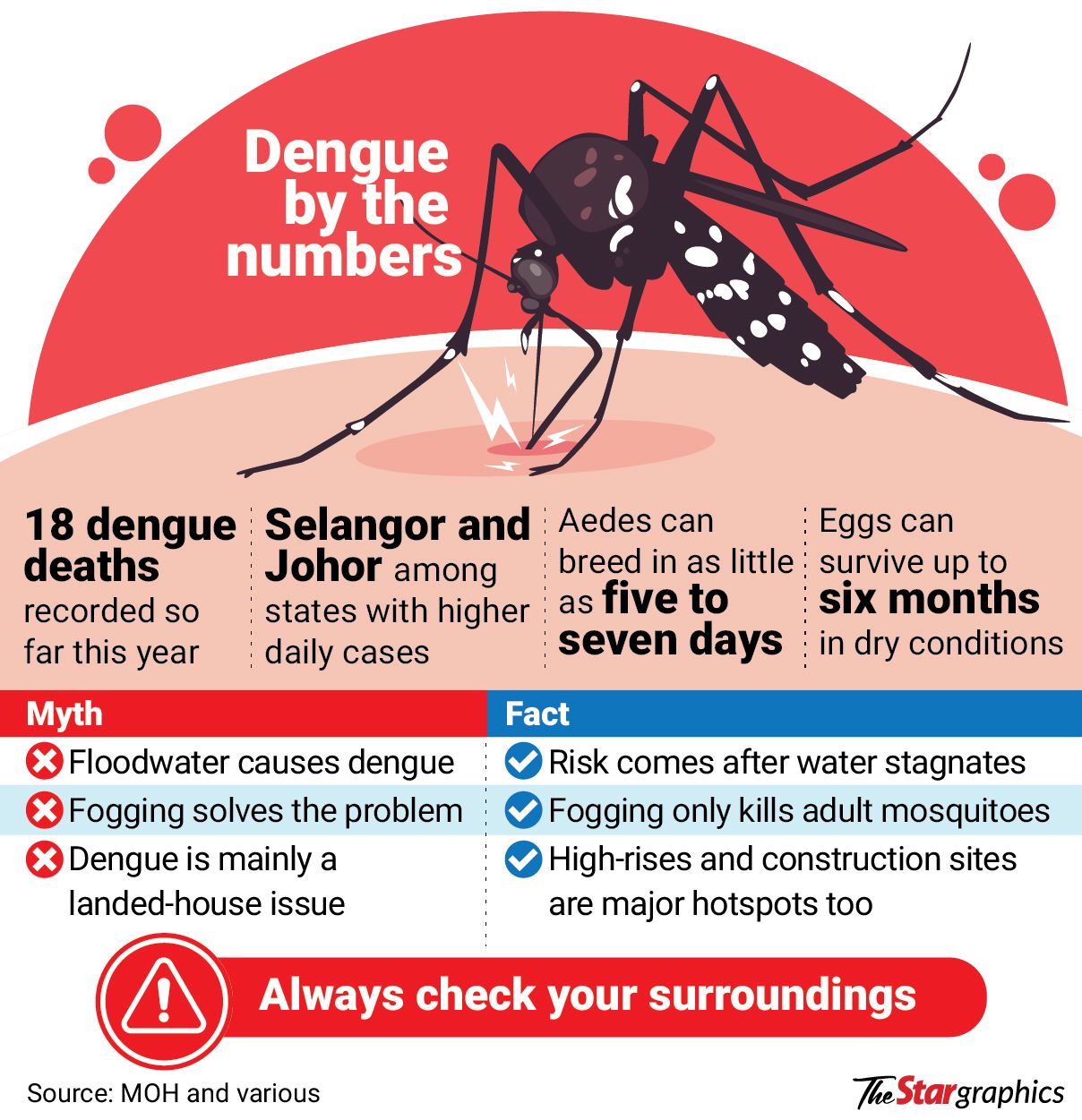
He noted that high-rise residential buildings and construction sites are increasingly contributing to urban dengue breeding due to water accumulation on rooftop tanks, blocked gutters, balcony drains, lift shafts and poorly maintained construction areas.
When asked, Lee said controlling Aedes mosquitoes remains challenging as their eggs can survive in dry conditions for up to six months before hatching when exposed to water again.
“This is why dengue prevention cannot only happen during outbreaks or rainy periods. Environmental management must continue throughout the year,” he said.
He also cautioned against over-reliance on fogging.
“Fogging mainly targets adult mosquitoes at that moment, but it does not eliminate eggs, hidden larvae or breeding sites.
“Fogging without cleanup is like mopping the floor while the tap is still running,” he said.
Universiti Malaya virologist Dr Sazaly Abu Bakar said dengue cases often increase around 16 days after heavy rain.
He noted that transmission also depends on infected individuals being exposed to mosquito bites, allowing the virus to spread further within communities.
Sazaly urged those experiencing dengue symptoms not to ignore warning signs or delay seeking treatment.
“People must be more alert. Don’t assume it is nothing,” he said.
Both Lee and Sazaly called on the public to regularly inspect their surroundings, especially in the week after heavy rain, and immediately remove stagnant water from containers, drains and hidden water traps around homes and buildings.