
PEACH coloured salmon, pink fatty tuna, white squid, creamy scallops all topped on carefully rolled Japanese short-grained rice.
Other than that, properly seared eel or unagi, smeared with sweet and savory smoky teriyaki sauce and other mouth-watering arrangements are displayed nicely, meant to feed one’s sight and hopefully, prompt one to get a taste of their own Japanese dishes.
This is part of an ongoing “I Love Sushi” exhibition at the Sabah Islamic Museum in Kota Kinabalu, which will end in June.
Other than examples of carefully assembled sushi rolls, there are also displays of raw ingredients with information on how these dishes are prepared, where they are sourced from and a little bit of history behind them.
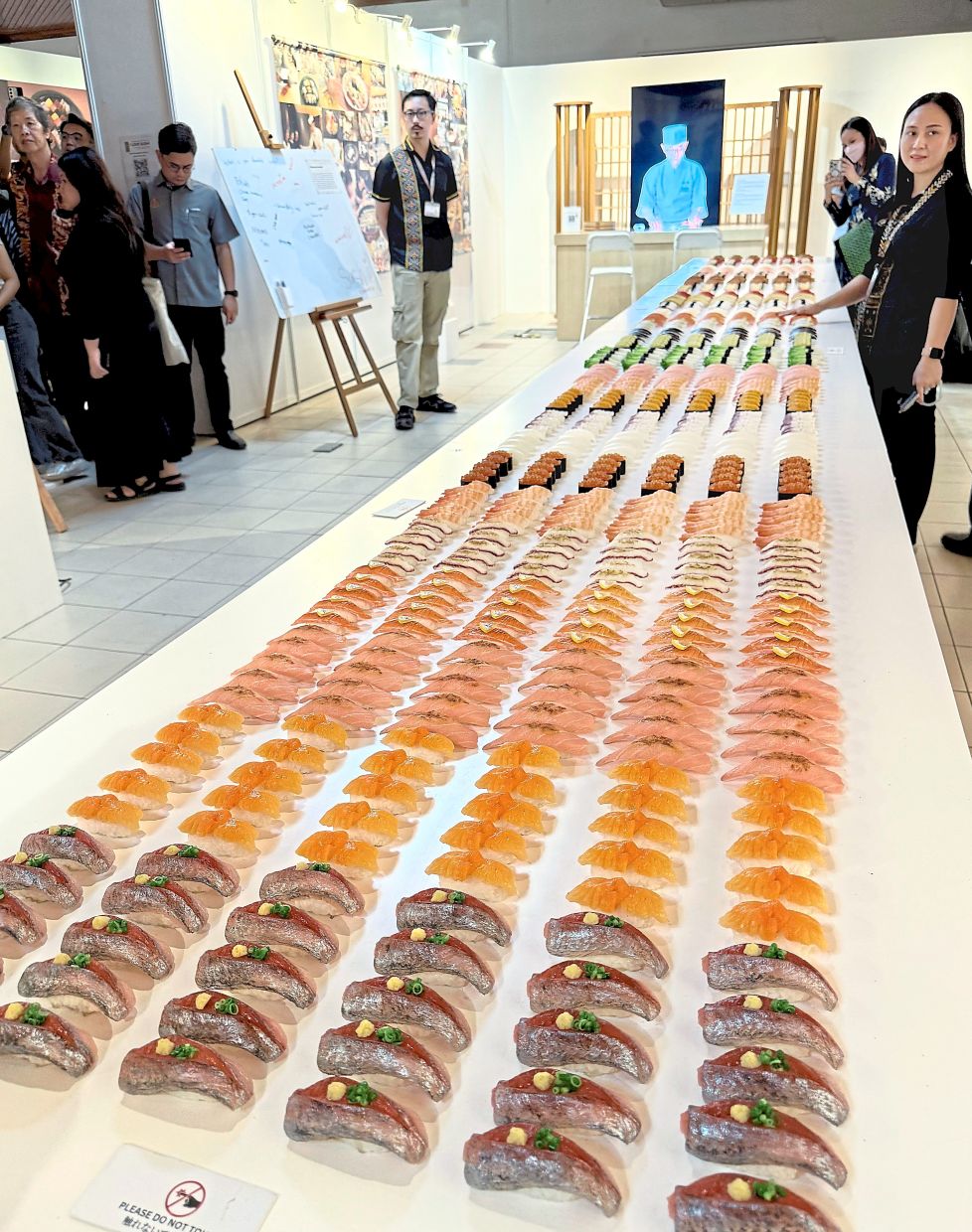
Visitors who wish to learn about making their own sushi can also get some insights with a video demonstration that is played during certain hours of the day.
When the exhibition was launched, Japan’s ambassador to Malaysia Shikata Noriyuki suggested that sushi is perhaps the most familiar face of Japanese cuisine around the world.
“Elegant, healthy, and deeply rooted in tradition, sushi embodies the very essence of washoku (meaning harmony and food or eating), Japanese cuisine, which was inscribed by Unesco in 2013 as an Intangible Cultural Heritage of Humanity,” he said.
“It is said that the roots of sushi in Japan started over a thousand years ago, and over the centuries, it has developed in its own way, shaped by Japan’s rich natural environment and the creativity of its people,” he explained.
Noriyuki said around 200 years ago, during the Edo period, sushi took on the form known today as nigiri-zushi, as a quick and tasty meal enjoyed by the people of Edo, Tokyo.
Since then, sushi has continued to evolve not only in Japan but around the world, he said.
“I have heard that in Malaysia there are creative styles such as “Sambal Sushi,” “Rendang Sushi,” and even “Nasi Lemak Sushi”.
“I am not sure whether sushi purists in Japan would approve, but I would certainly like to give them a try,” Noriyuki said with a chuckle.
Sabah Tourism, Culture and Environment Minister Datuk Jafry Ariffin said the exhibition invites visitors to explore the history, culture, and artistry behind one of Japan’s most iconic foods, a cuisine that has gained worldwide recognition and appreciation.
Through visual displays, interactive materials and a simulated sushi shop setting, visitors can experience the skill, balance of flavours and creativity that make sushi unique today, he said.
Jafry said that while sushi is Unesco-recognised, traditional dishes such as Hinava in Sabah are also recognised as part of Malaysia’s cultural heritage under the National Heritage Act 2005 (Act 645).
He said through initiatives like “I Love Sushi”, people are reminded of how culinary traditions can bring people together, foster mutual respect and deepen an understanding of different cultures across borders.
The exhibition is part of the Japan Foundation’s “Travelling Exhibitions Programme,” a long-standing initiative that introduces the many faces of Japanese art and culture to audiences across the globe.