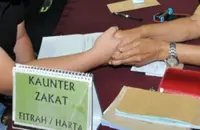
PETALING JAYA: There is a need for comprehensive and uniform laws governing zakat collection, especially in light of rising scam risks and concerns over unauthorised fundraising activities, say experts.
States that do not yet have comprehensive and uniform laws should introduce specific rules on zakat and zakat fitrah, said Syariah Lawyers Association of Malaysia president Musa Awang.
“States that already have such laws must review their effectiveness and introduce new provisions in line with current realities,” he said yesterday.
He added that stricter oversight and enhanced audits are needed to regulate zakat collection.
Musa warned that the actions of a small number of individuals or non-governmental organisations (NGOs) could have wider repercussions, including eroding public trust in legitimate Islamic charities, thus reducing donations to genuine beneficiaries.
“The involvement of religious figures in corruption can also create the perception that religion is being exploited for personal gain,” he noted.
Musa said state Islamic religious councils need to have tighter audits and monitoring over NGOs, as well as licensed zakat collectors and agents.
He also advised the public to exercise caution when making payments, particularly through online transfers.
“The simplest check is to look at the name of the recipient. If it is not the state Islamic religious council, then there should be a question mark,” Musa added.
Datuk Dr Mohd Na’im Mokhtar, a former Minister in the Prime Minister’s Department (Religious Affairs), said recent cases should serve as a wake-up call for NGOs to strengthen governance, particularly when handling public funds.
“I support the proposal to establish an independent monitoring body, such as a Charity Commission Malaysia, to ensure NGOs operate transparently and with integrity,” he said.
The senator also recommended that agencies like the Department of Islamic Development Malaysia (Ilim) and the Department of Awqaf, Zakat and Haj (Jawhar) conduct regular financial management training for Islamic NGOs.
“Zakat has its proper channel. Official institutions are the best avenue as they are subject to audits, comprehensive verification processes and state laws,” he said.
Mohd Na’im added that NGOs must uphold strict financial discipline and be open to audits.
“Audit is a shield, not a threat. It protects organisations from allegations and ensures public trust is maintained,” he said.
Common warning signs, he said, include requests to transfer funds into personal accounts, excessive focus on individual personalities and a lack of transparent reporting on aid outcomes.
A Friday sermon in Selangor yesterday stressed that zakat collection and distribution was under state jurisdiction.
“NGOs, individuals or other entities that collect or distribute zakat in Selangor without the permission of His Royal Highness the Sultan or his authorised representative, namely the Selangor Islamic Religious Council or the Registered Trustees of the Selangor Zakat Board, are acting unlawfully under Shariah law,” said Mohd Luqman Hakkim Rizuan when delivering the sermon at Masjid Sultan Salahuddin Abdul Aziz Shah.