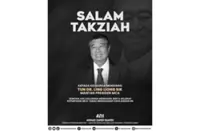
PETALING JAYA: Even as he dished out char kway teow to raise funds, the late Tun Dr Ling Liong Sik was also working to set up the Langkawi Project, an initiative aimed at keeping rural children in school.
UTAR council member Datuk Lim Si Cheng said Dr Ling wanted educational opportunities to go beyond top scorers.
“He was not satisfied with seeing only high-achieving students making it to university. He wanted children in rural communities to have the chance to stay in school and keep learning,” Lim recalled.
“Under the slogan ‘one hour a day – you can do it’, he urged parents to spend an hour each day with their children, take an interest in their schoolwork and help underprivileged students secure better learning opportunities,” he added.
Lim, who served as Dr Ling’s political secretary from 1990 to 1995, described him as a steady, patient and pragmatic man with strong negotiating skills.
Dr Ling’s commitment to education was shaped in part by his upbringing as his mother was an educator, he said.
Lim also credited Dr Ling with laying the groundwork for Universiti Tunku Abdul Rahman (UTAR) and the UTAR Hospital.
The Langkawi Project was launched on Feb 22, 1993, when Dr Ling was MCA president, to raise rural education standards by encouraging parents to take a more active role in their children’s learning.
Former MCA secretary-general Tan Sri Ong Ka Chuan said student community outreach was a key part of the Langkawi Project.
“We sent tertiary students to visit households so parents could see that their children, too, could become university students; that rural children should not be denied the chance to pursue education,” Ong said, adding that the effort later expanded into tuition centres in several areas.
Former MCA secretary-general Tan Sri Dr Ting Chew Peh spoke of Dr Ling’s vision in establishing UTAR, not only to broaden access to higher education but also to equip students for the job market.
“The aim was to provide affordable higher education, especially for those who could not enter public universities,” he said.
Ting also said the plan for UTAR was raised during a plane journey.
He said Dr Ling was travelling with then prime minister Tun Dr Mahathir Mohamad and noticed the leader enjoying his favourite Kedah-style nasi lemak.
“When Dr Ling saw that Mahathir was satisfied with his meal, he felt it was the right moment to broach the subject of setting up a university,” Ting said.
(The Star in a report dated March 7, 2019, with the headline “UTAR was born in the skies”, quoted Dr Ling as saying that he knew he had “struck gold” when Dr Mahathir jotted down the suggestion.)
Ting, who is also UTAR council chairman, said UTAR’s emphasis on multilingual education – in Bahasa Malaysia, Mandarin and English – proved to be a key strength.
“Many of our students come from modest backgrounds but because they are multilingual, they are highly employable,” he said.