
Gaps remain a concern, especially among SMEs, say experts
PETALING JAYA: The current level of compliance with industrial occupational safety and health (OSH) requirements remains relatively low and continues to be of concern.
Even though regulatory frameworks are in place, consistent implementation at the ground level still requires improvement, said Malaysian Occupational Health Practitioners Association (Mohpa) management committee member Hassan Abdullah.
This is especially true for small and medium enterprises (SMEs), which tend to exhibit lower levels of OSH awareness and compliance, while influenced by factors such as limited resources, cost considerations and lack of dedicated safety personnel.
“Nevertheless, Malaysia’s OSH performance is showing gradual improvement year by year. Increased enforcement by authorities, continuous awareness programmes and stronger industry participation are helping to elevate overall safety standards,” he said.
Hassan also acknowledged that various efforts and enforcement initiatives have been implemented by the Occupational Safety and Health Department Malaysia to strengthen compliance with OSH requirements across industries.
He said this after the recent incident involving two fatalities and one injury after the workers fell from a skylift during maintenance work at a Subang Jaya apartment on March 16.
The incident, which occurred at around 3.50pm during heavy rain, highlights the gaps in compliance and awareness.
Hassan added that it also reflects the ongoing challenges in ensuring safe work practices, particularly when using mobile elevating work platforms (MEWP) and carrying out work at height (WAH).
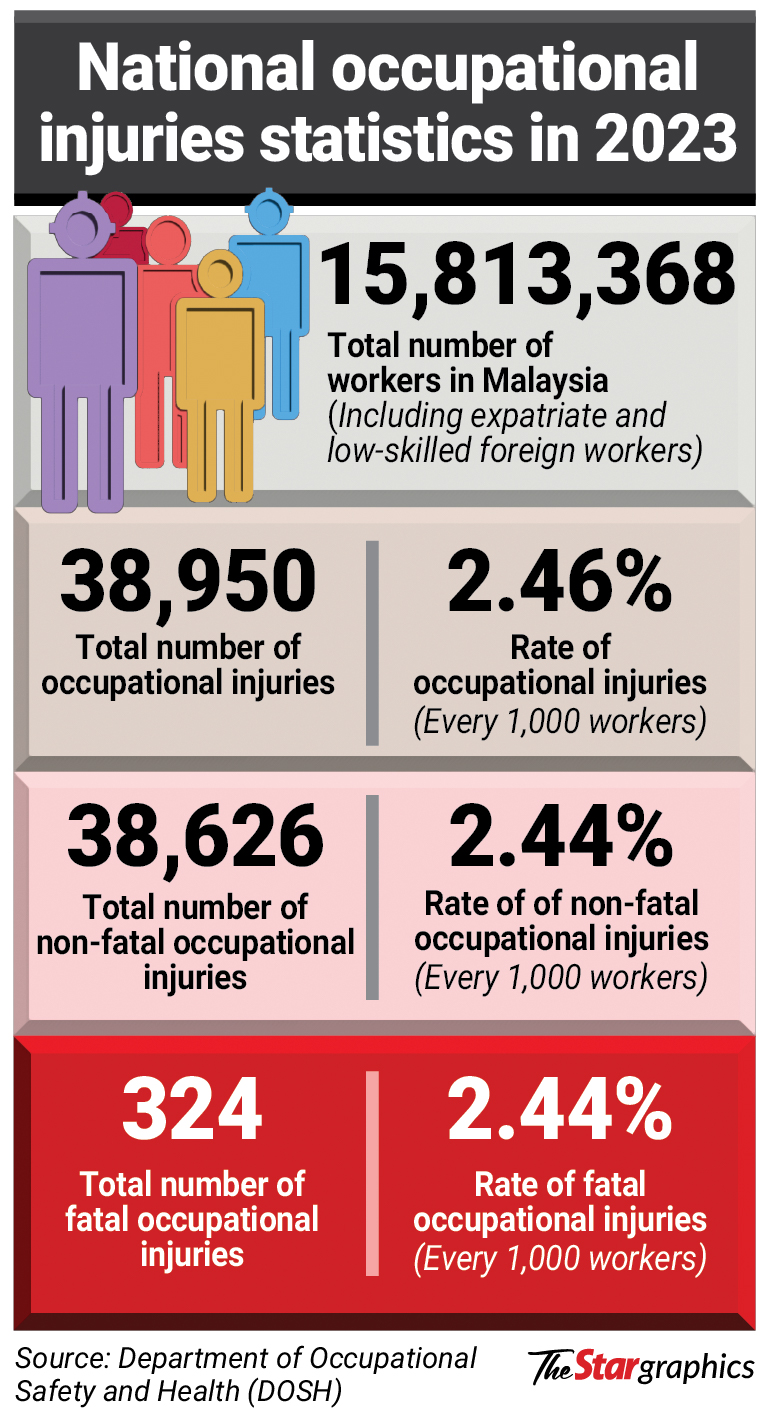
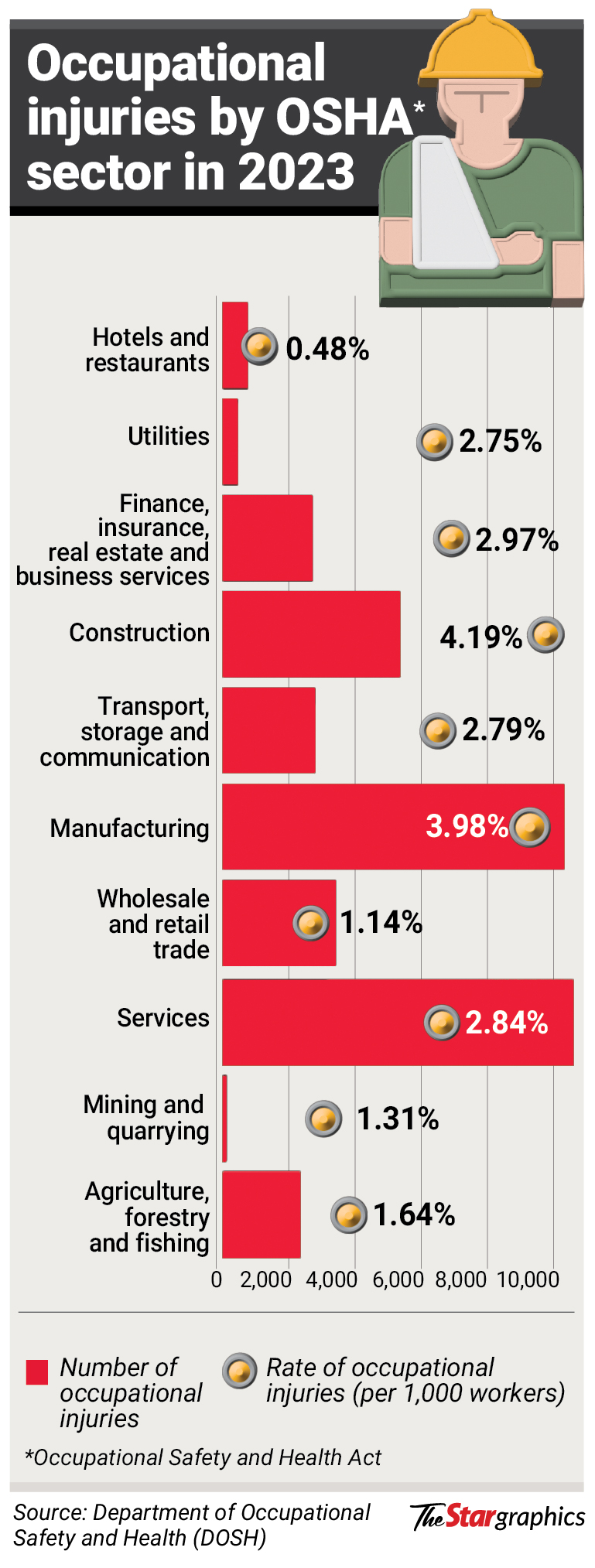
When asked which industry tops the list, Hassan said in terms of recorded incidents, there are more seen in manufacturing, but severe ones leading to fatalities are more common in construction.
He also said WAH contributes the bulk of fatalities at construction sites, especially from maintenance work.
Universiti Malaya occupational health specialist Prof Dr Victor Hoe said the skylift incident indicates a persistent and preventable risk in WAH.
“This incident reflects a broader pattern seen in Malaysia, particularly in construction and maintenance sectors, where falls from height remain one of the leading causes of fatal occupational injuries.
“Malaysia has a relatively strong OSH regulatory framework, and compliance is generally good.
“Larger organisations and multinational companies tend to have structured safety systems and better compliance.
“However, gaps remain among small and medium enterprises, subcontractors and the informal sectors,” he said.
In practice, Dr Hoe pointed out the issue is less about the absence of regulations and more about inconsistent implementation, particularly in day-to-day supervision, risk assessment and adherence to safe work procedures.
Academy of Occupational and Environmental Medicine Malaysia president Prof Dr Abu Hasan Samad recommended that several requirements be put in place, especially for those that come under the high-risk WAH, including risk assessment and preventive measures such as guardrails and fall prevention systems.
“Ensure that the scaffolds, platforms or gondolas used are properly installed and meet safety requirements, while also ensuring that the work permit is in order.
There should be proper supervision with adequately trained workers.
“Always maintain good communication with the colleague or supervisor on the ground, and ensure the safety harness is used at all times.
“During bad weather, workers should stop WAH.
“The supervisor or colleague on ground should instruct them to stop working and come down immediately,” said Dr Abu Hasan, who is also the Malaysian Federation for Occupational Safety and Health chairman.
He said the rules are there and most employers comply with the requirements, but supervision of WAH activities may be lacking.
“Workers’ compliance with the use of safety harnesses in general is poor, hence the need for close supervision. It’s the duty of the employers to ensure that all requirements for WAH are in place and that the employees comply with the SOP,” he added.