PETALING JAYA: The concern raised by the International Energy Agency (IEA) that the world is facing a serious energy crisis should serve as a push for Malaysia towards renewable energy.
Sunway University economics Prof Dr Yeah Kim Leng said fossil fuels overwhelmingly dominate Malaysia’s primary energy supply, forming an estimated 94%.
He said renewable energy contributes a sizable 25% of installed electricity capacity.
“Greater electrification will help to reduce the country’s dependency on fossil fuels.
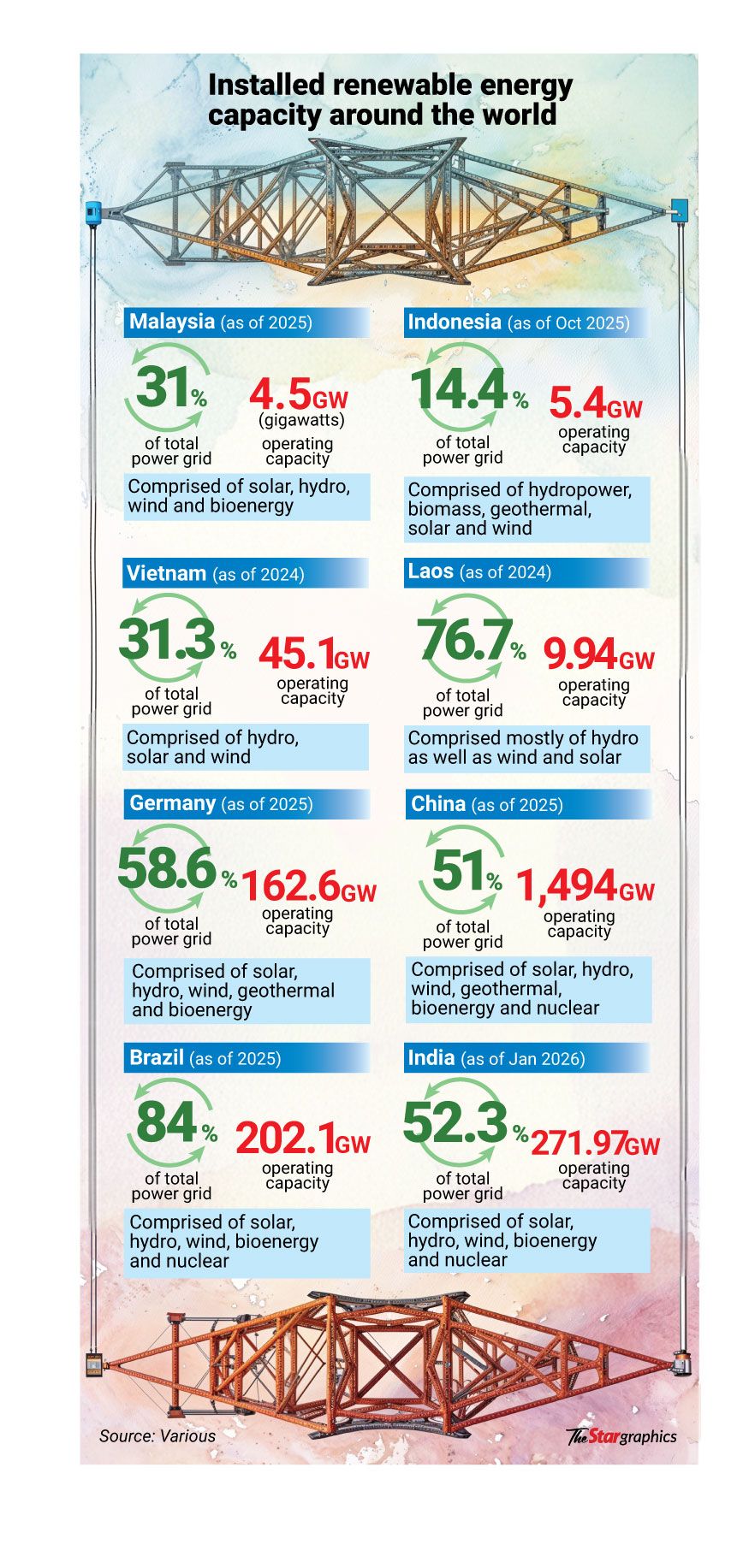
“The National Energy Transition Roadmap (NETR) would need to accelerate to boost the share of renewable energy, diversify energy sources and introduce new policies to promote energy efficiency and incentivise investment in renewables with a carbon tax phase in,” he said.
Citing nuclear technology and increasing deployment of safe and scalable reactors, Prof Yeah said there is now increasing optimism that it will become an important source of renewable energy in the near future.
“It is a positive development that it has now been included as a new clean energy source to be explored under the 13th Malaysia Plan,” he said.
Recently, IEA executive director Fatih Birol said the energy crunch due to the US-Iran conflict exceeded the 1973 and 1979 oil shocks and the gas shortages stemming from Russia’s 2022 invasion of Ukraine put together.
Association of Water and Energy Research Malaysia president S. Piarapakaran said almost 40% of the final energy demand is in the transportation sector, which is highly unsustainable.
“Fuel usage is aggravated by bad road designs and traffic management. The energy transition is also banking on natural gas as a major energy mix,” he said, adding that the fundamental lies in the slow implementation of energy efficiency across the board.
Piarapakaran also said the NETR faces a structural shortfall by over-relying on solar which effectively generates only four to six hours daily and without a viable strategy for de-carbonising the baseload.
“This intermittency forces the grid to maintain fossil fuel plants on standby, a practice that not only undermines emission target but also facilitates a socialisation of costs.
“The public bears the hidden tariff burden of grid stability while project owners secure insulated profits,” he added.
He said the geopolitical instability in Iran has introduced significant volatility into global energy supply chains, driving up the cost of goods and services and inflating the capital requirements for an accelerated energy transition.
“It is a critical oversight to view the transition as decoupled from the oil and gas sector as the logistical and material components of renewable infrastructure remain highly sensitive to fossil fuel market fluctuations,” he said.
Solar industry expert Ko Chuan Zhen said Malaysian markets would be ready to rely more on renewable energy if the price of fuel-based energy increases as a result of the Middle East conflict.
“Market sentiment towards renewable energy such as solar is still very much there.
“Malaysians, especially the younger generations, are also showing they are increasingly more cost-conscious.
“So if fuel prices and energy rise, we could see many people switching to renewable energy.
“The main hurdle now is the solar panel prices are increasing globally due to a hike in price of raw materials,” he said while urging the government to provide better incentives for renewable energy such as rebates or expanding the Solar For Rakyat Incentive Scheme.
Ko said another option was to revert the Solar Accelerated Transition Action Programme like it was in the Net Energy Metering 3.0 where excess power produced from home owners solar panels were sold back to Tenaga Nasional at a 1:1 offset.
He also said there is already growing energy demand in the industrial sector, making it the perfect opportunity to increase adoption of solar through lowering the Corporate Renewable Energy Supply Scheme billing rates.