
As more institutional capital enters the market, a new generation of fund managers is navigating a fundamentally different operating environment than their predecessors.
Deployment speed, long the dominant metric in venture capital, has given way to a more patient and disciplined approach.
StarBiz spoke to Ilham Capital’s Abdul Aziz Abu Bakar and Kairous Capital’s Joseph Lee on how institutional capital is reshaping VC behaviour, founder expectations and the broader startup ecosystem.
Ilham and Kairous are backed by Jelawang Capital, Malaysia’s national fund-of-funds.
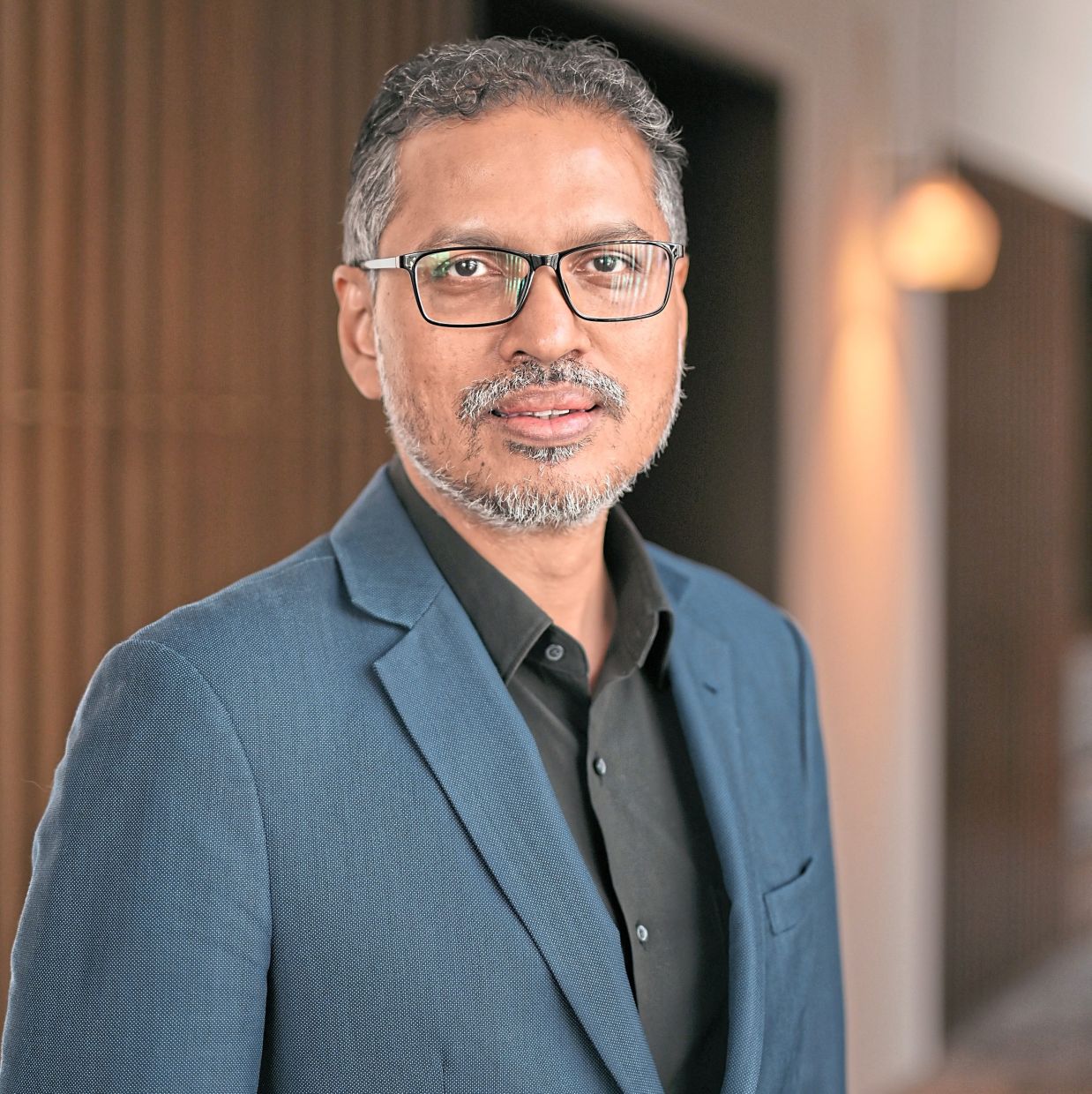
What discipline is the most important in your role as a fund manager, and why?
Aziz: I believe that the most critical discipline today is to maintain strict strategic alignment between capital deployment and national priorities.
In sectors such as semiconductors, an investment is not merely a financial decision. It is foundational to building technological sovereignty and generational advantage.
The “short-term capital gain” playbook is less favoured. Instead, it requires a patient capital approach, combined with deep sector expertise, to support companies tackling complex engineering challenges with multi-year development cycles.
These are not speculative; they are investments into proven capabilities addressing critical gaps in global supply chains.
Discipline, therefore, means having the intellectual conviction to decline opportunities that fall outside our core thesis, regardless of short-term return potential.
It also means staying close to the underlying businesses, spending time on the ground, visiting facilities, engaging directly with engineering teams and rigorously assessing technical differentiation.
Ultimately, semiconductors underpin strategic capabilities across AI compute, data infrastructure, energy systems and cybersecurity.
Building strength in this domain is essential for national resilience and economic growth.
Lee: Kairous believes a business must create durable customer value and convert that into repeatable, high-quality revenue, with a credible route to sustainable margins and cash flow.
This matters in South-East Asia because the region generally does not have the same depth of late-stage capital or exit liquidity as in the United States or China.
We look closely at the company’s pathway to profitability, how quickly it can recover its costs and whether the business can grow without constantly relying on new funding.
Profitability is not just an outcome. It helps ensure founders run their businesses with financial discipline and operational focus.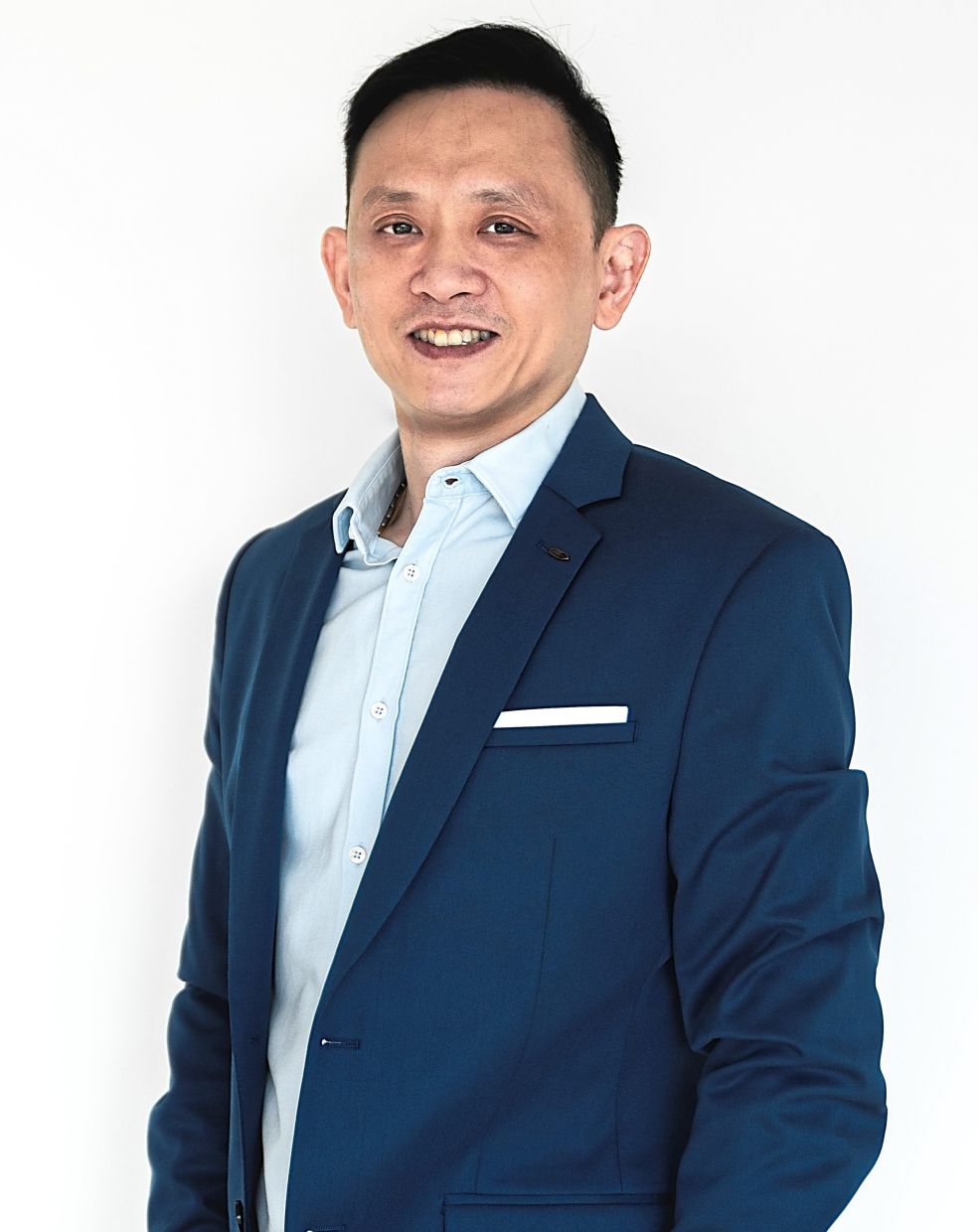
How do you support portfolio companies in the first 100 days without overstepping governance or operational boundaries?
Aziz: In the first 100 days, I would focus on three things: validating the business, putting in place strong governance and connecting companies to the right ecosystem.
My team and I spend time on the ground with engineering teams to confirm real technical and commercial viability.
In parallel, we establish clear board structures, reporting discipline and milestone-based capital deployment.
Just as importantly, we open doors to industry partners and customers who can validate and accelerate growth.
Make no mistake, we don’t run operations. Founders lead execution.
Our role is to provide structure, discipline and access so companies can scale effectively.
Lee: Kairous agrees on a 100-day value-creation plan before closing, with shared objectives, governance guardrails and clear decision rights.
We avoid running the business as we rather focus on enabling outcomes through specific working sessions and board-level oversight.
Our plan usually prioritises revenue acceleration, margin and cash discipline and institutional readiness.
We may include specialists and networks, but execution remains a management decision.
This keeps the accountability clear and builds an operating rhythm that improves IPO readiness or strategic exits.
What early signals do you look for to assess whether a founder or company is ready for institutional capital?
Aziz: I would look for a few key early signals including technical credibility, commercial realism and readiness for institutional discipline.
First, technical credibility – can the founder clearly articulate their differentiated IP and how they compete globally?
Second, commercial realism – beyond prototypes, are there real customers, traction and evidence the product can scale?
Third, readiness for institutional discipline – are they open to governance, board oversight and milestone-based capital deployment?
It is also important to have clear alignment with national priorities, especially in building high-skilled talent and positioning Malaysia in global supply chains.
Lee: We look for those with an institutional mindset, where we assess if founders understand shareholder responsibilities,
governance, transparency and their willingness to receive investor feedback.
We expect respect for budgets, board materials, KPIs and documented approvals, not ad hoc management.
We also prioritise clarity of use of proceeds, where we look for clear links of funds to milestones: what the capital is spent on, what metrics move and what risks are mitigated.
Given our Series A focus, we also test for credible evidence of product–market fit.
This includes retention signals, customer pull and scalable unit economics.
Founders who link capital to outcomes and operate with governance maturity are ready as partners.
What trends are you seeing among local founders in pitch sessions, including strengths and weaknesses?
Aziz: I am seeing more Bumiputera founders exploring frontier technology, which is a very encouraging shift.
Malaysian founders are generally resourceful and capital-efficient and we’re also seeing stronger, more diverse teams combining MNC experience, academic depth and entrepreneurial drive.
The challenge is often around scaling ambition and capital strategy.
Some underestimate the level of funding required for deep tech, while others mismatch stage and valuation, presenting early-stage ideas with growth-stage expectations.
Another common gap is translating strong technical capabilities into a clear commercial narrative that resonates with institutional investors.
Overall, the foundations are strong, but bridging that gap between technical excellence and scalable business execution is the key next step.
Malaysian founders have the technical depth and resilience. What’s needed now is sharper scaling ambition and investor-ready storytelling.
Lee: Malaysian founders are resilient and resource efficient.
Most have built themselves under capital scarcity, forcing them to prioritise leaner execution and stronger business fundamentals.
The common weakness is in their long term strategic clarity. Some teams execute well in the near term but struggle to articulate how they will build market leadership over multiple years.
This includes differentiation, defensibility and the path to scale when faced with intense competition.
Levels of institutional readiness are also uneven, especially around governance, reporting structure and fundraising strategy.
The strongest teams tend to stay capital efficient, with a clear long-term narrative and a willingness to corporatise.
What are the trends shaping Malaysia’s VC industry in 2026?
Aziz: First, the rise of institutional capital brings with it higher expectations on governance, clearer strategies and sharper sector focus.
This discipline is helping crowd in private capital alongside public funding.
There’s also a clear shift toward frontier technologies, especially in semiconductors, supported by national initiatives like the National Semiconductor Strategy, as Malaysia moves up the value chain from backend to design and advanced manufacturing.
And lastly, we’re seeing increased Bumiputera participation in both VC and startups, aligned with broader economic inclusion goals and a push to build ownership in high-growth sectors. Overall, the ecosystem is becoming more structured, more strategic and more aligned with national priorities.
Lee: Two trends stand out. First, more startups are targeting regional and global markets.
Malaysia’s cost base can be an advantage if distribution is executed well, prompting earlier investment in cross-border sales and partnerships with local resellers.
Second, government-linked initiatives are shaping fundraising momentum and signalling regional confidence.
Efforts by Jelawang Capital through the Emerging Fund Managers’ Programme (EMP), as well as institutional investors such as pension funds, are drawing attention and broadening participation in venture capital.
This deepens capital pools and platform effects, but risks eroding discipline if speed overtakes outcomes.
What signals indicate a venture ecosystem is developing in a healthy way?
Aziz: I would look at these key signals – ambition, economic impact and inclusivity.
Are founders tackling hard, globally relevant problems that require deep expertise?
Moving beyond component supply into innovation areas like silicon photonics, advanced packaging, and AI-linked hardware is a strong indicator of ambition.
As for economic impact, a healthy ecosystem creates high-value jobs, lifts productivity, and positions Malaysia as a technology creator, not just as a consumer.
The next signal is inclusivity. Broad participation, including from Bumiputera founders in frontier sectors, ensures we’re fully mobilising the nation’s talent base.
When you see ambition, impact and inclusivity coming together, that’s when an ecosystem is truly scaling in a sustainable way.
Lee: A healthy ecosystem is one where fundamentals are deep, ahead of headline exits.
We look for consistent company formation within sectors, higher survival rates beyond seed and Series A and follow-on funding driven by retention, business fundamentals and sometimes profitability.
Talent circulation is another marker, with employees spinning out to become new founders and operators.
Exit readiness also matters, including compliance discipline and early engagement with strategic buyers or capital markets.