
PETALING JAYA: Political parties from both sides of the divide continue to question deputy minister M. Kulasegaran’s (pic) impartiality when he accompanied activist Arun Dorasamy, who was charged at the Jawi court complex in Penang.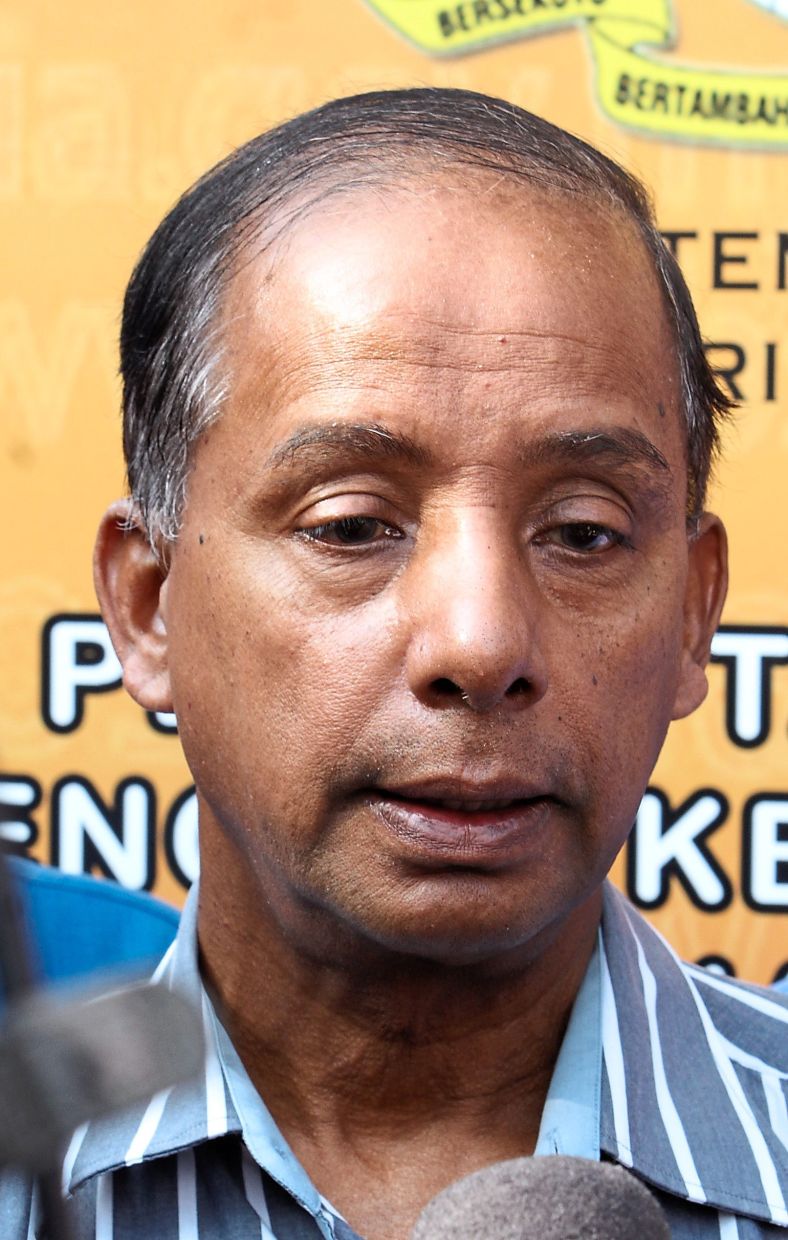
Kulasegaran’s fellow DAP leaders said his presence outside the court complex with Arun has raised public concern over the integrity of the legal system.
MCA legal bureau chairman Datuk Koh Nai Kwong said Kulasegaran’s appearance alongside Arun, who was charged with making a provocative statement, raises legitimate public concern.
Previously, leaders from Umno, PKR, PAS and Bersatu had also voiced their opposition to his presence with Arun at the court complex.
Umno Youth chief Datuk Dr Muhamad Akmal Saleh questioned the message that Kulasegaran was giving to the rakyat by accompanying Arun to court.
Johor PKR Youth chief Faezuddin Puad said the DAP leader’s presence with Arun warranted an explanation, as it could signal that the government supported a person facing a charge in court.
PAS information chief Ahmad Fadhli Shaari said the deputy minister seemed to have plenty of free time to spend with people facing charges in court.
Bersatu vice-president Datuk Dr Mohd Radzi Jidin asked if it was appropriate for a deputy minister in the Prime Minister’s Department to be present in court with an accused individual.
In a joint statement, DAP central executive committee members Sheikh Umar Bagharib Ali, Young Syefura Othman and Syahredzan Johan, together with Bukit Bendera MP Syerleena Abdul Rashid, said the move had sparked public polemics and heightened scrutiny, particularly given Kulasegaran’s role as Deputy Minister in the Prime Minister’s Department (Law and Institutional Reforms).
The leaders, while noting Kulasegaran’s explanation, said his position required a higher level of sensitivity to public perception.
“We also wish to confirm that there has been no party decision to express any inclination on this issue,” they said.
Koh said while Kulasegaran clarified that his presence was brief and personal, “public office holders do not operate in a vacuum.”
“Whether official or otherwise, the presence of a senior government figure, particularly one responsible for legal and institutional reforms, inevitably carries weight and symbolism.
“In such a sensitive setting, his proximity to an accused individual known to him can be construed as signalling support. More critically, it risks creating a perception – fair or otherwise – of implicit pressure on the magistrate or judicial process,” he added.
Koh, who is also an MCA central committee member, said even the slightest suggestion of influence undermined public confidence in the independence and impartiality of the judiciary, which must remain sacrosanct.
Kulasegaran had earlier denied being present in court when activist Arun was charged with allegedly stirring racial and religious tensions.
He said he had only briefly met the activist outside the court complex to advise him to place his trust in the legal process.