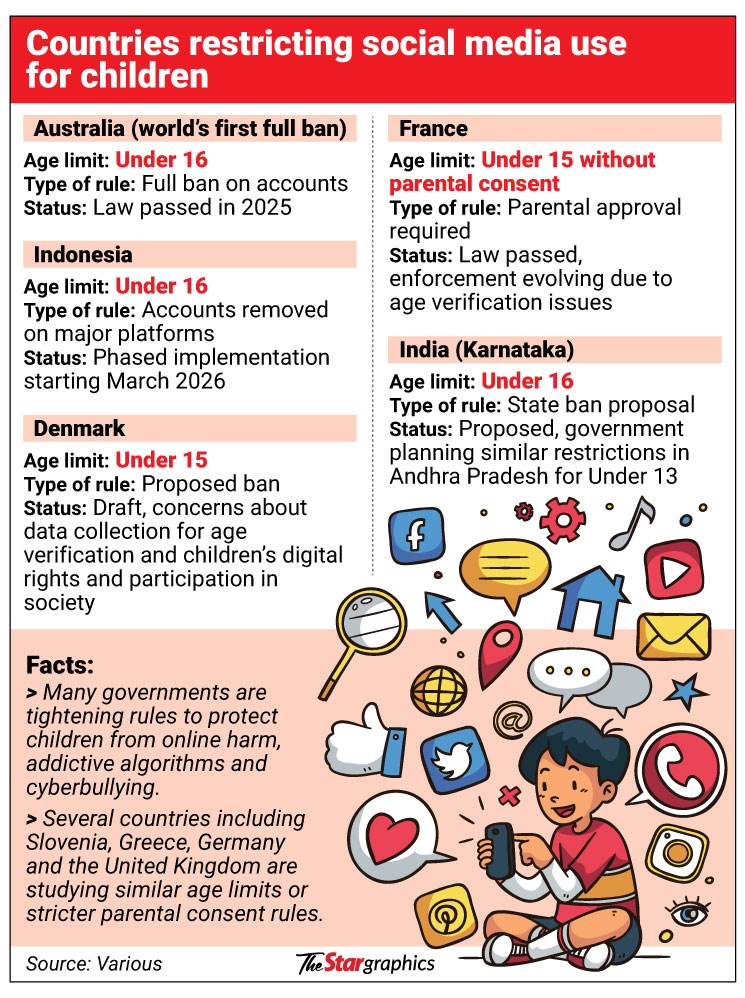
PETALING JAYA: Teenagers say they can adapt if social media accounts are restricted to those aged 16 and above, but many believe enforcing such a rule can prove difficult as young users may still find ways to communicate online.
Fifteen-year-old Olivia Tan from Damansara said she would not be too upset if the government restricted social media accounts to those aged 16 and above, though she questioned how it would be enforced.
“It would be a little weird not to be legally allowed to have an account, but I’m not that upset.
“I’m just concerned about how they will actually enforce it,” she said here yesterday.
Olivia, who mostly uses Instagram and YouTube to watch recommended content such as gaming videos and animation, said the restriction would not change much of her day-to-day communication as she and her friends already chat on WhatsApp, where schoolwork and notes are shared.
However, she noted that some students without cellphones would rely on social media messaging to keep in touch, and believes teens may try to get around the rules.
“I think if most students had the opportunity, they would try to find a loophole,” she said.
Her father Tan Chin Tuan, 50, said children were exposed to social media from a very young age, making it difficult to curb usage purely through legislation.
ALSO READ: Enforcement of age limit for social media use to take effect as early as July
“It is already part of their lives. If you suddenly impose a law to stop them, some children might question why they should follow since they were not doing anything wrong,” he said.
He said a blanket ban might not be the best solution, as much depended on parental guidance.
He noted that while some parents used online videos to keep young children occupied, others relied on YouTube for educational content and news.
“So which one is bad? That really depends on how parents guide their children and the choices they make for them,” Tan said.
In Melaka, siblings Lee Yew Chen, 15, Sin Yun, 14, and Sin Rong, 12, said a blanket ban could be difficult as new platforms and workarounds emerge quickly.
“By the time the rule is implemented, there will probably be other platforms or alternative ways for people to communicate online,” Yew Chen said.
Sin Yun and Sin Rong agreed, saying: “It’s hard to keep banning platforms for under-16s, it’s better for young people to realise they must not simply divulge personal data or communicate with strangers online.”
The siblings, who use platforms such as YouTube, TikTok, Instagram and Rednote, said school-related communication was already mostly done through WhatsApp and Telegram, so class coordination might not be affected.
Still, they said it could feel restrictive if under-16s were barred from platforms adults could access, adding that social media could be both educational and entertaining but also distracting and time-consuming.
Their mother Datin Christine Koh, 43, said the government’s intention to protect children online is good, but a blanket ban may not be the most practical approach.
“There should be some flexibility,” she said.
She suggested stronger parental supervision tools, time limits and age-appropriate content filters instead, noting that her children received smartphones at around 10 when schools relied more heavily on digital communication after the Covid-19 movement control orders.
“I now use parental controls that limit device use to one hour on weekdays and three hours on weekends, with devices locked after 9pm,” Koh added.
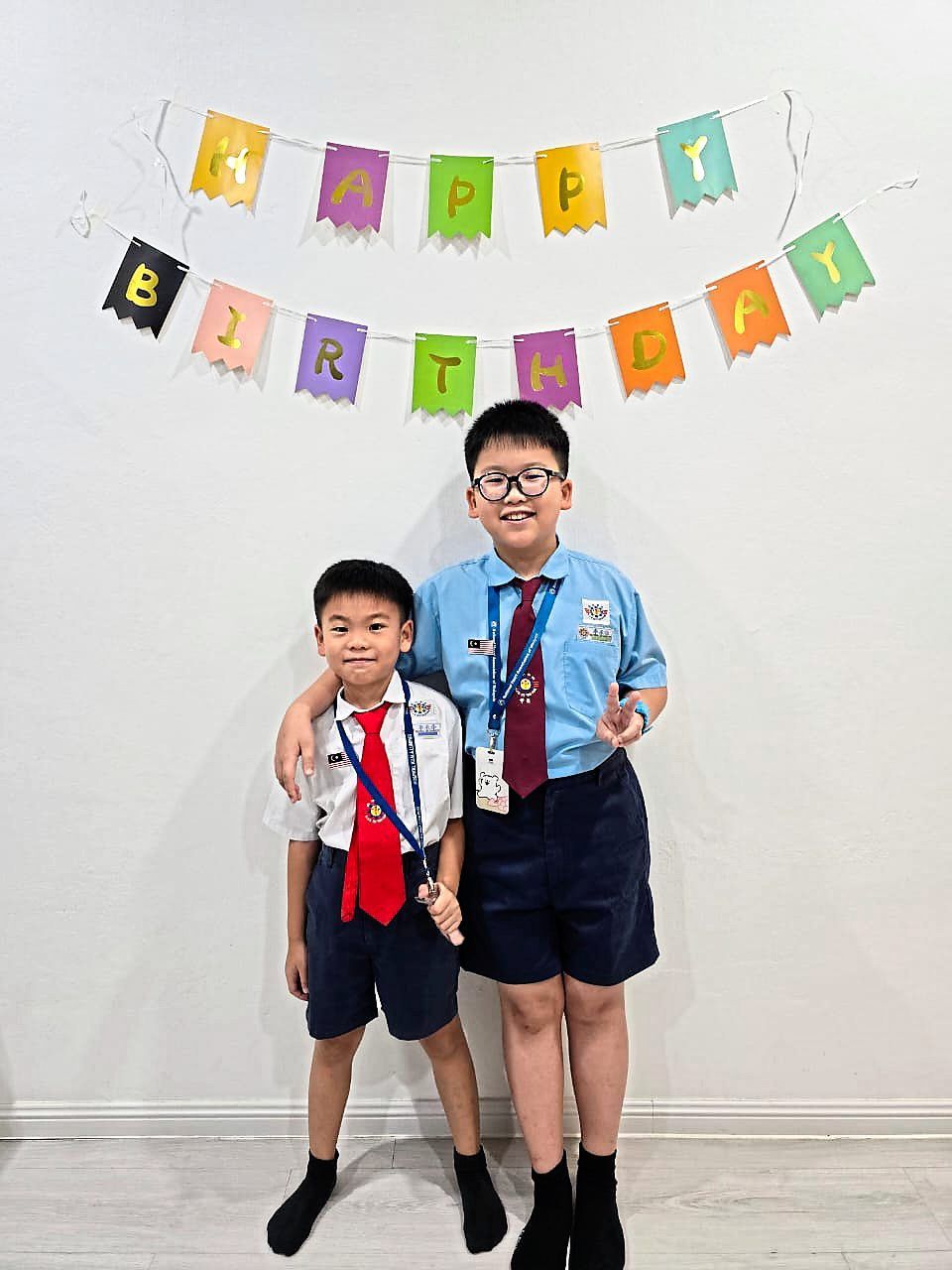
Meanwhile, sales executive Ejean Ng, 44, who has two sons – Matthew, 11 and Michael, nine – said she has yet to allow them to have social media accounts.
“For now they mostly play games on the iPad like Roblox or watch YouTube shorts, which I also try to limit,” she said.
Ng does not feel social media is a major issue for primary schoolchildren yet, as her sons spend much of their time with friends at school and their after-school centre.
She plans to give her children smartphones only when they enter secondary school, to communicate about homework and stay in contact after school.
“Our era is full of information and it is difficult to control everything. Whether social media is beneficial or harmful depends on the child’s maturity and understanding,” she said.
Educator Letchumi Unasegaran, 46, said parental guidance remained the most important factor regardless of government regulations.
“All my children have access to social media, but they understand the do’s and don’ts because we guide them,” she said.
She believes teenagers respond better to support rather than strict control.
“By staying involved, setting reasonable boundaries and keeping communication open, we help them learn to make wiser choices on their own,” she said.
“Social media is part of their world, so our guidance and presence remain their strongest protection,” she added.