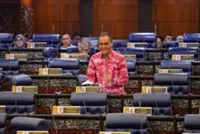
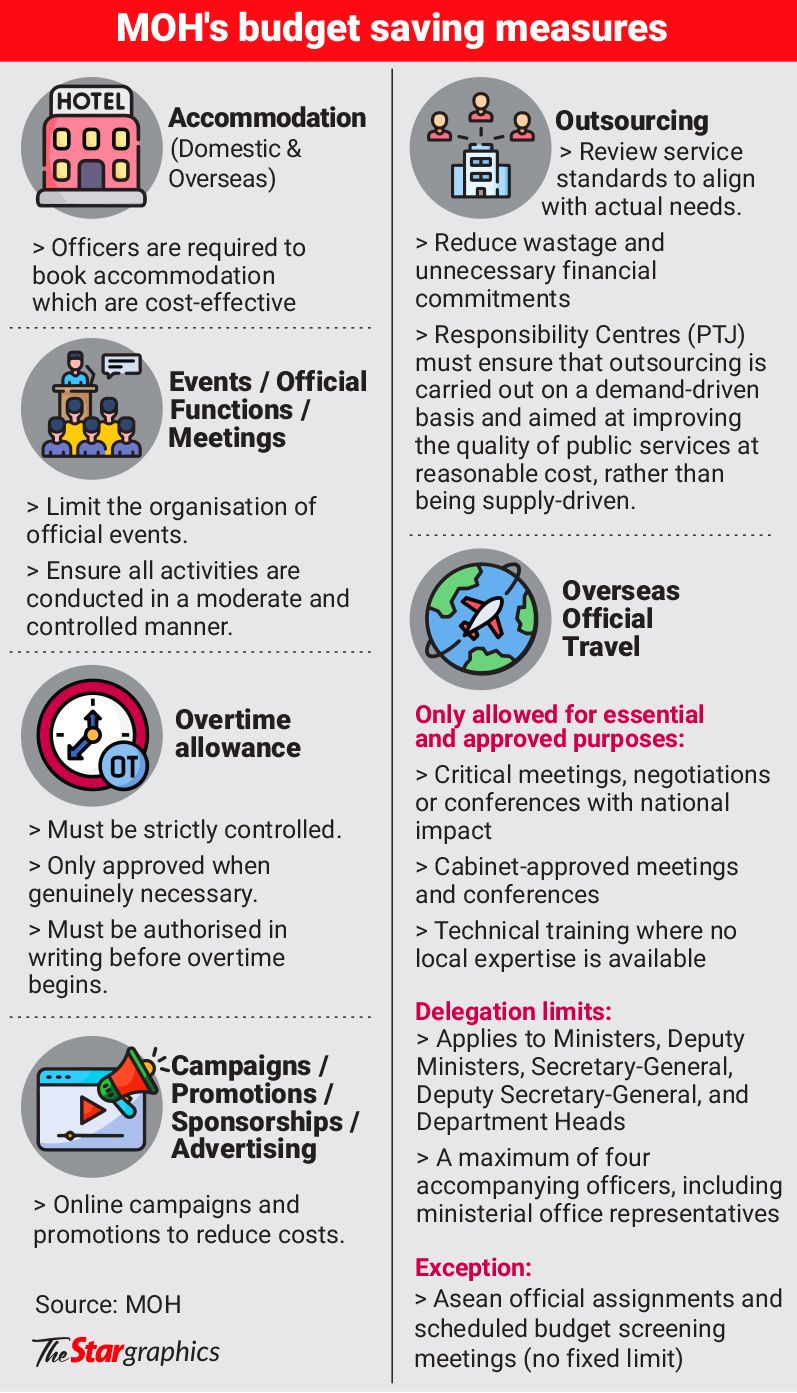
PETALING JAYA: The proposed budget cuts for the Health Ministry will only affect non-essential expenditure such as overseas travel, official functions and meetings, and stricter approvals of overtime allowances.
Health Minister Datuk Seri Dr Dzulkefly Ahmad gave an assurance that “essential healthcare services – including patient treatment, emergency care, all core essential services, as well as the supply of medicines and medical devices – will not face any reduction”.
However, the ministry had already put in place cost-cutting measures in March, before the Finance Ministry directive to slash budgets.
In a circular dated March 17, the ministry’s secretary-general Datuk Seri Hasnol Zam Zam Ahmad said although the ministry received a higher budget allocation this year, there was still a constraint.
The ministry received an allocation of RM46.5bil under Budget 2026. Its operating allocation for 2026 was RM39.78bil, an increase of 3.22% or RM1.24bil from RM38.53bil in 2025.
Of that, RM6.745bil has been approved under the Development Allocation, an increase of 0.1% or RM6.4mil compared with RM6.738bil in 2025.
ALSO READ:
“Although there is an overall increase in allocation compared with 2025, it remains relatively low and constrained in relation to the ministry’s actual needs. This is due to the expansion of existing and new services in the interest of patient care, rising and difficult-to-control supply costs, particularly for pharmaceuticals as well as various unforeseen expenditures arising from natural disasters, disease outbreaks, and changes in government policy,” Hasnol said.
For spending not accounted for in the 2026 Estimated Operating Expenditure (ABM) – including outstanding liabilities from previous years or the implementation of any new decisions – such expenditure must be financed using the current year’s allocation through trade-offs with less urgent expenditure.
Among the areas where resources would be optimised is laboratory testing.
The ministry’s expenditure guideline requires each test request to be supported by strong justification to avoid repeat testing, inappropriate requests, and duplication of laboratory investigations.
This is to ensure that financial resources are optimised across the ministry’s laboratories, as well as to minimise wastage and prevent any adverse impact on the implementation of essential and critical diagnostic tests.
As for medical supply, the stock across ministry facilities including District Health Offices will be monitored on a monthly basis to ensure that there are enough supplies to meet treatment service requirements.
Meanwhile, Dzulkefly affirmed that any plans to recalibrate ministries’ budget was currently still in the proposal stage and discussions were still underway.
He said his ministry would ensure that core healthcare services remain protected during the negotiations.