
BY day, the scent of grease and rubber fills a small tyre workshop in Sandakan. By night, it echoes with drumbeats, laughter and the sharp snap of disciplined footwork.
Inside this unlikely space, a group of young Sabahans is doing more than rehearsing for lion dance performances. They are safeguarding a tradition that once defined festive streets but now competes with modern distractions and shrinking interest.
Nearly all members of the Persatuan Tarian Singa dan Naga Chung Seng are under 30.
In a state often focused on development challenges, these youths have chosen to fight for something different. They are preserving culture.
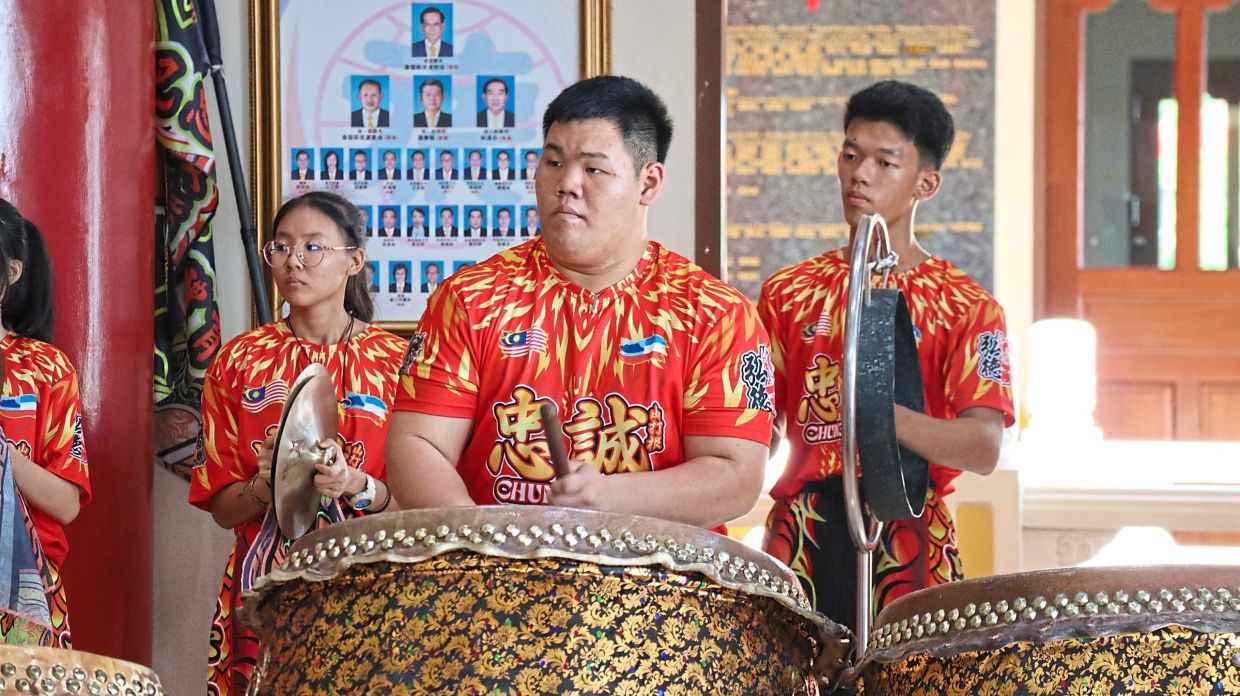
Chung Seng was founded in 2022 by Andy Chu, a Sandakan lad who was 22 at the time. It began as a simple conversation among seven young men who already had between two and five years of experience in lion, dragon and unicorn performances.
They had trained under other associations, learned the discipline and built skills before deciding to create their own team.
“We started with just seven of us, all good friends,” Chu said. “We asked ourselves, ‘Why not build our own team?’”
For Chu, it was not about breaking away but about improving how young people were trained.
He felt that methods used by some larger associations no longer suited today’s youth.
“Young members need encouragement, not punishment,” he said.
“We teach patiently until they understand. Discipline comes through training, not fear.”
The change in approach quickly attracted teenagers and young adults who might otherwise never have stepped into the art form.
One of them is 19-year-old Bryan Chok.
He joined at 17 after years of watching lion dances during Chinese New Year celebrations.
“My family was worried at first because they were afraid I might fall,” he said.
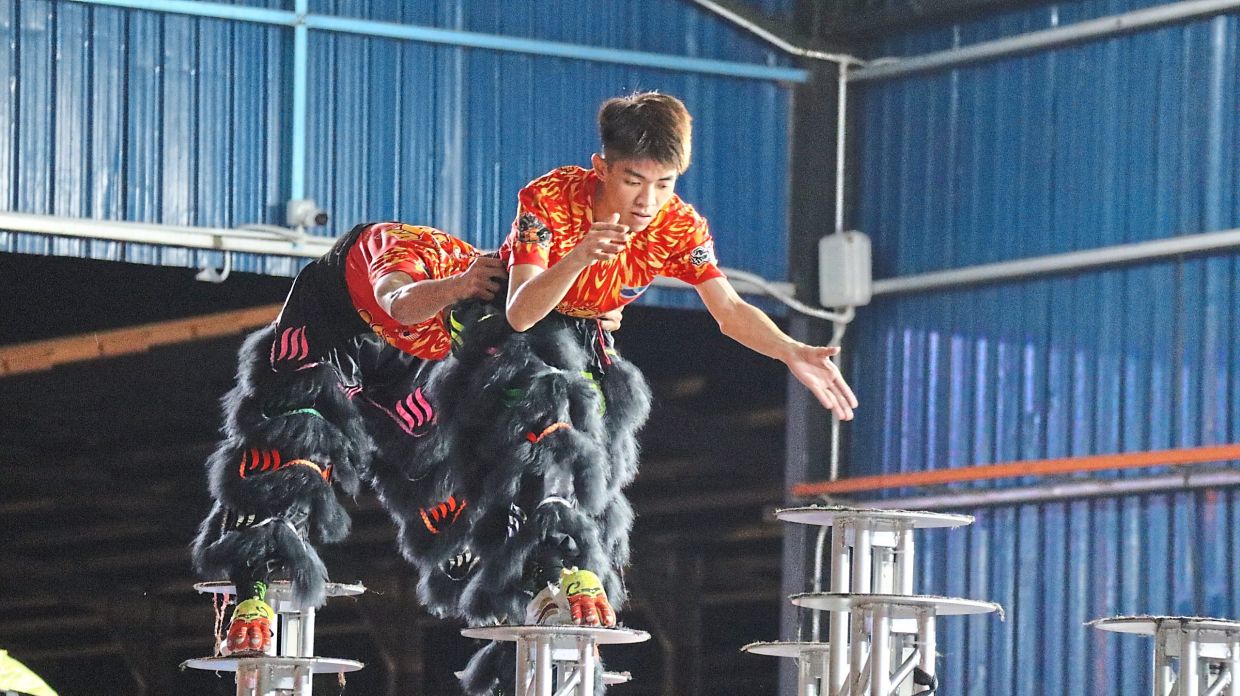
Their concerns were real. High pole performances demand strength, balance and absolute trust. A small mistake can lead to serious injury.
Chok himself suffered a leg injury during training and had to stop for several months.
Still, he returned. “Step by step,” he said.
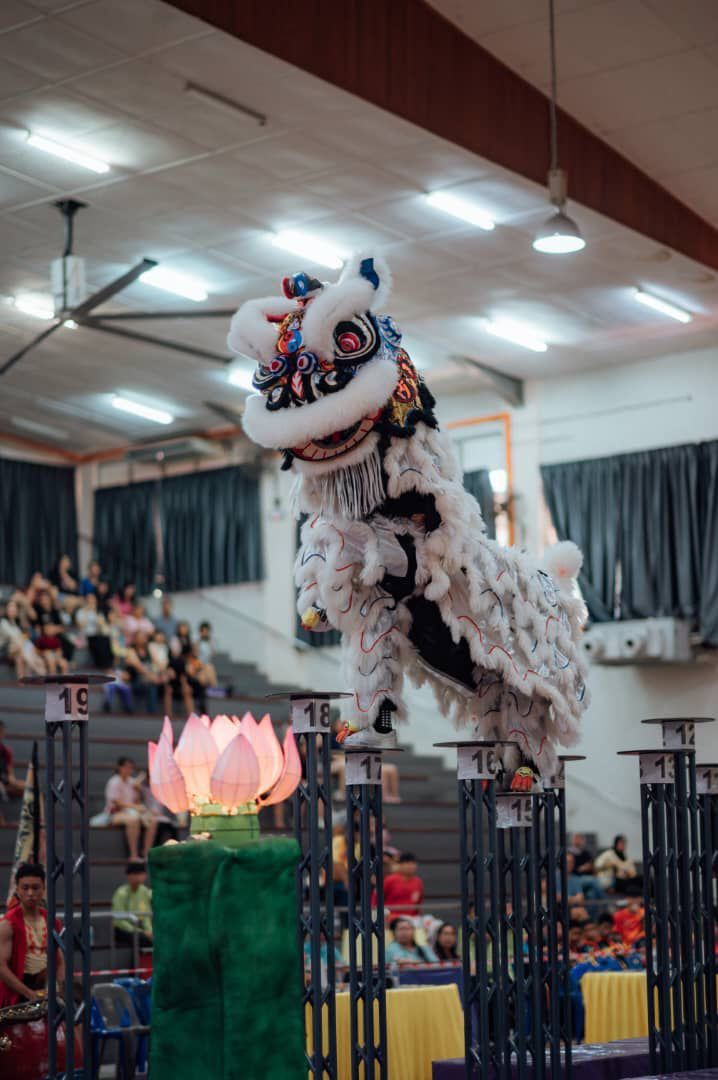
That perseverance reflects the spirit Chung Seng aims to build, and the association’s growth has been swift.
In 2025, Chung Seng won its first medal. Within a year, the young team secured five medals, including third place at a national level championship.
Though recognition has grown, but financial realities remain tough.
Chu said a high pole performance in Sandakan would often be offered less than RM1,000.
“The market price here is very low,” he said. “Some associations keep lowering their fees just to secure bookings, and it affects everyone.”
He believes lion dance teams in Sandakan should come together and agree on a standard rate.
“This is about respecting the art, the hard work and the risks performers take,” Chu said. “If someone falls and gets injured, the cost is not small.”
Despite these challenges, members continue returning night after night to train.
Some contribute small amounts, sometimes RM5 or RM10, to cover basic expenses.
The tyre workshop was chosen not just for convenience.
Lion dance training is loud, especially with drums and cymbals involved, and the team had previously received complaints when practising near residential areas.
Training away from housing areas allowed them to continue without disturbing the community.
Chu is realistic about the future.
He said lion dance in Sandakan is unlikely to ever become a full-time career, especially with what he describes as the lowest market rates in Sabah.
Most of his members juggle training with full-time jobs or studies, with some work in supermarkets while others are still in school or college.
“With the prices here, there’s no way someone can survive doing this full time,” Chu said. “We do it because we love it, not because it pays.”
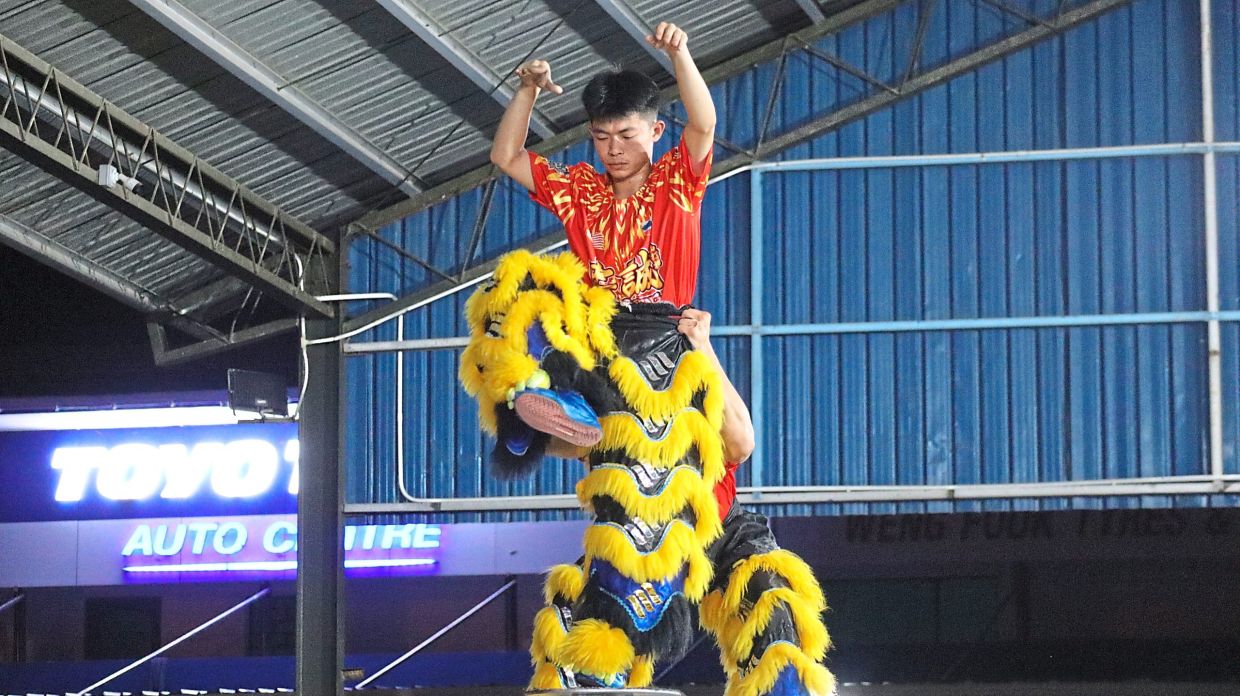
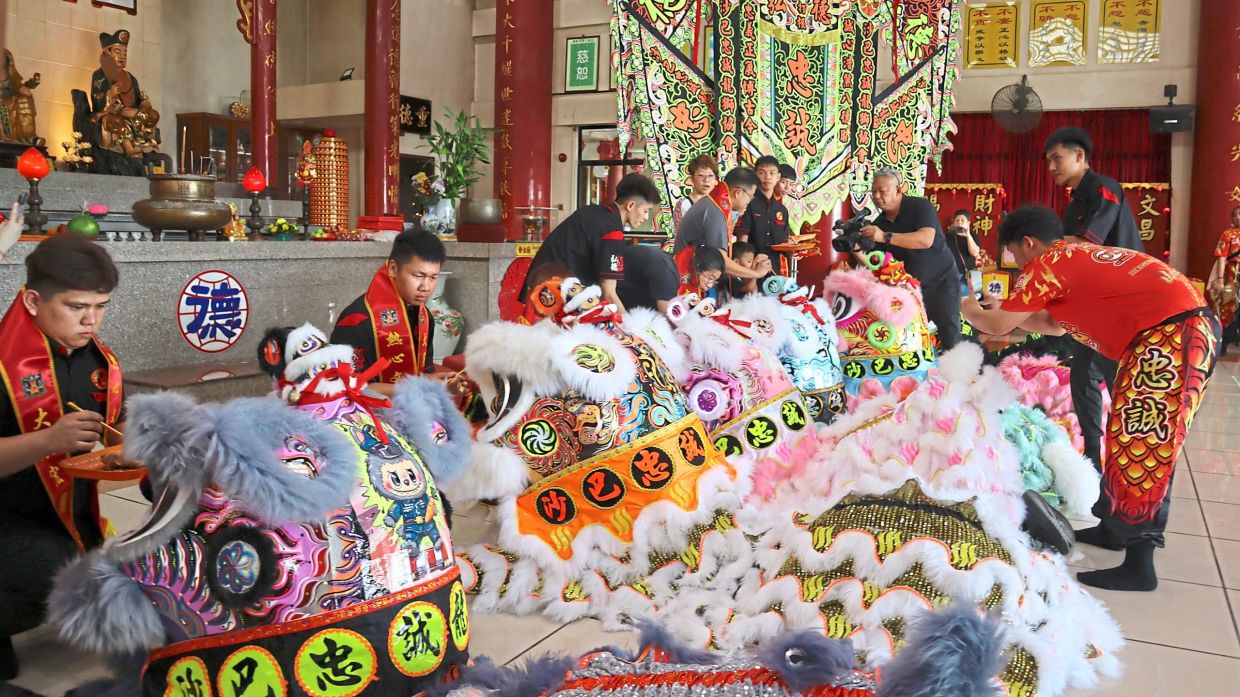
Before each Chinese New Year season, the association performs the traditional eye-dotting ceremony on new lion heads, a symbolic act believed to awaken the lion’s spirit.
While it marks the beginning of the lions’ performances, it also symbolises the start of the team’s renewed goals, with Chung Seng now setting its sights on the Genting International Lion Dance Championship and committing to train even harder in pursuit of competing on the prestigious international stage.
Across Sabah, especially for east coast Sandakan district, cultural traditions often struggle against migration, economic pressures and changing lifestyles.
Young people leave. Communities thin. Arts quietly fade.
Yet in the small tyre workshop, a different story is unfolding.
These youths are choosing to stay, to train and to carry culture forward. They are not driven by fame or profit. They are driven by pride.
From a modest corner of Sandakan, lion dance is being rebuilt by a generation determined to ensure tradition does not disappear with time.