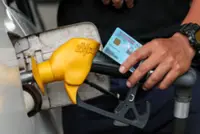
AUTHORITIES are moving to tighten controls on subsidised RON95 petrol, with a possible ban on foreign-registered credit cards at outdoor petrol station payment terminals being studied.
Domestic Trade and Cost of Living Minister Datuk Armizan Mohd Ali said this is among the additional measures being considered to curb leakages under the Budi 95 programme.
The programme only allows eligible Malaysians to purchase RON95 petrol at a subsidised price of RM1.99 per litre.
“We are seeing if this mechanism can be expanded. At the same time, monitoring and operations by plainclothes ministry officials will be carried out at known hotspots,” he said in his winding-up speech on the motion of thanks for the Royal Address yesterday.
Armizan also said the ministry takes a serious view of alleged threats made against petrol station operators over the sale of subsidised RON95 petrol.
“These actions are criminal offences, and those involved can lodge reports with the police,” he said.
Armizan added that regulations barring foreign-registered vehicles or their drivers from purchasing subsidised RON95 petrol are set to be enforced beginning April 1 this year.
“Currently, the regulations lean heavily towards licence holders or petrol station operators. We are reviewing legislative amendments to penalise individuals attempting to pump the subsidised petrol illegally,” he said.
This follows calls to hold perpetrators accountable rather than have the liability borne solely by petrol station operators.
On another matter, Armizan said the ministry is finalising policies related to a new e-commerce legislation, which is targeted to be tabled in the next Parliament meeting.
He added that the ministry is utilising existing legislation to tighten enforcement against an influx of foreign products and services flooding the domestic market.
This includes the Consumer Protection Act 1999 and Competition Act 2010, among others.
Armizan also said that the updated guidelines of foreign business involvements, set to be tabled soon, will ensure the domestic market is not controlled by foreign entities, and create a level playing field for micro, small and medium enterprises.
He explained that although e-commerce falls under the ministry’s jurisdiction, it is still subject to the digital ecosystem, which covers various ministries and agencies.
“In line with this, a more consolidated approach is being taken to strengthen cooperation across agencies alongside empowering the role of digital platforms,” he said.
Separately, Armizan said all quarters, including small traders, are welcome to join the Madani Rahmah sales programmes as strategic partners.
“We always encourage participation among small traders, including local sundry store operators and cooperatives,” he said in response to concerns raised over how these programmes could negatively affect the sales of smaller businesses.
He also noted how the majority of the 2,100 operators of Madani Rahmah Sale Programme nationwide comprised smaller stores and retailers.