
PETALING JAYA: Malaysia, which has among the world’s lowest organ donations, is now pushing for an improvement – but deeper challenges remain.
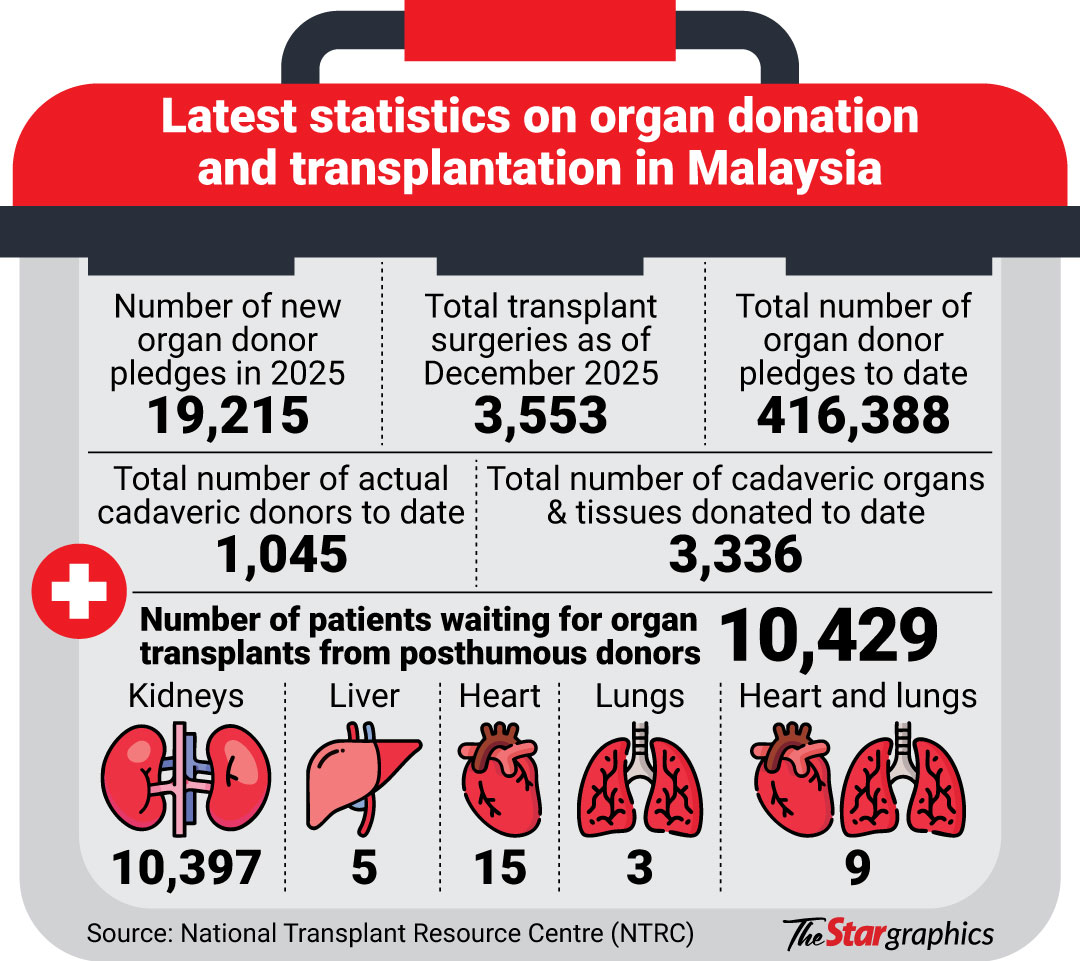
The country is also in need of more transplant expertise with the increasing number of kidney failure cases at about 10,000 new cases each year. A total of about 50,000 people are already undergoing dialysis.
ALSO READ: Long wait for a lifeline
The National Transplant Resource Centre has now been elevated as a national command centre, and that is a crucial step in fixing long-standing fragmentation in policy, data and hospital coordination, said public health expert Datuk Dr Zainal Ariffin.
“Real improvements in transplant numbers and waiting times are expected within one to two years as the new centre streamlines coordination but sustained effort is needed,” he said.
ALSO READ: Malaysia faces twin shortage of organs and transplant surgeons
Dr Zainal stressed that Malaysia’s organ shortage is closely linked to the country’s growing burden of chronic diseases, particularly kidney failure caused by diabetes and hypertension.
“The problem is not just a lack of transplant facilities. It is that possible donors themselves have diseases, with poor prevention and late treatment of chronic ailments,” he said.
“Public hesitation towards organ donation remains a major challenge and that is often driven by religious or cultural misconceptions, distrust in the medical system and the lack of family discussions.
“Making registration easier is helpful, but public education is just as important,” he said, referring to the option to pledge as an organ donor via the MySejahtera app.
Ironically, more than 400,000 Malaysians have registered as donors but there are more than 10,000 patients on the waiting list because the relatives of the donors are not keen on fulfilling the pledges.
Universiti Kebangsaan Malaysia pathologist Prof Dr Tan Geok Chin said the restructuring of the transplant system was necessary, but he too said there were challenges on the ground.
“There are still logistics issues and there are not enough donated organs and tissues. Improvements may take about three to six months,” he said.
Dr Tan said the surge in end-stage kidney failure cases was largely driven by lifestyle-related illnesses.
“I strongly believe diabetes and hypertension account for about 80% of renal failure cases.
“Better prevention and early intervention would ease long-term pressure on the transplant system,” he said.
He also underscored the need to raise public understanding of organ donation.
“Many people are still unaware of how transplants can save lives. Better public education is needed to change mindsets and increase donor willingness,” he said.