
Creating a safer-by-design digital ecosystem is essential to building youth resilience and promoting responsible platform practices
IN THE early days of the internet, the digital world was often likened to a lawless world – a vast, unmapped frontier where users roamed freely with little oversight.
Decades later, that frontier has transformed into a marketplace, school and town square for millions of people around the globe.
Yet, as social media platforms evolve into complex ecosystems of e-commerce and global connection, they have also become a primary gateway for sophisticated cybercrime.
Malaysia Cyber Consumer Association (MCCA) president Siraj Jalil believes that the current state of social media registrations is the Achilles heel of national cybersecurity.
“Identity verification is the most critical part of social media registrations in the current age. Everyone knows we are facing real threats of cybercrimes on these platforms, and it is always rising,” he said.
Since the Online Safety Act (ONSA) 2025 came into force on Jan 1 this year, Siraj argues that the focus must shift from mere content moderation to a robust hardening of user identity and platform accountability, centred around the government’s new under-16 age mandate.
Fake account pandemic
According to Siraj, the core of the issue lies in the ease with which identity can be fabricated online.
While the government’s move to set a benchmark age of 16 for social media usage is grounded in developmental science, the practical reality is that age standards have been historically easy to bypass.
“The age limit is not something new. Most major platforms had already instated an age limit at 12 or 13 years old,” said Siraj.
“But up until today, anybody can ‘cheat’ or lie about their age to register on any platform. It is an unsolved issue that often leads to cybercrime or cyberbullying.”
He explained that in the current landscape, cybercriminals do not just post harmful content, but also exploit social media marketplaces – like Facebook Marketplace or TikTok Shop – using “social engineering” tactics that constantly evolve.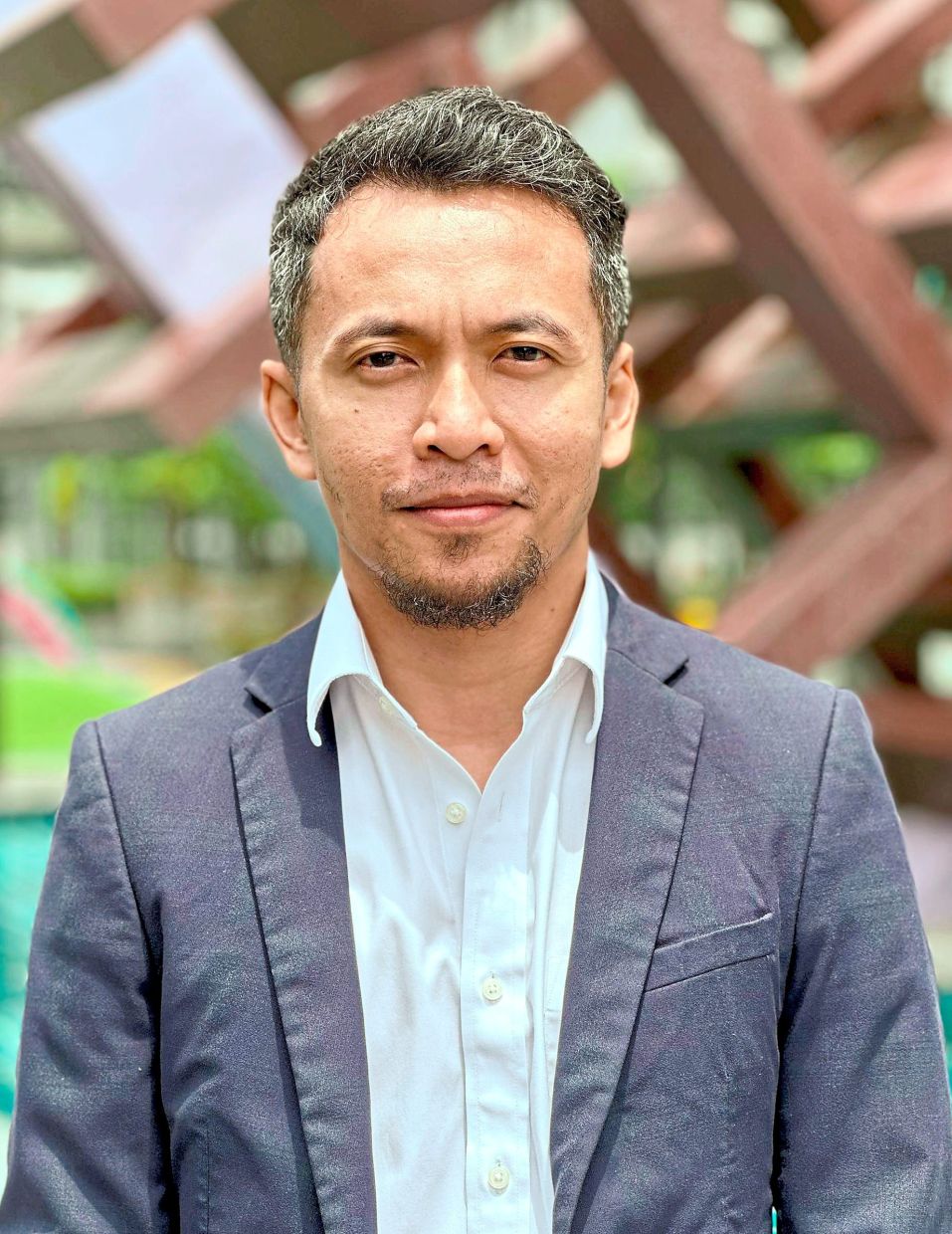
These tactics are how scammers manipulate users into trusting them and voluntarily give away money or sensitive information, often by impersonating legitimate sellers or exploiting familiar online platforms.
Siraj added that ONSA could be a potential game-changer in addressing this issue, as it facilitates a mechanism to finally close these loopholes.
By integrating more stringent verification processes at the registration stage, the government, through the Malaysian Communications and Multimedia Commission (MCMC), can move toward curbing underage usage and hardening the process of creating fake accounts that serve as primary tools for scammers.
Enhancing verification
To solve the verification crisis, Siraj stated that the MCCA is a proponent of utilising MyDigital ID as the mechanism for social media registrations.
This comes after the MCMC revealed that it is currently conducting a regulatory sandbox to identify potential verification mechanisms that are practical, proportionate and accurate.
While some privacy activists remain sceptical about its usage, Siraj believes that the alternatives are far less reliable.
“The harm of not using it would be far greater than using it – we don’t have any other viable option for now,” he said.
“There is no effective alternative to managing the millions of users here in Malaysia. If we rely on the public’s digital hygiene, it will create all sorts of issues.”
Siraj said that, unlike biometric data, which can be critical to manage and store securely, MyDigital ID is monitored by the National Cybersecurity Agency (Nacsa), which is under the supervision of the National Security Council.
He opined that this approach places the technology in the “right hands”, ensuring it is well-monitored and secure.
“MyDigital ID is a very complex system that is monitored by our critical agencies, which is not easily exploited by online perpetrators,” he said.
He added that this strategy is already seeing a pilot rollout in the telecommunications sector, as telco providers now require users to verify their identities via MyDigital ID for new prepaid SIM card registrations to combat scams and identity theft.
Applying this same rigour to social media could create a second, even more formidable layer of defence.
“When cybercriminals create new accounts or fake their identities, it’s the same as getting a new prepaid SIM card,” said Siraj.
“Utilising MyDigital ID could close another gateway for these criminals to target their victims.”
Accountability triangle
Siraj added that perhaps the most significant shift under ONSA is the redistribution of responsibility.
Historically, the burden on safety fell almost entirely on the government and end-user, while platforms remained “neutral”, neglecting accountability for the abuse occurring on their systems.
He pointed to the current crisis of fraudulent advertisements on social media, where criminals pay platforms to target victims.
In these cases, platforms and cybercriminals profit while consumers lose out.
Under ONSA, platforms must now take responsibility for ensuring safer environments and collaborating with the government to solve these issues.
Siraj described the ideal ecosystem as a “balanced triangle”, shifting the narrative toward a collective, community-wide effort.
“Now, everyone has their own responsibilities and role to play. Users must be responsible for being a good digital citizen and take accountability for their actions online,” he said.
“At the same time, the government must play their role in terms of policies, enforcement and compliance, while platforms must now ensure the security of users and comply with any kind of standards set by the government.
“If there is a balance, then we can see a better social media ecosystem for all.”
Preparing under-16s
While technical barriers are an essential mandate, Siraj warned that they are insufficient without a massive reset of digital culture.
Simply banning social media access until the age of 16 without providing a proper roadmap for digital behaviour is counterproductive.
“If you block them from access until they are 16, but don’t provide the education and awareness, the outcome will be the same when they become old enough – it’s like holding a time bomb,” said Siraj.
He proposed digital literacy systems that are akin to getting a driver’s licence, where children undergo a syllabus to earn their digital independence, reflecting their level of digital literacy.
“To get a driver’s license, you have to study, go for a computer test and then get tested on the road – they don’t just give you one when you turn of age,” he said.
“Problems arise when people are not well-educated about digital etiquette.”
He added that this education is vital to addressing the toxic culture of social media users that has become normalised online.
“Everyone knows the laws about offensive content and behaviour online,” said Siraj.
“But it’s become so common that it’s become a part of the social media culture – like users arguing and using profanity in the comments sections.
“We have to reset our culture about digital consumerism because you can already see the differences between one generation and the other, and how their behaviour and character have been orchestrated based on digital information.”
Taking these factors into account, the implementation of ONSA represents a fundamental shift in Malaysian digital identity.
By hardening the registration process and pressuring platforms to take accountability, the government is moving to protect users and the digital infrastructure systems from being abused by cybercriminals.
When the government enforces ONSA, the platforms comply and the users are educated, the digital world could finally become the safe, collaborative space it was always intended to be.