
Two years of reforms bring advances, but modernisation challenges persist.
ON a warm weekday morning at Anjung Kinabalu, a Kota Kinabalu City Hall (DBKK) enforcement officer signals at a double-parked car as one of the new pink buses glides past – a small but symbolic snapshot of how Kota Kinabalu is trying to move forward under mayor Datuk Dr Sabin Samitah.
Two years into his tenure, Sabin describes returning to Sabah from a senior federal posting as both a homecoming and a responsibility.
“I was proud to return,” he said.
“With my federal experience, perhaps I could bring a new approach to DBKK.”
Digitisation has shaped much of that approach. Parking payments have moved online, business licence renewals are digital and development and building plans are undergoing the same transition.
“We needed more efficiency and transparency,” he said.
“Digital systems help us work faster.”
Internally, he points to one example: “When a claim is verified, we now make the payment within two weeks. Before this, processes took much longer.”
Cleanliness – long a public frustration – has been another focus. DBKK has added bins, responds more rapidly to overflowing bin centres and issues RM30 fines for littering, including cigarette butts.
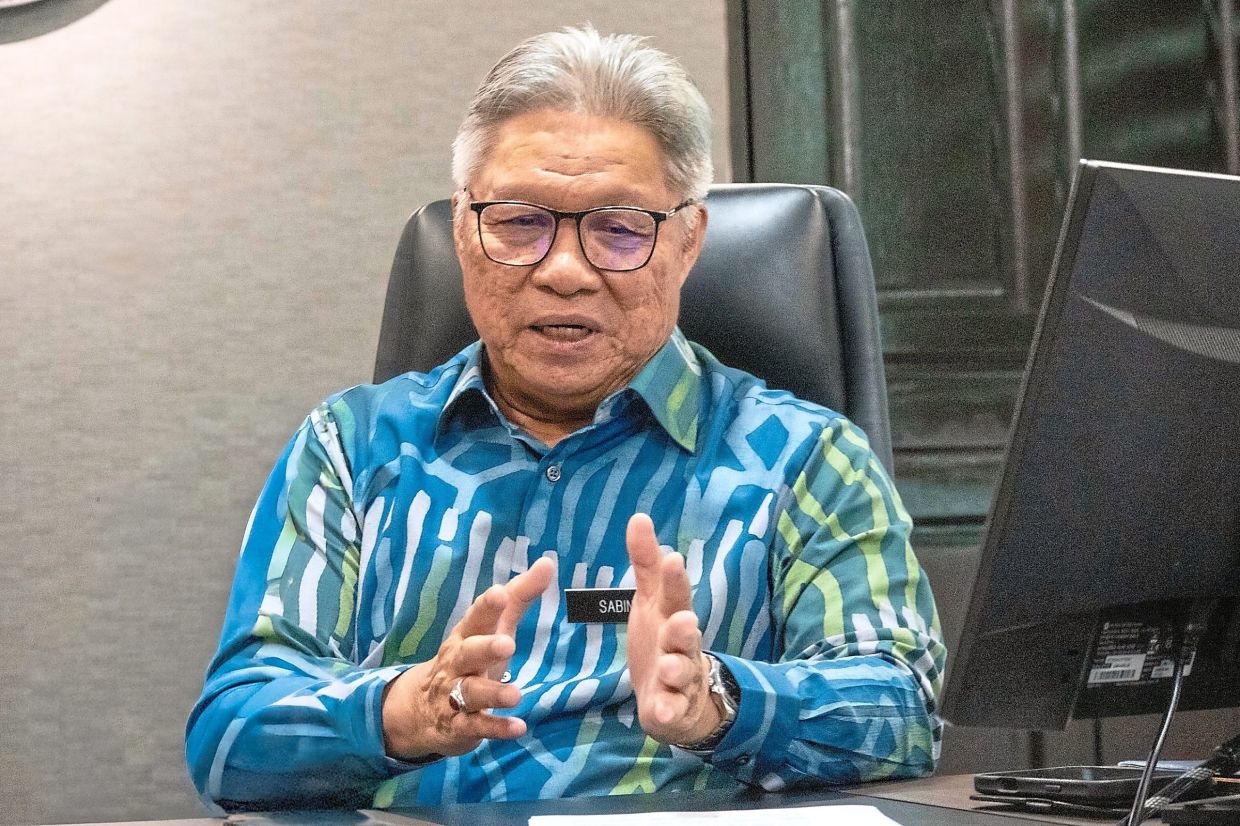
“It is a small amount, yes,” Sabin said, “but if someone keeps getting RM30 fines, it is actually a lot.”
Along the waterfront and riverbanks, DBKK hires locals to collect rubbish, installs trash traps and engages over-water settlements on proper waste disposal.
“We are a coastal city. Keeping the waterfront clean is one of our biggest responsibilities,” he said.
Traffic congestion, however, remains stubborn.
“Double parking, especially by business owners themselves, reduces two lanes to one,” Sabin said. “That makes congestion worse.”
Officers from DBKK and the police are stationed at hotspots on weekends and holidays – but private vehicle reliance continues to strain the city.
The rollout of the BAS.MY Kota Kinabalu pink buses may be a turning point.
The first route – KK Sentral, Jalan Tun Fuad Stephens, Jalan Penampang and back – begins its trial run with free rides.
The buses have air-conditioning, CCTV, GPS tracking and disabled-friendly features.
By May 2026, 48 buses will cover eight routes.
“These buses run on fixed schedules, with or without passengers,” Sabin said.
“Consistent timing will build public confidence.”
Longer-term transport plans with the Transport Ministry include future terminals in Inanam and Kepayan to manage inter-district buses and reduce congestion entering the city.
DBKK also contends with homelessness and stateless children, many undocumented non-locals.
“We cannot chase them – it is dangerous if they run onto the road,” he said.
DBKK works with the Welfare Department to place them temporarily in shelters.
Flood management is just as challenging. Many drains were built decades ago and cannot cope with heavier rainfall.
“Some drains simply cannot handle the load anymore,” Sabin said.
DBKK clears the drains it manages and alerts the Public Works Department or the Irrigation and Drainage Department when larger work is needed.
Despite slow progress in some areas, Sabin views the past two years as groundwork for a bigger shift.
Stronger work culture, quicker approvals and digital systems lay the foundation for a smart city model – including an AI-enabled CCTV network and a central command system to monitor traffic, flooding and waste in real time.
Public views remain mixed: cleanliness shows improvement, traffic remains difficult, and hopes for reliable public transport are pinned on the pink buses.
But even critics acknowledge the city is attempting to modernise.
“We are moving,” Sabin said.
“Not perfectly, not all at once – but we are moving.”
Two years on, Kota Kinabalu is still a work in progress – but undeniably a city in motion.