
THE landscape of skill development financing in Malaysia is poised to undergo a significant transformation.
In recent times, many working adults often browse job portals, encountering high-salary positions for technicians or specialists that require professional industry certification.
This scenario frequently leads to a common dilemma: the individual recognises the potential for a substantial salary increase – possibly ranging from RM3,500 to RM4,200 – but is immediately faced with the daunting cost of the required skills course fees.
A chance encounter, perhaps a conversation with a colleague who secured a skill-based licence and saw their income rise by RM800 a month, illuminates a path to career advancement previously obscured by financial constraints.
For these individuals, the ability to take a course, enhance their skills and boost their self-worth promises a more stable future –but it all hinges on access to affordable financing options.
Evolution of PTPK financing
The core issue – that career progression is often blocked by high upfront training costs – will be directly addressed by the Skills Development Fund (Amendment) Bill 2025.
The Skills Development Fund Corporation (PTPK) has historically managed financial aid, focusing primarily on the Malaysian Skills Certificate and Diploma (SKM/DKM) under the Skills Development Department (JPK).
Since its establishment 25 years ago, PTPK has provided loans totalling RM5.3bil, benefitting 400,000 borrowers.
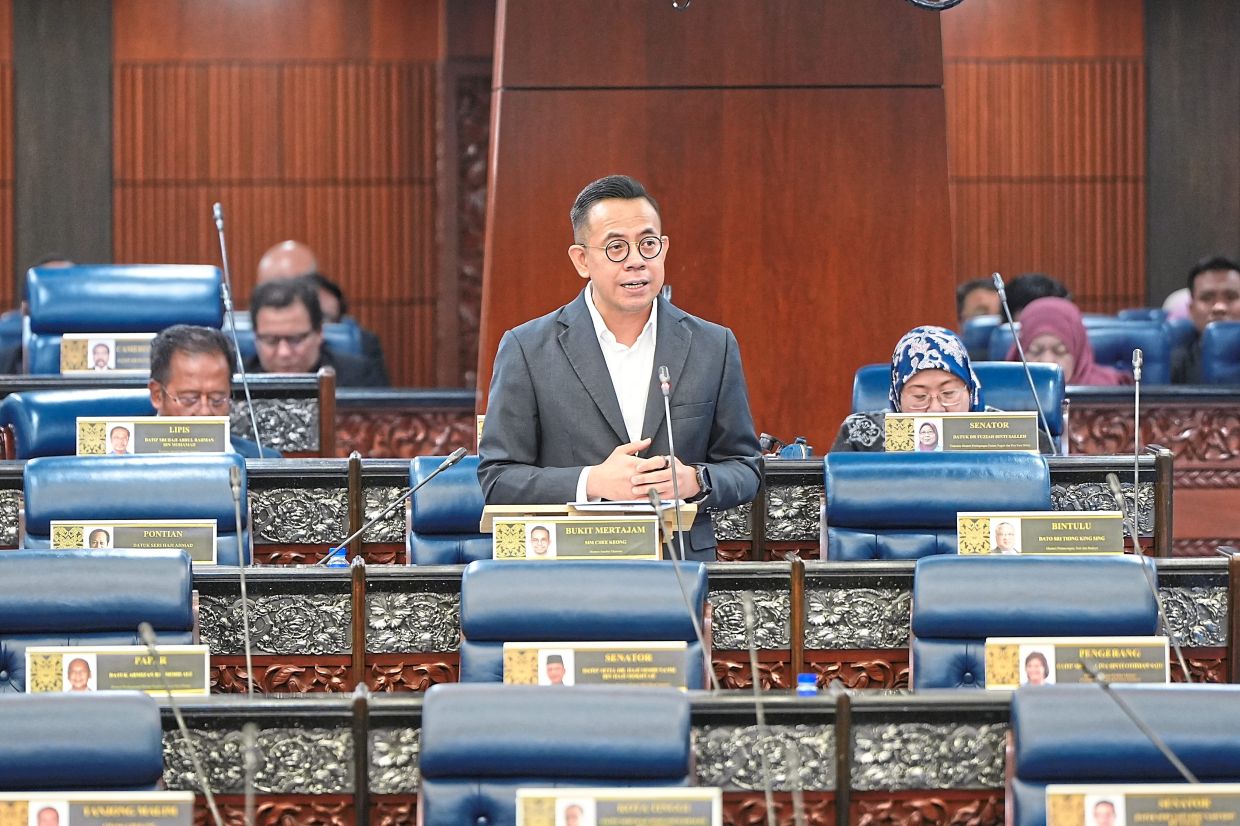
However, the tabling of the Skills Development Fund (Amendment) Bill 2025 for first reading in Parliament on Nov 10 by Human Resources Minister Steven Sim Chee Keong could bring a major expansion.
This mooted legislative change broadens the financing scope beyond traditional technical and vocational education and training (TVET) qualifications to encompass high-value industry certifications and licensing.
The expanded scope of PTPK will offer financial assistance in three key areas:
> Professional and industrial competency certificates: This includes high-demand digital qualifications such as Microsoft, Cisco and AWS Cloud Practitioner certifications, as well as critical safety and health certifications like those for occupational safety and health (OSH);
> Work licensing and certifications: The scheme will cover essential industrial licences, such as those for wireman or chargeman issued by the Energy Commission, and specialised skills like welding certifications from the American Welding Society.
> Recognised short skills courses: Short-term training that is explicitly acknowledged by the industry and vital to employer needs will also be eligible for funding.
Crucially, this means individuals seeking professional development or industrial licensing outside of the traditional JPK qualification track can now access PTPK financial aid, opening up new opportunities for career development and advancement.
Key changes
The proposed amendment introduces several systemic improvements designed to make the scheme more accessible and effective.
First, the scope of the loan is significantly wider, validating not just SKM qualifications but also certificates and licences from recognised professional bodies.
Second, the process is slated to be faster and more digitally powered, potentially reducing application processing times while making it easier for working adults to enrol without lengthy delays.
Finally, governance and enforcement are being strengthened to safeguard the fund’s integrity and guarantee that loans are directed toward quality, relevant and recognised courses.
The market demand for these newly financeable qualifications is significant, covering several high-value areas critical to the modern economy.
In the digital and IT sector, certifications such as Microsoft Certified, Cisco CCNA and AWS Cloud Practitioner are essential skills driving the digital economy, valued by the industry.
Likewise, energy and electrical fields consistently demand licensed professionals, with qualifications like the wireman or chargeman licence, alongside specialised maintenance skills, remaining highly sought after.
Meanwhile, across all industries, proper compliance is paramount, making safety and health qualifications for OSH officers and various compliance modules vital.
For the heavy industries, particularly the manufacturing and oil and gas industries, technical skills like the American Welding Society’s welding certification and basic non-destructive testing (NDT) training continue to be cornerstones of the sector.
Finally, numerous technical services offer strong career prospects, especially in emerging fields such as basic heating, ventilation and air conditioning (HVAC), electric vehicle (EV) automotive maintenance and fundamental automation training.
Clear pathway to progress
For those determined to move forward in their careers, the path to leveraging this expanded scheme is straightforward.
The first step involves determining the target skill by observing job market demands and identifying the specific licences or certifications employers are seeking.
Subsequently, individuals must verify selected training centres to ensure the provider is legitimate and accredited by the appropriate professional or licensing body.
Following this, individuals can apply for the PTPK loan with basic documentation. Once approved, the focus shifts to completing the course and obtaining the certification. The final step is to update their resume and apply for higher-paying positions that are aligned with the new, valuable qualifications.
While not all talented individuals follow a traditional academic route, with many held back by the cost of specialised training, the expansion of PTPK makes the choice more equitable.
Now, those who are committed and willing to learn have a clear path to upward mobility.
Ultimately, the decision rests with the individual to select the right skill, take the essential first step and build a more rewarding career.