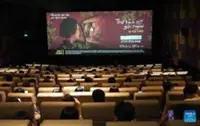
KUALA LUMPUR: Overseas Chinese communities should be recognised as distinct from the Chinese in China, not merely as extensions of the motherland, said Assoc Prof Dr Rachel Leow of Cambridge University.
She said ethnic Chinese around the world have, over generations, developed their own unique identities shaped by the societies they live in.
“For centuries, the story of the Chinese diaspora has too often been told as an extension of China’s national history,” Leow said.
“But that approach risks oversimplifying the experiences of millions of ethnic Chinese across the seas.”
To truly understand the Chinese diaspora, she said, it must be viewed as a set of communities shaped by local contexts and interactions.
“Perhaps we can only grasp the full meaning of the Chinese diaspora when we stop treating it as an extension of China and start seeing it as communities transformed by the places they settled and the people they encountered,” she said.
Delivering her keynote address at the 12th International Conference of the International Society for the Studies of Chinese Overseas, Leow highlighted how the distinction between Zhongguoren (people of China) and Huaren (ethnic Chinese) has often blurred, particularly for political reasons.
“We all know there’s a difference but these borders have become less clear,” she said. “For ethnic Chinese in South-East Asia, this complexity is nothing new.”
Leow noted that the region’s history itself has been one of hybridity, creolisation and cultural blending.
“The seas south of China have long been crossroads of migration and trade,” she said. “Chinese settlers interacted with Malays, Indians, Arabs, Europeans and others. Their languages, religions and traditions intertwined over centuries.
“The Chinese were among many communities transformed by complex historical encounters across the seas.”
Her keynote, titled “Horizons, Homelands and Hegemony: The Prospects and Perils of Chinese Diaspora in the Age of Global History”, was delivered at the two-day conference at Universiti Malaya, moderated by Arts and Social Sciences Faculty dean Prof Datuk Dr Danny Wong Tze Ken.
Speaking on the evolving meaning of Chinese identity, Leow said that while overseas Chinese communities continue to maintain cultural and ancestral ties to China through clan associations, ancestral halls and festivals, they have also developed distinct local characteristics.
“The overseas Chinese are part of a larger tapestry,” she said. “They’ve built their own worlds while staying connected to their cultural origins.”
Leow urged scholars to broaden their approach to overseas Chinese studies, calling for a shift from the “homeland” of the diaspora to the “horizons” of the diaspora.
“Telling China’s story well is not the same as telling Chinese people’s stories well, and perhaps that’s precisely the point.”
The conference was sponsored by the IKHASAS Group; the Institute of Science Innovation and Culture, Rajamangala University of Technology Krungthep, Thailand; Pejati, Universiti Malaya’s Alumni Association of the Department of Chinese Studies; and the Fo Guang Shan Education Centre.
The Star and Sin Chew Daily served as media partners.