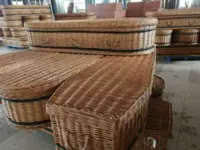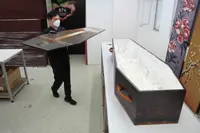
Not many takers for environmentally friendly coffins


PETALING JAYA: Despite the growing popularity of environmentally friendly coffins in neighbouring countries like Singapore, its use has yet to take off locally.

Since its introduction in Malaysia in 2013, these coffins only account for 5% to 10% of total coffin sales, said the Malaysia Funeral Public Association.

Association president Kong Thian Hau said the older generation may also be less inclined to use coffins made of cardboard.

“Those with traditional mindsets may be relatively conservative and find these hard to accept,” he said when contacted.

However, Kong said Generation Y, or those born in the 1990s, could be more open to the idea.

“We also expect higher use of environmentally friendly coffins when it is their time to carry out funeral planning,” he said.

Kong explained that environmentally friendly coffins are generally made of thick cardboard and corrugated paper, or materials that have lower carbon footprint, which results in less emissions during cremation.

“It uses many patented technologies to provide moisture resistance, load-bearing capacity and more. It is not just simply about using thick cardboard,” he said.

While some perceive cardboard coffins to be cheaper, the reverse is actually true.

“Existing products in Malaysia are mainly imported from places such as the United States and Hong Kong. Due to the exchange rate and transportation cost, prices may be higher than traditional ones,” he said.

Association deputy chairman Jamelia Looi Heng Ling said those producing eco-coffins pay close attention to ensure the production chain is eco-friendly, in addition to the materials used.

“Environmentally certified products are generally more expensive.

“In light of this, prices of environmentally friendly coffins are relatively higher,” she said, adding that the imported ones are only suitable for cremation and not burials.

“Cremation must also be carried out with specially formulated technology. Thick cardboard is relatively easy to burn and the flame intensity cannot be too strong.

“Otherwise, the outer layer of the coffin will be completely burnt before the body inside has turned into ashes,” she said, adding that most crematoriums in the country are only suitable for cremating traditional coffins.

“If environmentally friendly coffins are used, they usually need to be sent to specific private crematoriums, which can result in higher total funeral costs,” she added.

Fook Loke Sau Casket Centre director Thung Siew Ching said some people have qualms using environmentally friendly coffins, especially those who organise wakes for the deceased.

“There are those who use dry ice in this process, which can result in moist conditions that some quarters may be uncomfortable with,” she said.

On the other hand, there is ready demand for environmentally friendly urns.

“It is made in a way that will dissolve upon touching water. However, the urn must be carefully handled as it is made with material similar to paper and dissolves quickly,” she said.

Follow us on our official WhatsApp channel for breaking news alerts and key updates!

Next In Nation

Scout movement should be platform for non-formal education to produce future leaders, says chief commissioner
State rights, 40% revenue claim, infrastructure in the spotlight at Sabah assembly
Cops urge witnesses to come forward after motorcyclist dies in Kuchai Lama crash
Malaysia sets RM100bil franchise sales target by 2030, says Zahid
DID issues flood warning for parts of K'tan following heavy rain forecast
Anwar-Hajiji ties key to fast-tracking Sabah's 40% revenue claim, say state lawmakers
Baby abandoned behind Besut house exposes incest between siblings
South-East Asia cultural economic-exchange connects Vietnam and Malaysia
Rising child and maternal deaths expose cracks in Sabah healthcare
Seizure of Bersatu's accounts linked to Muhyiddin's criminal case, High Court told

Others Also Read