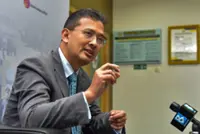
PETALING JAYA: While the Health Ministry received the second highest allocation under the unity government’s maiden budget with RM36.3bil, health experts say the allocation falls short of being enough to address the various needs of the healthcare sector.
The ministry received RM200mil – more than the RM36.1bil allocated under the spending plan tabled by the last government in October.
It also received the highest jump in allocation compared to Budget 2022, where it received RM32.4bil.
Public health advocate and former Health Ministry official Datuk Dr Zainal Ariffin Omar said while the increased allocation was laudable, it was still below the World Health Organisation’s yardstick of 5% of the gross domestic product.
Welcoming the RM3bil allocation for the hiring of 1,500 medical officers, dentists and pharmacists for permanent and contract positions, he said this would help address problems at understaffed healthcare facilities.
“But there is still a long way to go for more significant changes. Hopefully, we can see more long-term plans in the Health White Paper,” Dr Zainal said of the strategy paper, which is slated to be tabled in the Dewan Rakyat soon.
“The most significant extra initiative is the Madani Health Scheme. This will help the B40 group get faster treatment from nearer facilities and support local general practitioners (GPs).”
The Hartal Doktor Kontrak group said the RM3bil allocation for hiring did not specify how many of the 1,500 doctors, pharmacists and dentists would be permanent and how many would be contract workers.
“A more transparent announcement is needed,” a spokesperson said, adding that the measures to decongest hospitals were welcomed.“Hopefully it can be done quickly and we can see results soon as healthcare facilities and healthcare workers are extremely stretched and on the brink of collapse.”
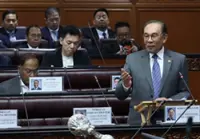
In tabling Budget 2023, Prime Minister Datuk Seri Anwar Ibrahim also announced measures to address congestion at government hospitals such as optimising public health capacity by outsourcing patients from congested hospitals to university, army and private hospitals.A total of RM120mil will be allocated for the Madani Health Scheme for the poor to receive treatment at GP clinics. Another RM700mil will be allocated for the construction of a women and children’s wing at Hospital Melaka, while hospitals that are 100 years old will be upgraded and refurbished.
The health scheme for the lower income, Peka B40, will be further strengthened with an allocation of RM80mil. The scheme will now include diabetes screening.
Anwar also said the threshold for tax relief for medical expenses will be increased from RM8,000 to RM10,000, while a relief of up to RM4,000 will be given for treatment of autism, Down syndrome and other specific learning disabilities.He said welfare hospitals registered as a company limited by guarantee would be given income tax exemptions equal to the amount spent on welfare.
Echoing Dr Zainal, Association of Private Hospitals Malaysia president Datuk Dr Kuljit Singh said the increased budget was encouraging despite not reaching the 5% allocation requested.
“The most important part is the implementation, as many patients are currently waiting in public hospitals’ emergency departments, wards and at home for treatment.
“We hope the speed of implementation is immediate as this proposed budget is for the current year and all government agencies should not delay their processes as many of our citizens are suffering with multiple ailments,” he added.
He said private hospitals were happy to assist the public healthcare and would help negotiate reasonable reimbursements to make the outsourcing process sustainable throughout the year.
“The Prime Minister has specifically mentioned outsourcing to university, military and private hospitals with the allotted amount. The private hospitals successfully managed many outsourced patients care during the Covid-19 pandemic.
“However, this will be based on the private healthcare current capacity which seems to be overstretched too,” Dr Kuljit said.
Universiti Kebangsaan Malaysia health economy and public health specialist Prof Dr Sharifa Ezat Wan Puteh said it was good that aspects such as upgrading public healthcare facilities and human resources were given attention.
“The new appointments for doctors are an excellent drive to retain skilled staff and future experts in the country. We must think of how to sustain them in the country and prevent brain drain through better remunerations, work standard and opportunity to gain higher income.
“The procurement of medicine and vaccines are welcomed as without government subsidy, most B40 and M40 would not be able to have access to drugs, especially the non- formulary medications (patients have to purchase/co-pay) and oncology drugs for cancer,” she added.
Already a subscriber? Log in
Get 20% OFF The Star Digital Access
Cancel anytime. Ad-free. Unlimited access with perks.