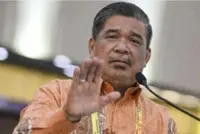
FORMER Sungai Siput MP Dr Michael Jeyakumar Devaraj is no longer the sole socialist representative in parliament. This means, arguably, that there is no one there to speak for the left as New Malaysia finds its way.
Yet Dr Jeyakumar finds some encouragement, both in some of steps taken in the post-Barisan Nasional era and in the fact that he can now focus on grassroots activism again.
“I think it’s a fantastic watershed event for Malaysia to have a new government after all this time. I think it’s a big step forward and it has given a lot of hope to young people that things can be changed – you know you can agitate and bring about change through democratic process,” he tells Sunday Star at an exclusive interview.
“I think the new government has done a number of things which are interesting in terms of governance and check and balance – they have made great steps. The new attorney general, the electoral commission having a new head, commissions to report directly to parliament and not the prime minister, talking of progressive changes to the laws (on the Sedition Act and death penalty). I think all are good steps, but on the economic front there are some questions.”
Dr Jeyakumar was not particularly impressed when a minimum wage of RM1,100 per month was announced, to take effect on Jan 1 next year.
“The wage council was going for RM1,170 and I’m not happy about it. I think it shows a certain anti-worker bias. The other issue I’m worried about is the whole health insurance plan the government is talking about, which I think will undermine the public health services.”
Just what is his relationship with the new government since he decided to fight under the Parti Sosialis Malaysia (PSM) banner and lost his seat?
“I think it’s a bit ambiguous. I have a lot of personal friends inside (the government) and I do believe they want to bring about a better Malaysia, but the fact is that PSM is part of the opposition now.
“We stood against them in 14 seats, so we are definitely part of the opposition.”
At the same time, PSM doesn’t seem to have much in common with most of the other opposition parties.
“The Barisan parties we have been fighting all this while – I’m not sure if they have changed their DNA or not. PAS is different, but the people who were our close friends have all come out to join Amanah.
“So, there is not very much in common with the opposition right now. On a case-by-case issue, we could work with them if they have interest in issues like poverty in rural areas.”
Dr Jeyakumar believes that a consistent ideological analysis is very much lacking in the Malaysian discourse and thinks that the new government needs to be challenged.
“In economic ideology, there is hardly a difference (from the old government). That’s why we need a party like PSM to bring a different viewpoint, a different vision of what could be. That’s the role of an opposition, not using ethnic or religious issues to split our country.”
PSM has toyed with the idea of a left front grouping with the rump Parti Rakyat Malaysia and NGOs, but it has yet to really take off.
“We are still trying to work with them. Obviously PSM alone can’t bring about change, but the other groups are still in their infancy. We need to get a critical mass and that will take time. But there are interesting individuals and groups bringing reform, so I think its hopeful.”
Despite the draconian moments in his first period at the helm, Prime Minister Dr Mahathir has gained Dr Jeyakumar’s respect.
“I think he’s an amazing man to do this at 93 years old and I think we all owe him one. Without him, it would have been difficult to displace Barisan, Having said that, I think in economic policies, there are still lots of problems I would have with him.
“I am concerned with talk about privatising government-linked companies as I think when under government control, they can execute socially useful programmes. For example, childcare in work, Malay small and medium enterprises with vendor programmes under government control and worker participation in ownership, for example 10% of a company’s board members coming from its workers.
“I am worried that Mahathir will go back to old projects like the third national car and the bridge.”
Unlike some, Dr Jeyakumar feels that the Port Dickson by-election was a necessary step.
“I think for Pakatan, it’s very important to have someone in line for leadership change. If not for (Datuk Seri) Anwar (Ibrahim), who else is there? I would like to see Pakatan finish five years without a leadership struggle and see how far they can go. Having Anwar in parliament creates space for that.
“The next leadership change would not be contested and that will give time for the government to establish itself and continue its reforms.”
He believes there is a big danger of more right-wing elements coming to the fore in the country if Pakatan Harapan does not perform well.
As he points out, the majority of Malays voted for either Umno or PAS. In his constituency, for one, only about 15% voted for Pakatan Harapan in the last general election, while in other constituencies it was about 25%, he says.
It is essential for Pakatan to address issues relating to Malay poverty such as unemployment in rural areas and the rising cost of living.
At the same time, these economic issues affect the bottom 60% of the population, so they could be solved through policies that help the poor of all races.
“If the government does that, it will take the sail out of people trying to play the hypernationalist thing – the game that Umno and PAS might play,” he says.
Dr Jeyakumar also cautions Pakatan against removing Bantuan Rakyat 1 Malaysia (BR1M).
“That will be very unpopular. BR1M is something that helped the lower income people a bit. If you take it away and don’t put something else in, people will get upset. In Sungai Siput, so many people will come to the office for help to be registered under BR1M. It is really appreciated.”
He also calls on the government to be bold in terms of planning economic policy for the masses.
“The government is losing revenue, but is afraid of increasing corporate tax or property gains tax because it could lead to capital running away.
“We suggest that Asean get together and stop cutting corporate tax. For every one per cent that is cut, we put a five percent tariff on that country’s exports to other Asean countries. That way, we use Asean free trade for the good of all our countries. We need to stop the pressure at the bottom.”
Another issue is the minimum wage, he notes.
“Dr Mahathir’s government doesn’t want to increase minimum wage so much because it doesn’t want businesses to suffer and lose market share. There is some truth there but we should be asking: What are we doing to get everyone to raise wages at the bottom level by 5%? That would increase the bottom 40% in all our countries and boost domestic and regional markets.
“This government needs to accept that increasing the purchasing power of the working class helps us all,” says Dr Jeyakumar.
Already a subscriber? Log in
Get 20% OFF The Star Digital Access
Cancel anytime. Ad-free. Unlimited access with perks.